Fill dirt is one of the most fundamental materials in construction, landscaping, and land development — yet it's also one of the most misunderstood. Walk onto almost any job site and you'll hear the term tossed around casually, as if all dirt is interchangeable. It isn't. The wrong fill material can lead to soil settlement, foundation cracking, drainage nightmares, vegetation die-off, and costly regulatory violations. The right fill, properly specified and sourced, can make a project structurally sound, cost-effective, and compliant for decades.
In the United States alone, the earthwork and excavation industry moves hundreds of millions of cubic yards of material annually. According to the U.S. Geological Survey, construction sand and gravel production exceeds 900 million tons per year — and fill dirt represents a massive slice of that movement. Understanding how to specify, test, and procure the right fill material isn't just good practice; it's essential project management.
This guide covers everything you need to know: the major categories of fill dirt, how to evaluate each for your specific application, compaction and testing standards, cost benchmarks, regional sourcing considerations, and how modern platforms are transforming the way contractors and landowners find the right material at the right price.
What Is Fill Dirt, Really? Defining the Material
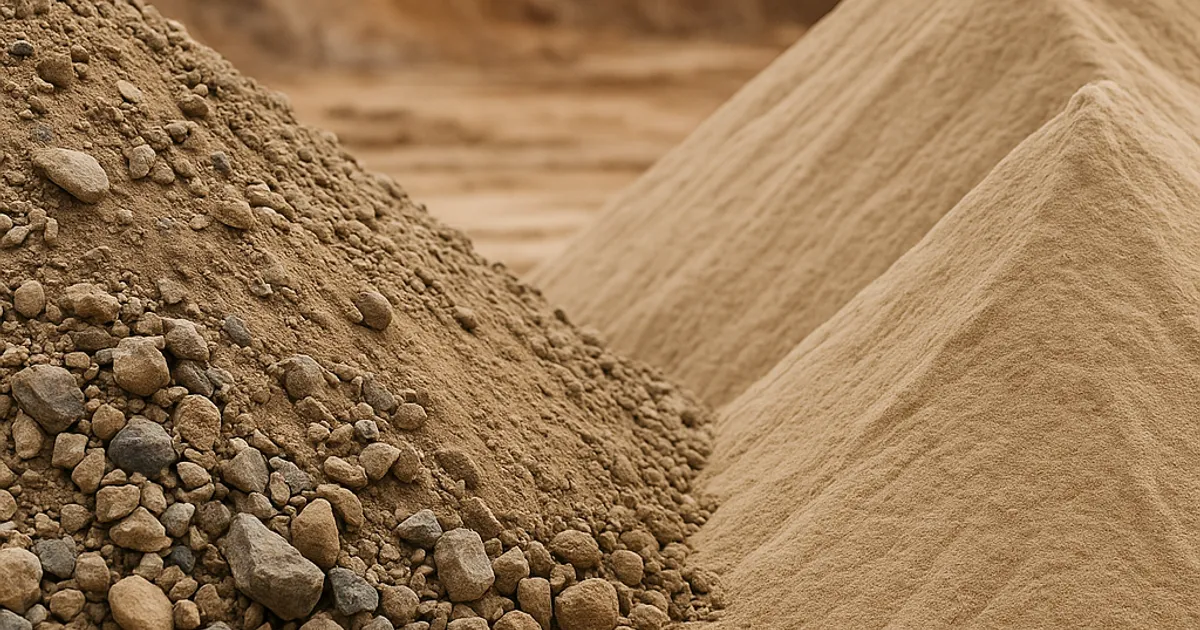
At its most basic, fill dirt is any soil or aggregate material used to raise grade, fill voids, support structures, or modify the topography of a site. But that definition encompasses an enormous range of materials — from clean sandy loam to compacted clay, crushed rock to recycled concrete — each with radically different engineering properties.
Fill dirt is fundamentally different from topsoil. Topsoil is the uppermost 2–12 inches of earth, rich in organic matter, microorganisms, and nutrients — ideal for growing plants, but terrible for structural fill because organic material compresses and decomposes over time, causing settlement. Fill dirt, by contrast, is typically subsoil: material excavated from below the topsoil layer that has low organic content and more predictable engineering characteristics.
The key properties that define fill dirt quality include:
- Particle size distribution — the ratio of sand, silt, clay, and gravel
- Plasticity index (PI) — how much the material expands or contracts with moisture changes
- Compaction potential — measured by Proctor density tests (ASTM D698 for standard, ASTM D1557 for modified)
- Bearing capacity — how much load the compacted fill can support
- Permeability — how freely water moves through the material
- Organic content — any percentage above 2–3% is generally problematic for structural applications
- Contamination status — presence of hazardous materials, construction debris, or regulated substances
These properties are evaluated through standardized testing procedures defined by ASTM International and referenced in virtually every state DOT specification, building code, and geotechnical engineering report in the country.
The Major Types of Fill Dirt and Their Core Applications
Understanding the spectrum of fill dirt types is the essential first step in making a sound material selection. Each type has distinct physical properties, engineering characteristics, cost profiles, and best-use scenarios.
Clean Fill Dirt
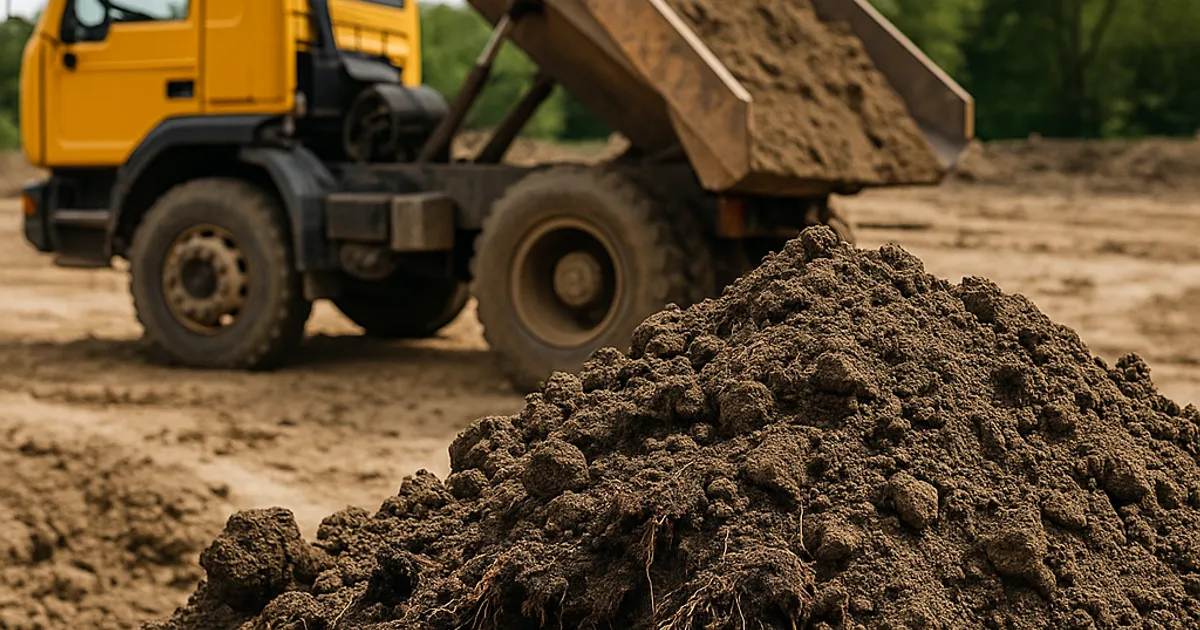
Clean fill is uncontaminated soil excavated from below the topsoil horizon, free of debris, organic material, and hazardous substances. It typically consists of subsoil clay, sandy loam, or silty material. It's the most commonly requested fill material on general construction projects and the starting point for most fill specifications.
Best for: Raising site grade, filling low spots, general grading behind retaining walls, utility trench backfill (with caveats)
Limitations: Variable engineering properties depending on source; clay-heavy clean fill can be problematic in wet climates
Structural Fill
Structural fill is engineered material — typically a well-graded gravel, crushed stone, or granular soil — placed and compacted to specific density standards to support loads. It meets defined gradation requirements (often ASTM D2940 or state DOT aggregate base specs) and is tested in-place to verify compaction.
Best for: Foundation support, roadbed subbase, building pads, retaining wall backfill, bridge abutments
Compaction standard: Typically 95–100% of maximum dry density per ASTM D1557 (Modified Proctor)
Sandy Fill / Select Fill
Sandy fill is coarse-grained material with a high sand content and low plasticity index (typically PI < 6). It drains well, compacts predictably, and is far less susceptible to frost heave and moisture-driven volume changes than clay-heavy soils.
Best for: Utility backfill, areas with high water tables, beach and coastal projects, septic system fill
Regional note: Sandy fill is abundant in coastal markets like dirt exchange in San Diego and dirt exchange in Los Angeles, where decomposed granite and sandy soils dominate the regional geology.
Clay Fill
Clay-dominant fill is cohesive, fine-grained material with a high plasticity index. It's cheap and widely available but problematic in many applications because it expands when wet and shrinks when dry, creating differential movement that can crack foundations, buckle pavements, and disrupt landscaping.
Best for: Pond liners, embankment cores, landfill caps, erosion control berms
Avoid for: Foundation backfill, areas subject to frost, drainage-sensitive applications
Crushed Rock and Aggregate Fill
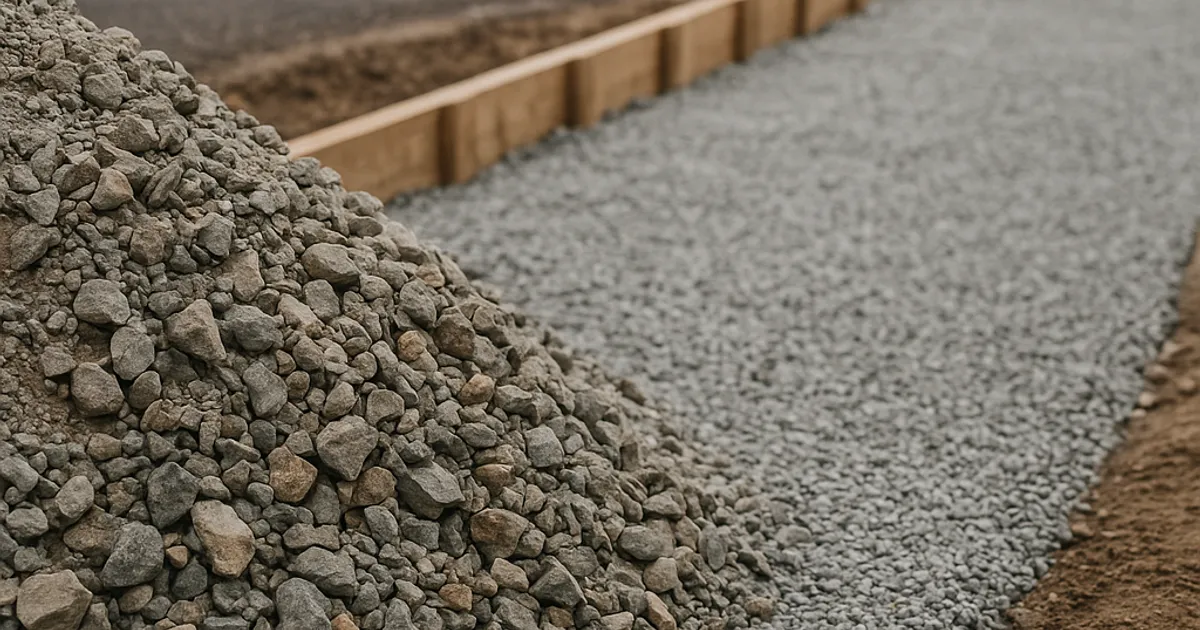
Crushed limestone, granite, or basalt — along with recycled concrete aggregate (RCA) — provides the highest bearing capacity and most predictable compaction behavior of any fill material. It's the go-to choice for structural applications requiring immediate load-bearing capacity.
Best for: Driveway base, parking lot subbase, footing drainage, French drain systems, fill beneath concrete slabs
Cost premium: 2–4x the cost of clean fill dirt, but often eliminates the need for over-excavation and replacement
Flowable Fill (CLSM)
Controlled Low-Strength Material (CLSM) is a self-compacting, cementitious slurry used to fill voids, utility trenches, and abandoned underground structures. Per ACI 229R, it typically has unconfined compressive strength of 1,200 psi or less, making it excavatable if future access is needed.
Best for: Utility abandonment, trench backfill in congested areas, void fill under slabs
Reading and Interpreting Soil Classifications
Professional fill dirt specification almost always references the Unified Soil Classification System (USCS), standardized under ASTM D2487, or the AASHTO Soil Classification System used widely by state DOTs. Knowing how to read these classifications allows you to communicate precisely with suppliers and geotechnical engineers.
USCS Classification Quick Reference
| USCS Symbol | Soil Type | Structural Fill Use | Drainage | Notes |
|---|---|---|---|---|
| GW | Well-graded gravel | Excellent | Excellent | Ideal structural fill |
| GP | Poorly-graded gravel | Good | Excellent | Good drainage fill |
| SW | Well-graded sand | Good | Good | Reliable utility backfill |
| SP | Poorly-graded sand | Fair | Good | Susceptible to piping |
| SM | Silty sand | Fair | Fair | Frost-susceptible |
| SC | Clayey sand | Fair | Poor | Limited structural use |
| ML | Silt, low plasticity | Poor | Poor | Avoid structural use |
| CL | Clay, low plasticity | Poor | Very Poor | Pond liners, embankments |
| CH | Clay, high plasticity | Very Poor | Very Poor | Avoid for most fill |
| OL/OH | Organic soils | Unacceptable | Poor | Never use as structural fill |
For most building pad and foundation applications, engineers will specify materials in the GW, GP, SW, or SP range, often with a maximum plasticity index of 15 and a maximum passing the No. 200 sieve of 15–35%, depending on the application.
AASHTO Classification
The AASHTO system (AASHTO M 145) rates soils from A-1 (excellent) to A-8 (peat — completely unsuitable). State DOTs use this system extensively in highway and bridge specifications. If you're working on a road project, expect your fill spec to reference AASHTO A-1-a, A-1-b, or A-3 for select granular fill.
Compaction Standards: The Make-or-Break Factor
You can source the most perfectly graded fill in the world, but if it isn't compacted correctly, it will fail. Compaction is the process of mechanically densifying soil to reduce voids, increase bearing capacity, and minimize future settlement.
Proctor Testing Fundamentals
The standard Proctor test (ASTM D698) establishes the maximum dry density and optimum moisture content for a given soil. Modified Proctor (ASTM D1557) uses greater compactive effort and is required for higher-load applications. Labs charge $150–$350 per Proctor test depending on soil type and location.
Field compaction is then verified against Proctor results:
- 85–90% of modified Proctor: Typical for landscaping and utility trench fill in non-structural areas
- 90–95% of modified Proctor: Standard for roadway subgrade, building pads, and general structural fill
- 95–100% of modified Proctor: Required for heavily loaded foundations, bridge abutments, and airfield pavements
Field Testing Methods
Nuclear Density Gauge (ASTM D6938): The industry standard for rapid, non-destructive in-place density measurement. Requires licensed operator due to radioactive source material. Cost: $50–$150/test.
Sand Cone Test (ASTM D1556): Traditional method using excavated volume and standard sand. Slower but doesn't require special licensing. Cost: $75–$200/test.
Dynamic Cone Penetrometer (DCP): Rapid field tool for estimating CBR (California Bearing Ratio) and relative compaction. Increasingly popular for granular fill verification.
Lift thickness matters as much as equipment selection. Most specifications limit lift thickness to 6–8 inches of loose material for sheepsfoot or vibratory compactors, with 8–12 inches allowed for heavy vibratory rollers on granular material. Exceeding lift thickness is one of the most common causes of compaction failures.
Moisture Control
Compacting soil at the wrong moisture content is as damaging as inadequate roller passes. Soil compacted too dry achieves lower density; soil compacted too wet can be remolded and weakened. Field teams should monitor moisture content relative to optimum (±2–3%) during placement, adjusting with water trucks or aerating as needed.
In regions like dirt exchange in Denver and the Mountain West, fill placed in summer can arrive significantly drier than optimum due to low humidity — requiring moisture conditioning before compaction.
Fill Dirt Contamination: What You Must Know Before You Accept a Load
This is where fill dirt procurement can go seriously wrong, and where uninformed buyers pay the heaviest price. Contaminated fill — soil containing hazardous chemicals, construction debris, asbestos, lead, petroleum hydrocarbons, or other regulated substances — can create long-term environmental liability that far exceeds any savings on material cost.
Common Contaminants to Screen For
- Petroleum hydrocarbons (TPH): From former gas stations, industrial sites, or fuel storage areas
- Heavy metals: Lead, arsenic, chromium from former industrial or agricultural use
- Asbestos: From demolition of pre-1980 structures
- PCBs: From electrical equipment, transformers
- Construction and demolition debris (C&D): Wood, concrete, metal, which can cause differential settlement and attract pests
Regulatory Framework
The U.S. Environmental Protection Agency regulates contaminated soil under RCRA (Resource Conservation and Recovery Act) and CERCLA (Superfund). State environmental agencies maintain their own fill material regulations — some states, like California and Massachusetts, have specific clean fill policies that require documentation of source site history and, in some cases, laboratory analysis before fill can be accepted.
In Massachusetts, the MassDEP Clean Fill Policy requires that fill imported to a site be documented as meeting specific screening criteria. Violations can result in mandatory excavation and disposal at costs of $50–$200+ per ton.
Due Diligence Steps Before Accepting Fill
- Request source documentation: Know where the material came from and the history of that site
- Visual inspection: Look for discoloration, odor, debris, construction materials
- Phase I ESA on source site: For large volumes or sensitive receiving sites, environmental due diligence is worth the investment
- Laboratory analysis: At minimum, TCLP metals and TPH screen for unknown sources; $300–$800 per composite sample
- Contractual protection: Require seller to warrant material as uncontaminated; define liability allocation
Platforms like DirtMatch help connect earthwork contractors with documented, vetted fill sources — reducing the risk of unknowingly accepting contaminated material by creating a transparent marketplace where source information is part of the exchange.
Cost Benchmarks: What Fill Dirt Really Costs in 2024
Fill dirt pricing is notoriously regional and highly variable based on market conditions, material type, haul distance, and whether you're buying or receiving free material. Understanding the full cost picture prevents budget surprises.
Material Cost by Type
| Fill Type | Typical Cost Range (per cubic yard) | Notes |
|---|---|---|
| Free clean fill | $0 (plus haul) | Available from excavation projects |
| Basic clean fill | $5–$25/CY | Highly regional; often $0–$10 in active markets |
| Select sandy fill | $15–$40/CY | Premium for low-plasticity material |
| Crushed limestone base | $25–$55/CY | Includes crushing/processing |
| Recycled concrete aggregate | $10–$30/CY | Economical structural option |
| Flowable fill (CLSM) | $80–$150/CY | Includes cement content |
| Screened topsoil (for finish grade) | $30–$60/CY | Not structural fill |
Hauling Costs
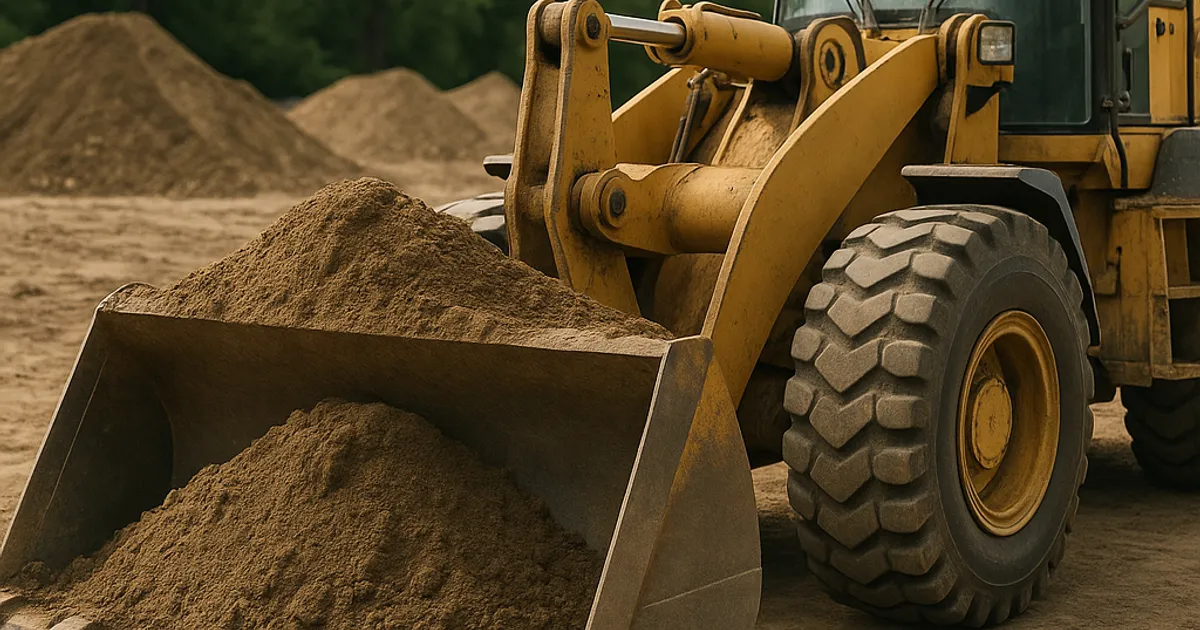
Material cost is only part of the equation. Hauling typically represents 50–70% of total fill dirt cost on many projects. A standard tri-axle dump truck carries 12–14 cubic yards (or 18–22 tons). Trucking rates vary from $85–$175/hour or $3–$8/ton-mile depending on region and fuel costs.
Reducing haul distance is the single most impactful cost lever in fill dirt procurement. A project receiving fill from 5 miles away versus 50 miles away can cut trucking costs by 60–80%. This is precisely why finding nearby fill sources is so valuable — and why how DirtMatch works to match local supply with local demand creates real, measurable cost savings for contractors on both sides of the transaction.
Hidden Costs
- Testing and inspection: $2,000–$15,000 depending on project size
- Over-excavation and replacement: Can add $20–$50/CY if subgrade soils are unsuitable
- Remediation if contaminated fill is accepted: $50–$500+/ton
- Delay costs: Material unavailability mid-project
Find or Post Dirt, Rock & Aggregate
Join thousands of contractors using DirtMatch to buy, sell, and exchange earthwork materials.
Try DirtMatch FreeRegional Fill Dirt Considerations Across the U.S.
Fill dirt availability, predominant soil types, and regulatory requirements vary significantly by geography. Understanding regional context helps contractors anticipate challenges and make better sourcing decisions.
Pacific Coast Markets
California's expansive soils (montmorillonite clays common in the Central Valley and Bay Area) are notoriously problematic for fill applications. The dirt exchange in San Francisco market often sees a premium on sandy fill and engineered aggregate because local clay soils have high plasticity indices that make them unsuitable for structural applications without expensive amendment.
CalGEOSS and local Bay Area jurisdictions enforce some of the most stringent fill material regulations in the country, driven by seismic risk and environmental protection concerns. Projects in liquefaction-prone zones require special attention to fill gradation and compaction to avoid catastrophic settlement during seismic events.
Pacific Northwest
The Seattle and Portland markets deal with abundant glacially-deposited soils — often dense, well-graded glacial till that makes excellent structural fill when properly managed. However, high annual rainfall creates moisture management challenges during fill placement. The dirt exchange in Seattle market is active year-round, with construction seasons pushing through rain that requires careful moisture conditioning of fill materials.
Mountain West
Denver and the Front Range sit on expansive bentonite-bearing soils that have caused billions of dollars in foundation and pavement damage. Colorado is one of the few states with specific guidelines addressing expansive soil fill (Colorado Department of Transportation's M&S Standards). Sandy fill from river deposits or crushed rock is strongly preferred over native clay fill for any structural application. Dirt exchange in Boulder is a particularly active market given the volume of residential and commercial development in the Front Range corridor.
New England
Boston and the broader New England market contend with a complex geology: glacial outwash sands and gravels in some areas, dense till and ledge in others, and extensive areas of marine clay and organic deposits near coastal zones. The fill market here is heavily regulated under the Massachusetts Contingency Plan (310 CMR 40.0000) and Connecticut's RCSA Chapter 22a-133k-1 et seq. Dirt exchange in Boston participants must be particularly careful about source documentation and contamination screening.
Specifying Fill Dirt: Writing a Proper Fill Material Specification
For any project where structural performance or regulatory compliance matters, verbal agreements and handshake deals on fill material quality are insufficient. A written fill specification protects the owner, defines expectations for the contractor, and provides legal clarity if disputes arise.
Core Elements of a Fill Specification
1. Material Classification Reference the USCS or AASHTO classification. Example: "Structural fill shall consist of granular material classified as GW, GP, SW, or SM per ASTM D2487, free of organic material, frozen lumps, debris, and deleterious substances."
2. Gradation Requirements Define maximum particle size, percentage passing key sieve sizes. Example: "Maximum particle size 3 inches; not more than 12% passing the No. 200 sieve."
3. Plasticity Limits For structural fill: "Plasticity Index (PI) shall not exceed 15 as determined by ASTM D4318."
4. Organic Content "Organic content shall not exceed 2% as determined by ASTM D2974."
5. Compaction Requirements "Fill shall be compacted to a minimum of 95% of maximum dry density as determined by Modified Proctor (ASTM D1557) at moisture content within 3% of optimum."
6. Lift Thickness "Fill shall be placed in horizontal lifts not exceeding 8 inches in loose thickness prior to compaction."
7. Testing Frequency Define how often density tests are required: typically one test per 500–2,000 SF of fill area per lift, or one test per 200–500 CY placed.
8. Source Documentation For contamination protection: "Supplier shall provide documentation of source site location and history. Fill shall be accompanied by a statement of origin certifying material as uncontaminated."
Sample Specification Language Table
| Specification Element | Residential Grading | Commercial Building Pad | Highway Subgrade |
|---|---|---|---|
| USCS Class | CL-ML or better | SW, SM, or better | A-1, A-3 (AASHTO) |
| Max PI | 25 | 15 | 6 |
| Max passing #200 | 35% | 20% | 15% |
| Compaction standard | 90% standard Proctor | 95% modified Proctor | 95% modified Proctor |
| Max lift thickness | 8 in | 6–8 in | 6 in |
| Testing frequency | Spot checks | 1/500 SF/lift | 1/500 LF |
Testing Your Fill Source Before You Commit
Ordering fill without testing the source is one of the most common and costly mistakes in earthwork contracting. A small investment in pre-procurement testing can prevent enormous post-placement problems.
Step-by-Step Pre-Procurement Testing Protocol
Step 1: Visual Assessment Visit the borrow source. Look for color uniformity, absence of debris, odor, and approximate soil texture. Ask about the history of the site.
Step 2: Sample Collection Collect representative samples per ASTM D75 (for aggregate) or ASTM D4220 (for soils). For large volumes, take multiple samples from different areas of the borrow pile.
Step 3: Basic Index Testing Submit to a geotechnical lab for: grain size analysis (ASTM D422/D7928), Atterberg limits (ASTM D4318), and organic content (ASTM D2974). Lab turnaround: 3–7 business days; cost: $200–$600.
Step 4: Compaction Testing Run Standard or Modified Proctor to establish maximum density and optimum moisture — essential for field compaction operations.
Step 5: Contamination Screening (if warranted) For unknown sources: total petroleum hydrocarbons (TPH) and TCLP metals at minimum. Turnaround: 5–14 business days; cost: $300–$800/sample.
Step 6: Engineering Review Have a licensed geotechnical engineer review results against project specifications before material procurement is finalized.
Environmental and Regulatory Compliance for Fill Dirt Projects
Beyond contamination concerns, fill dirt operations intersect with a broad range of environmental regulations that can significantly impact project scheduling and cost.
Wetlands and Waters of the U.S.
Filling in jurisdictional wetlands or waters of the United States without a permit violates Section 404 of the Clean Water Act. The U.S. Army Corps of Engineers regulates these activities through the Nationwide Permit (NWP) program and individual permits. Nationwide Permit 39 (NWP 39) covers residential, commercial, and institutional developments with impacts up to 0.5 acres — but even NWPs require pre-construction notification in many cases.
Violations can result in mandatory restoration orders, civil penalties up to $25,000 per day, and criminal penalties for willful violations. Always confirm jurisdictional status before placing fill in any low-lying, periodically inundated, or riparian area.
Stormwater Management
Fill operations disturbing more than 1 acre require a Construction General Permit (CGP) under the EPA's NPDES program. This requires a Stormwater Pollution Prevention Plan (SWPPP) with erosion and sediment controls, including silt fencing, check dams, and stabilization of disturbed fill slopes. The EPA's Construction General Permit requirements are strict and actively enforced.
Grading Permits
Most municipalities require grading permits for fill operations exceeding certain thresholds — commonly 50–200 cubic yards, or any fill on slopes exceeding 15–20%. Permit requirements typically include engineered grading plans, soils reports, and inspection protocols. Operating without required permits can result in stop-work orders and mandatory removal of unpermitted fill.
How to Source Fill Dirt Efficiently: From Traditional Methods to Modern Platforms
Historically, sourcing fill dirt meant networking through contractor relationships, calling quarries, checking local classifieds, or waiting to hear about nearby excavation projects through word of mouth. This inefficient system resulted in enormous amounts of valuable fill material being hauled to landfills while nearby projects paid premium prices for trucked-in material.
The economics are stark: disposing of excavated fill costs contractors $15–$60 per cubic yard in tipping fees and trucking. Simultaneously, receiving contractors are paying $20–$80 per cubic yard for equivalent material hauled from distant sources. This mismatch represents a massive market inefficiency — and a significant environmental waste.
Traditional Sourcing Channels
- Quarries and aggregate suppliers: Reliable but expensive; good for processed/engineered fill
- Contractor networks: Good for free fill from nearby excavations; limited by relationship access
- Craigslist/Facebook Marketplace: Unpredictable quality; high contamination risk; no vetting
- Soil brokers: Add markup; may not cover your geographic area
Modern Platform-Based Sourcing
Digital marketplace platforms have fundamentally changed fill dirt procurement, much the way online marketplaces transformed equipment rental and material supply in other sectors. DirtMatch was built specifically to solve this problem — connecting contractors who have excess excavated material with those who need fill, reducing haul distances, landfill waste, and total project cost.
For contractors looking to upgrade their access to verified fill sources and project opportunities, DirtMatch Pro offers advanced matching features, priority listings, and expanded geographic reach that can meaningfully reduce material sourcing costs on every project.
By matching supply and demand within defined geographic zones, platform-based sourcing can:
- Reduce average haul distance by 40–60% compared to traditional sourcing
- Eliminate tipping fees for excavators with clean fill to offload
- Accelerate procurement timelines from weeks to days
- Provide material documentation and source transparency that reduces contamination risk
- Create competitive pricing by aggregating multiple nearby sources
For high-volume earthwork operations and developers managing multiple simultaneous projects, the efficiency gains are compounding — better material at lower cost, delivered faster, with less administrative burden.
Making the Final Decision: A Practical Selection Framework
With all the information above, how do you actually choose the right fill dirt for your specific project? Here's a practical decision framework that any contractor, developer, or landowner can follow.
The Fill Dirt Selection Decision Tree
1. Define the application category:
- Structural (foundations, roads, building pads) → Requires engineered fill, testing, high compaction
- Non-structural grading (landscaping, grade adjustment, drainage) → More flexibility in material type
- Environmental (pond liners, landfill caps) → Specific permeability requirements
2. Assess site constraints:
- Water table depth → High water table favors granular/sandy fill
- Frost depth → Cold climates require frost-resistant granular material near grade
- Seismic zone → Liquefaction-prone areas require dense, non-liquefiable fill
- Expansive soil presence → May require import of non-expansive fill or amendment
3. Determine volume and budget:
- Small volumes (<500 CY) → Local suppliers, contractor networks, platforms
- Large volumes (>5,000 CY) → Long-term supply agreements, quarry contracts, borrow site development
4. Evaluate regulatory requirements:
- Wetland proximity? → Corps of Engineers coordination
- State clean fill policy applies? → Source documentation required
- Grading permit needed? → Soils report and inspection protocol required
5. Test before you commit:
- Index testing minimum for all structural applications
- Contamination screening for unknown sources
- Proctor testing to establish compaction targets
6. Source strategically:
- Maximize proximity to minimize hauling cost
- Verify material against specification before first delivery
- Build in contingency for material substitution if source quality changes
Quick-Reference Application Guide
| Application | Recommended Fill Type | Key Standard | Testing Required |
|---|---|---|---|
| House pad/foundation | Granular structural fill (GW/SW) | ASTM D1557 | Proctor + field density |
| Utility trench backfill | Select granular or CLSM | ASTM D698 | Density at critical depths |
| Road subgrade | A-1 or A-3 granular | AASHTO M145 | CBR + density |
| Retaining wall backfill | Freely draining granular | AASHTO | Density + drainage verification |
| Pond liner | Compacted clay (CL/CH) | ASTM D698 | Permeability testing |
| Landscape grading | Clean fill + topsoil cap | Local spec | Visual + spot density |
| Embankment | Clay or mixed soil | ASTM D1557 | Extensive density testing |
Conclusion: Getting Fill Dirt Right the First Time
Fill dirt selection is not a commodity decision. It is an engineering decision with long-term consequences for structural performance, environmental compliance, and total project cost. The contractor or developer who treats fill as an afterthought — ordering whatever is cheapest without regard to gradation, plasticity, compaction potential, or contamination risk — is setting up their project for expensive, sometimes catastrophic, failure.
The professionals who do it right follow a consistent process: define the application, write a clear specification, test the source material, verify compaction in the field, document everything, and source material from vetted, nearby suppliers who can deliver consistently.
Modern platforms have made that last step dramatically easier. Whether you're managing a single residential grading project or coordinating earthwork across a large development portfolio, connecting with verified local fill sources reduces cost, saves time, and cuts environmental waste. If you're ready to streamline your fill dirt procurement and get matched with quality local material, get started with DirtMatch and see how the platform can transform how you source and move earth materials.
The right fill dirt, properly specified and sourced, isn't just a cost line on a project budget — it's the foundation everything else is built on.