Walk onto any active construction site, land development project, or major landscaping job and you'll almost certainly find fill dirt at work. It's being compacted beneath a new foundation, shaped into a berm along a highway, or used to level a yard that slopes toward a house. Fill dirt is the unsung workhorse of the earthwork world — and "clean" fill dirt is the only kind that's safe, legal, and effective for most projects.
But what exactly makes fill dirt "clean"? The answer involves soil science, environmental law, construction engineering, and a surprisingly intricate marketplace where supply and demand rarely line up perfectly. Contractors overpay for hauling when surplus clean fill is sitting just a few miles away. Landowners accept truckloads of material that turns out to be contaminated, triggering costly remediation orders from state environmental agencies. Projects stall because the right material can't be found at the right time.
This guide cuts through the confusion. You'll learn the precise definition of clean fill dirt, how it differs from topsoil and other materials, what regulations govern it, how to test and verify it, what it costs, and how modern platforms are reshaping the way contractors source and offload it.
Defining Clean Fill Dirt: What It Is and What It Isn't
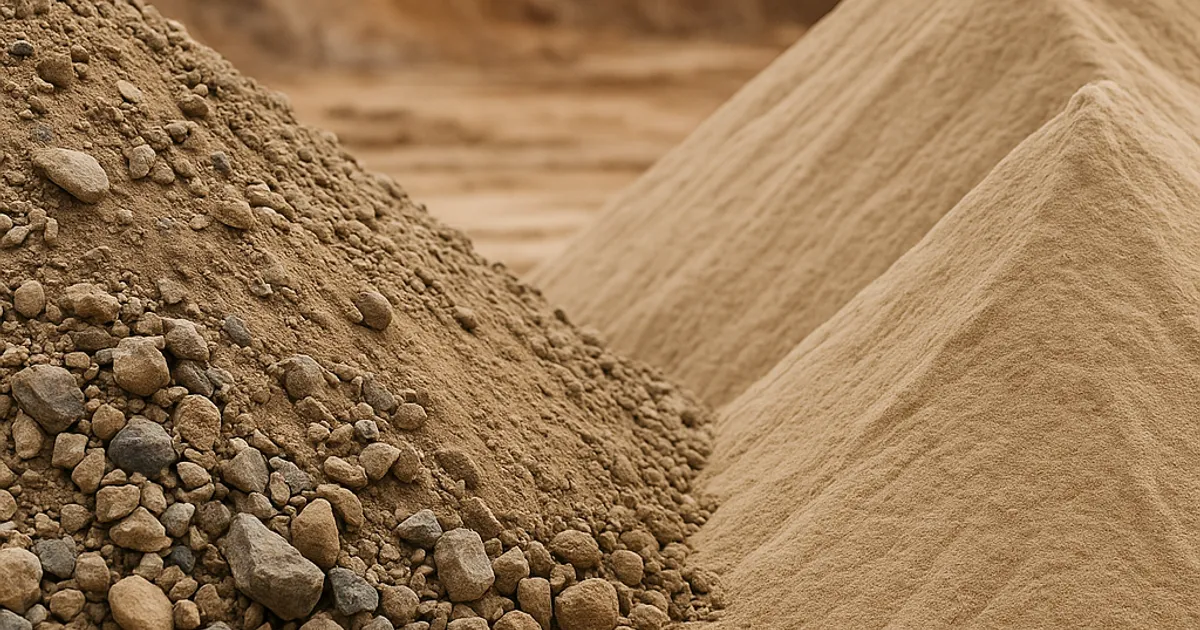
At its most basic, clean fill dirt is subsoil — the layer of earth below the topsoil horizon — that is free from organic matter, debris, hazardous substances, and chemical contaminants. "Clean" is not a casual descriptor. In most regulatory frameworks and industry standards, clean fill dirt must meet specific compositional and contamination thresholds before it can be legally placed on a site, used beneath a structure, or disposed of in a fill area.
Subsoil differs from topsoil in one critical way: it lacks significant organic content. Topsoil — the dark, nutrient-rich upper 4 to 12 inches of earth — is teeming with decomposing organic matter, microorganisms, and plant roots. That organic content makes topsoil excellent for growing plants, but terrible for structural applications. As organic material decomposes underground, it creates voids, promotes settling, and can generate methane gas. Clean fill dirt, by contrast, is primarily composed of mineral particles — clay, silt, sand, and small gravel — with very little organic content (typically less than 1–2% by weight in most engineering specifications).
What Clean Fill Dirt Contains
Typically, clean fill dirt is a mixture of:
- Clay minerals (such as kaolinite, illite, or montmorillonite)
- Silt particles (0.002–0.05 mm in diameter)
- Sand particles (0.05–2 mm)
- Small gravel or rock fragments (depending on the region and source)
The exact ratio matters. Clay-heavy fill compacts well and resists water infiltration, making it ideal for pond liners or erosion control. Sandy fill drains more freely and is better suited to applications where water movement is desirable. Most fill projects call for a loamy or silty-clay blend that compacts reliably without cracking or excessive shrinkage.
What Clean Fill Dirt Does NOT Contain
This is where the "clean" designation becomes legally and practically significant. Clean fill dirt must be free from:
- Organic material — wood, roots, leaves, grass, compost
- Construction debris — concrete chunks, asphalt, rebar, brick, glass, drywall
- Hazardous chemicals — petroleum hydrocarbons, heavy metals (lead, arsenic, chromium), solvents, pesticides
- Trash or municipal solid waste
- Radioactive materials
- Asbestos-containing material (ACM)
Many state environmental agencies — including the U.S. Environmental Protection Agency — define clean fill in terms of specific chemical thresholds. For example, California's Department of Toxic Substances Control (DTSC) uses a tiered system of soil screening levels, while New York's DEC maintains numerical standards under 6 NYCRR Part 375. Exceeding these thresholds means the material is no longer "clean" — it becomes regulated waste, subject to entirely different handling, transport, and disposal requirements.
Clean Fill Dirt vs. Topsoil vs. Other Fill Materials
One of the most persistent sources of confusion in construction and landscaping is the difference between clean fill dirt, topsoil, and other materials like crushed stone or engineered fill. Each has its place, and using the wrong one can create structural failures, drainage problems, and regulatory violations.
| Material | Organic Content | Primary Use | Compaction Suitability | Typical Cost (per yard) |
|---|---|---|---|---|
| Clean Fill Dirt | <1–2% | Grading, foundation base, volume fill | High | $5–$25 (or free) |
| Topsoil | 5–20%+ | Lawn establishment, gardens, planting beds | Low (settles) | $15–$50 |
| Sand Fill | <0.5% | Drainage, pipe bedding, beach areas | Medium | $15–$30 |
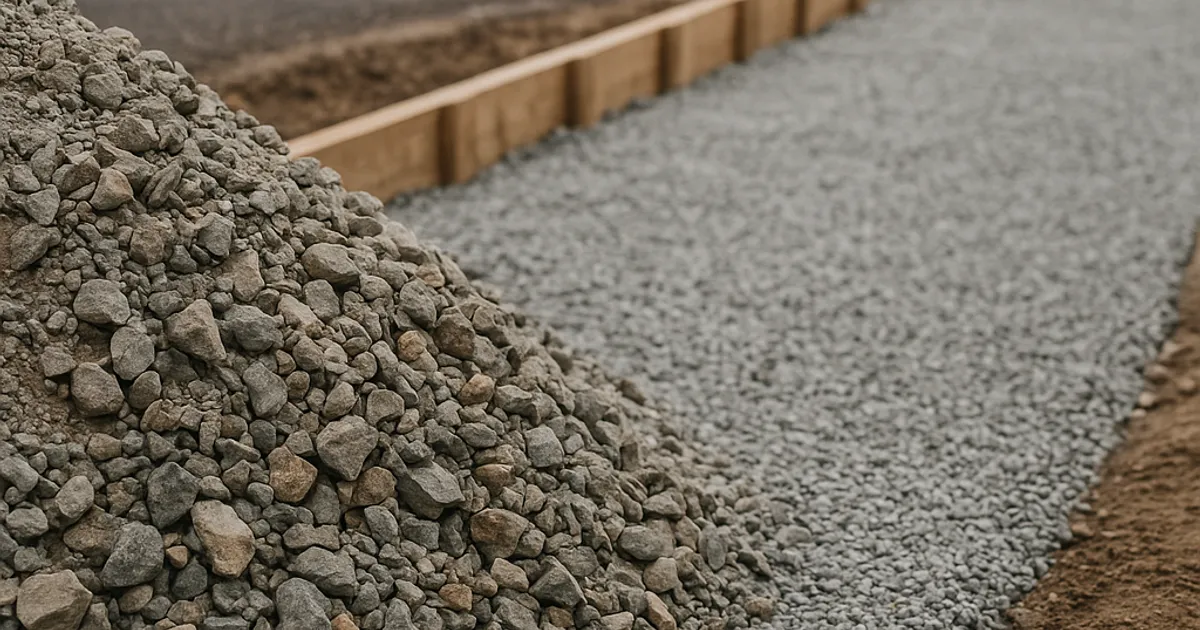
| Crushed Stone/Gravel | None | Drainage, road base, structural fill | Very High | $25–$55 |
| Engineered Fill | Specified | Structural, dam construction | Specified | $20–$60+ |
| Screened Topsoil | 3–8% | Lawn repair, sports fields | Low-Medium | $20–$45 |
When to Use Clean Fill Dirt
Clean fill dirt is the right material when you need volume, stability, and compaction without the growing capacity of topsoil:
- Foundation and slab preparation — raising grade before pouring concrete
- Utility trench backfill — after pipe or conduit installation
- Lot grading and leveling — correcting drainage slopes around structures
- Pond and lake construction — building berms and dike structures
- Road subgrade preparation — beneath aggregate base layers
- Landfill daily cover — regulatory requirement at many permitted facilities
- Mine reclamation — restoring disturbed land profiles
- Retaining wall backfill — structural support behind wall systems
When Not to Use Clean Fill Dirt
Clean fill dirt should not be used as the final growing medium for lawns, gardens, or planted slopes. Its low organic content and often high clay percentage make it poorly suited for plant establishment. A common best practice is to use clean fill for bulk volume and subsurface grading, then cap the fill area with 4–6 inches of quality topsoil.
Regulatory Standards Governing Clean Fill Dirt
Regulations around fill dirt vary significantly by state, county, and municipality — and understanding the applicable framework is not optional. Using non-compliant fill can result in stop-work orders, mandatory excavation and remediation, significant fines, and civil liability.
Federal-Level Framework
At the federal level, the EPA's Resource Conservation and Recovery Act (RCRA) provides the foundational framework for solid waste management. Under RCRA, fill dirt that is not hazardous waste and meets "clean" thresholds may be exempt from regulation as a solid waste when used beneficially. However, this exemption is conditional and subject to state interpretation.
The EPA's Brownfields Program has developed extensive guidance on soil cleanup standards that frequently inform what "clean" means in practice, especially for urban infill development and redevelopment of formerly industrial parcels.
State-Level Regulations
Most states have their own numeric soil screening levels or fill quality standards. Here's a snapshot of how several states approach clean fill regulation:
- California (DTSC): Uses Environmental Screening Levels (ESLs) for a range of chemical constituents. Fill material exceeding these levels for commercial or residential use requires characterization as a regulated material.
- Washington State (Ecology): Under the Model Toxics Control Act (MTCA), fill soil must not exceed Method A or Method B cleanup standards, which vary by land use.
- Texas (TCEQ): The Texas Risk Reduction Program (TRRP) establishes protective concentration levels (PCLs) for soil. Contractors in the dirt exchange in Dallas region frequently reference TRRP compliance.
- Colorado (CDPHE): Uses the Colorado Risk-Based Standard for soil and groundwater, referenced frequently by contractors involved in dirt exchange in Denver.
- New York (DEC): 6 NYCRR Part 375 provides soil cleanup objectives that distinguish between unrestricted, commercial, industrial, and restricted use scenarios.
Local Permits and Fill Placement Regulations
Beyond state environmental standards, most counties and municipalities require fill placement permits for projects above certain thresholds — often 50 to 500 cubic yards depending on jurisdiction. These permits may require:
- Documentation of material source
- Soil testing results
- Grading and drainage plans stamped by a licensed engineer
- Inspection by a local building or public works official
- Erosion and sediment control measures per local stormwater ordinances
The EPA's stormwater management guidance is also relevant here — many fill projects disturb more than one acre of land, triggering NPDES permit requirements.
How to Test and Verify Fill Dirt is Truly "Clean"
Visual inspection is not enough. Contaminated soil can look identical to clean fill — the difference only becomes apparent through proper testing. Here's a step-by-step process for verifying fill quality.
Step 1: Know the Source History
Before accepting any fill material, investigate the source site's land use history. Fill originating from former industrial facilities, gas stations, dry cleaners, agricultural operations (due to pesticide and herbicide residues), or areas with underground storage tanks (USTs) should be treated with heightened suspicion and subjected to more rigorous testing.
Request a Phase I Environmental Site Assessment (ESA) if the source site's history is unknown or includes any industrial or commercial uses. This is a documentary review — no soil sampling — but it can flag recognized environmental conditions (RECs) that warrant further investigation.
Step 2: Conduct Soil Sampling
For any significant fill volume (generally 1,000+ cubic yards, though many consultants recommend sampling even smaller quantities from unknown sources), commission a licensed environmental consultant to collect soil samples. Sampling protocols typically follow:
- ASTM D6913 — Standard Test Methods for Particle-Size Distribution of Soils
- EPA Method 8260 — Volatile Organic Compounds (VOCs)
- EPA Method 8270 — Semi-volatile Organic Compounds (SVOCs)
- EPA Method 6010/6020 — Metals analysis (including lead, arsenic, chromium, cadmium)
- EPA Method 8015 — Petroleum hydrocarbons (TPH)
Typical costs for a basic soil contamination screen run $300–$800 per sample, with a full suite of analyses potentially reaching $1,500–$2,500 per sample. For large fill projects, this is a small fraction of the liability risk it manages.
Step 3: Compare Results to Applicable Standards
Once laboratory results are in hand, compare detected concentrations against the applicable state cleanup standards or fill quality criteria for your jurisdiction and the proposed land use. If all analytes come back below the screening levels, the material qualifies as clean fill.
Step 4: Document Everything
Maintain records of the material source, chain of custody for soil samples, laboratory analytical reports, and the regulatory standard used to evaluate the results. Many states require this documentation to be kept on file for 3–7 years. Some jurisdictions, particularly for larger projects, require documentation to be filed with the state environmental agency.
Visual and Olfactory Inspection
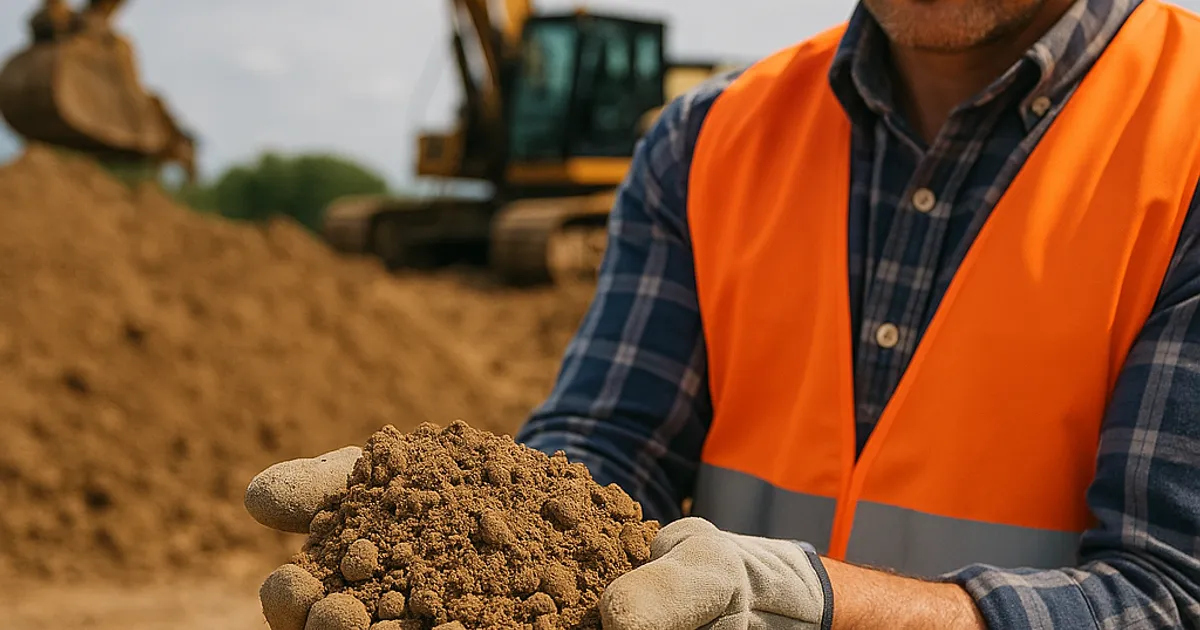
While not a substitute for laboratory testing, experienced contractors develop a useful preliminary screening routine:
- Smell it — petroleum hydrocarbons, solvents, and some industrial chemicals have distinctive odors. A chemical smell is a red flag.
- Look for staining — dark, rainbow-sheened, or discolored patches in soil often indicate hydrocarbon contamination.
- Check for debris — any visible construction debris, trash, or unusual inclusions disqualifies the material immediately.
- Test for organics — a simple field test: a handful of true subsoil should be mostly mineral, not dark or fibrous.
Where Clean Fill Dirt Comes From
Clean fill dirt doesn't come from a quarry or a bag at the garden center. It's almost entirely a byproduct of other construction activities — and understanding where it originates helps both those who need it and those who need to get rid of it.
Primary Sources
Excavation projects are the single largest source of clean fill. When a developer breaks ground for a building foundation, basement, parking structure, or utility corridor, they move earth that has to go somewhere. Depending on project location and soil type, an average commercial building foundation excavation might generate 5,000 to 50,000 cubic yards of material. Contractors pay $8–$18 per yard for licensed disposal — or they can match with a nearby project that needs fill.
Infrastructure projects — highway construction, bridge abutments, drainage channel regrading, pipeline installation — generate enormous quantities of cut material. State DOT projects often have surplus cut material that is available to adjacent landowners and developers at low or no cost.
Land clearing and grading operations for residential subdivisions are another major source, particularly in fast-growing metro areas. The dirt exchange in Denver is particularly active due to rapid suburban expansion on the Front Range, where graders frequently have clean fill to offload.
Pond and lake dredging occasionally yields usable fill material, though dredge spoil requires careful testing, as sediments can concentrate contaminants.
The Supply-Demand Mismatch Problem
Here's the central market inefficiency: projects with surplus clean fill and projects needing clean fill are rarely in direct communication with each other. Historically, this meant contractors paid for fill to be hauled to a landfill while a project two miles away was importing fill trucked from 50 miles away.
This is precisely the problem that DirtMatch was built to solve — connecting contractors, developers, and landowners who have surplus fill with those who need it, reducing wasteful hauls, cutting disposal and acquisition costs, and keeping clean material out of landfills where it doesn't belong.
The Real Cost of Clean Fill Dirt
Cost is one of the most frequently asked questions in the fill dirt world, and it's also one of the most variable. Prices swing dramatically based on location, quantity, material quality, haul distance, and market conditions.
Cost to Buy Clean Fill Dirt
- Free fill: Available when a nearby project has surplus and just wants it gone. Common on platforms and local contractor networks. The catch: you pay haul costs.
- $5–$15 per cubic yard: Typical for contractor-sourced fill with moderate haul distances (under 20 miles). May include delivery.
- $15–$25 per cubic yard: Commercially purchased fill from suppliers or landscape material yards. Often includes delivery within a defined radius.
- $25–$50+ per cubic yard: Specialty fill, screened material, or fill in high-demand metro markets with limited local sourcing.
Delivery costs add $3–$10 per cubic yard for short hauls, rising steeply with distance. A single tri-axle dump truck holds approximately 14–16 cubic yards, meaning a $500–$700 delivery charge per truckload is common within a 20-mile radius.
Cost to Dispose of Surplus Clean Fill
If you're on the other side — you have fill and need to get rid of it — costs include:
- Tipping fees at C&D landfills: $8–$20 per ton (roughly $12–$30 per cubic yard for typical soils at ~1.2 tons/yard)
- Transport to disposal: $4–$12 per cubic yard depending on haul distance
- Total disposal cost per cubic yard: $15–$45 for legally compliant disposal
This is why finding a nearby project that needs fill is so valuable. By connecting with a fill recipient directly, excavating contractors can potentially eliminate or dramatically reduce disposal costs — and some even charge a nominal tipping fee to the recipient.
Quantity Reference Guide
| Project Type | Typical Fill Volume Needed |
|---|---|
| Residential yard leveling (small lot) | 20–100 cubic yards |
| New home foundation area grading | 100–500 cubic yards |
| Commercial building pad | 500–5,000 cubic yards |
| Large subdivision grading | 5,000–50,000+ cubic yards |
| Highway or infrastructure project | 50,000–500,000+ cubic yards |
How Clean Fill Dirt is Placed and Compacted
Proper placement of clean fill dirt is a critical construction activity governed by engineering specifications and building codes. Simply dumping fill and driving over it with a truck is not adequate compaction — and improperly compacted fill is one of the leading causes of foundation failure, pavement distress, and retaining wall collapse.
Lift Thickness and Compaction Standards
Fill is placed in lifts — horizontal layers of a specified thickness — and each lift is compacted before the next is added. Standard lift thickness ranges from 6 to 12 inches (loose) for most fill applications, compacting to approximately 4–8 inches (dense). The correct thickness depends on the compaction equipment being used and the fill material's grain size distribution.
Compaction standards are typically specified as a percentage of maximum dry density as determined by the Proctor Compaction Test (ASTM D698 for Standard Proctor, ASTM D1557 for Modified Proctor). Common specifications:
- Structural fill beneath foundations: 95–100% Modified Proctor
- Roadway subgrade: 95% Modified Proctor per AASHTO T 180
- General grading fill: 90–95% Standard Proctor
- Non-structural fill (berms, landscaping areas): 85–90% Standard Proctor
Moisture Content Matters
Compaction efficiency is highly sensitive to moisture content. Fill compacted too dry won't achieve density; fill compacted too wet will pump and rut under equipment. Laboratory testing establishes the optimum moisture content — the water content at which maximum dry density is achieved. Field crews monitor moisture and add water or allow drying as needed.
Equipment Used for Compaction
- Sheepsfoot rollers: Best for cohesive (clay) soils
- Smooth drum vibratory rollers: Effective for granular (sand, gravel) soils
- Pneumatic tired rollers: Versatile for mixed soils
- Plate compactors and jumping jacks: Small areas, trenches, near structures
Field density testing — typically using a nuclear density gauge (ASTM D6938) or sand cone test (ASTM D1556) — verifies that each lift meets specification before the next lift is placed. On engineered projects, a geotechnical inspector typically monitors and documents compaction continuously.
Find or Post Dirt, Rock & Aggregate
Join thousands of contractors using DirtMatch to buy, sell, and exchange earthwork materials.
Try DirtMatch FreeEnvironmental and Sustainability Considerations
The environmental dimensions of fill dirt management extend well beyond contamination testing. The movement of fill dirt has significant carbon footprint implications, and improper fill practices can create long-term ecological damage.
Carbon and Haul Distance
A fully loaded tri-axle dump truck gets approximately 5–7 miles per gallon. A 50-mile round trip haul for fill disposal or acquisition burns roughly 14–20 gallons of diesel — emitting approximately 140–200 pounds of CO₂ per truck. Multiply that by dozens or hundreds of truck cycles on a large project, and the carbon footprint of fill logistics becomes substantial.
Reducing haul distances through local matching — exactly what platforms like DirtMatch facilitate — can meaningfully reduce project emissions. Studies from the Construction Industry Institute have documented that optimized earthwork logistics can reduce fuel consumption by 20–35% on large projects.
Wetlands and Fill Regulation Under Section 404
Placing fill dirt in wetlands, navigable waters, or their adjacent areas requires a permit under Section 404 of the Clean Water Act, administered by the U.S. Army Corps of Engineers. Violations — including unpermitted fill in wetlands — can result in fines up to $25,000 per day and mandatory restoration at the violator's expense. The U.S. Army Corps of Engineers maintains detailed permitting requirements that any contractor placing fill near water bodies must review.
Erosion Control During Fill Operations
Freshly placed fill is highly erodible, particularly before vegetation is established or hard surfaces are placed. Requirements under NPDES Construction General Permits mandate best management practices (BMPs) including:
- Silt fences and sediment basins
- Temporary seeding and mulching
- Inlet protection
- Stabilized construction entrances
Failure to implement adequate erosion controls is one of the most frequently cited violations in stormwater enforcement actions.
Sourcing Clean Fill Dirt: Traditional Methods vs. Modern Platforms
For most of earthwork's history, finding clean fill was a phone-call-and-handshake business. Project managers called other PMs they knew, contacted local DOT offices, or simply hired a broker who knew which sites had surplus material. The system worked, but inefficiently — information was siloed, prices were opaque, and haul distances were often longer than necessary.
Traditional Sourcing Methods
- Contractor networks and trade associations — effective but limited to personal relationships
- Craigslist and classified ads — unvetted, inconsistent quality, no standardization
- Material brokers — add cost (typically $2–$8/yard margin) but provide local knowledge
- DOT surplus notifications — good source for large quantities, but bureaucratic lead times
- Landscape supply yards — reliable quality but retail pricing, not suitable for large volumes
Modern Fill Matching Platforms
The emergence of digital platforms has dramatically improved the efficiency of fill dirt sourcing. By aggregating supply and demand from across a metro area or region, these platforms enable contractors to find matches that would never have happened through traditional networking.
If you're navigating a project that requires sourcing or offloading clean fill, understanding how DirtMatch works can save you significant time and money. The platform connects excavating contractors who have surplus clean fill with developers, graders, and landowners who need it — handling the matching logistics so both parties can focus on their projects.
In high-activity markets like the dirt exchange in San Francisco and dirt exchange in Los Angeles, where disposal costs are extremely high and landfill capacity is constrained, digital matching has become an essential part of project cost management for savvy contractors.
Tips for Sourcing Fill Successfully
- Start early — fill availability is highly time-sensitive. Surplus fill disappears fast.
- Know your specs — have your geotechnical report and soil type requirements ready before you search.
- Factor in haul costs — free fill 40 miles away may cost more than $15/yard fill 5 miles away.
- Request documentation — always ask for source site information and testing results.
- Have a backup plan — fill availability can evaporate if a project schedule changes.
- Understand your timeline — coordinate delivery windows with your project schedule to avoid stockpiling on a small site.
Common Mistakes to Avoid with Clean Fill Dirt
Even experienced contractors make costly mistakes with fill dirt. Here are the most common pitfalls and how to avoid them.
Accepting Fill Without Documentation
This is the single most consequential mistake. A verbal assurance that fill is "clean" carries no legal weight when the state environmental agency shows up with a contamination finding. Always get written documentation of the source and ideally independent laboratory results.
Confusing Topsoil and Fill Dirt
Using topsoil as structural fill leads to settlement — sometimes dramatic settlement. A residential slab built over 2 feet of improperly compacted topsoil can settle 2–4 inches in the first year as organic matter decompresses. This is expensive to repair and may not be covered by builder's insurance if specs were not followed.
Ignoring Expansive Clay Properties
Some clean fill dirt — particularly clay-rich material from certain geological formations — is highly expansive. Expansive clays shrink when dry and swell when wet, generating pressures that can crack foundations, buckle slabs, and displace retaining walls. A geotechnical engineer should evaluate the plasticity index (PI) of fill material intended for use near structures. Material with a PI above 20–30 often requires special handling or blending.
Underestimating Fill Settlement
All fill settles over time. Well-compacted structural fill may settle 0.5–1% of fill height; poorly compacted fill can settle 3–5% or more. For a 10-foot fill section, that's 1.2 to 6 inches of settlement. Projects with structures, pavement, or utilities on fill should account for settlement in design and may require monitoring.
Skipping Geotechnical Oversight on Structural Projects
For any fill placed beneath structures, pavements, or retaining walls, geotechnical engineering oversight is not optional — it's essential. The cost of a geotechnical inspection program ($3,000–$15,000 for a typical project) is trivial compared to the cost of remediating a failed foundation.
Special Applications and Case Studies
Residential Lot Grading
In residential construction, clean fill dirt is most commonly used to correct negative drainage slopes (where the yard drains toward the house rather than away) and to raise low areas that accumulate standing water. The standard requirement under the International Residential Code (IRC) Section R401.3 is a minimum 6-inch drop in grade within the first 10 feet from a structure's foundation.
A typical residential lot correction requires 50–200 cubic yards of fill, costing $1,500–$5,000 delivered. Using a local matching platform can often reduce this to transportation cost only if surplus fill is available nearby.
Highway and Road Construction
Highway embankments represent some of the largest fill operations in civil engineering. Interstate highway embankments can rise 30–60 feet above original grade, requiring hundreds of thousands of cubic yards of fill placed and compacted to exacting state DOT specifications. Fill material must typically meet AASHTO classification standards and achieve 95% Modified Proctor density at optimum moisture.
The Federal Highway Administration's geotechnical guidance provides extensive technical standards for fill in highway applications.
Mine Reclamation and Land Restoration
Surface mine reclamation under the Surface Mining Control and Reclamation Act (SMCRA) often requires placement of fill to restore approximate original contour (AOC). This is a highly regulated use of fill, with material composition requirements designed to support eventual revegetation and to prevent acid mine drainage. Reclamation fill is typically tested for pH, metal content, and agronomic properties in addition to standard fill parameters.
Getting Started: A Practical Checklist for Clean Fill Projects
Whether you're sourcing fill for a project or trying to offload surplus excavation material, use this checklist to keep your project compliant, cost-effective, and on schedule.
For Fill Recipients:
- Define fill quantity (cubic yards) and timeline
- Identify required soil type (clay, sandy loam, etc.) per geotechnical report
- Confirm applicable state and local fill quality standards
- Request source documentation and test results from suppliers
- Arrange for independent testing if source is unknown
- Confirm compaction specifications with geotechnical engineer
- Obtain required fill placement permits
- Arrange for inspection during fill placement
For Fill Surplus Contractors:
- Identify excess material volume and timeline availability
- Document source site history (no former industrial or commercial contamination)
- Conduct basic screening (visual, olfactory) of material
- Commission laboratory testing if source site has any uncertainty
- Post material on matching platforms with accurate descriptions
- Confirm haul logistics and truck access at receiving site
- Maintain chain of custody documentation for material transfer
If you're ready to take the next step, get started with DirtMatch to post your available fill, search for nearby material, or connect with verified contractors in your region — all without the phone-tag and guesswork of traditional methods.
The Future of Fill Dirt Markets
The clean fill dirt market is evolving rapidly, driven by several converging trends:
Increasing regulatory scrutiny — States and municipalities are tightening fill quality requirements in response to high-profile contamination cases where unknowing recipients accepted contaminated fill. Documentation requirements are becoming standard, and digital record-keeping is making compliance easier to enforce.
Sustainability mandates — A growing number of public projects and private developers are adopting construction waste diversion targets. Diverting clean fill from landfills to beneficial reuse is an easy win — clean fill is already the most commonly landfilled material at C&D facilities, yet it's 100% reusable.
Digital transformation — The earthwork industry has historically lagged behind other construction sectors in technology adoption. The emergence of specialized platforms is changing how fill markets function, bringing price transparency, quality verification, and logistics optimization to a market that desperately needed modernization.
Urban infill pressure — In dense metros from Seattle to Boston to San Diego, fill material is increasingly valuable as urban development requires site preparation at locations where importing material is logistically complex and expensive. Local fill sources command significant premiums in these markets.
The contractors and developers who understand these trends — and position themselves to benefit from a more connected, transparent fill market — will have a meaningful competitive advantage in the years ahead.
Conclusion
Clean fill dirt is far more than just dirt. It's a carefully defined material with specific compositional requirements, regulatory standards, engineering specifications, and environmental implications. Getting it right means understanding the difference between clean fill and contaminated material, knowing what testing to require, following proper placement and compaction procedures, and sourcing material efficiently from the right nearby sources.
The fill dirt market has long been hampered by information asymmetry — contractors with surplus material didn't know who needed it, and those who needed it didn't know where to find it locally. Modern platforms are solving that problem, reducing costs, cutting emissions from unnecessary trucking, and keeping a reusable resource out of landfills.
Whether you're a developer grading a new lot, an excavating contractor sitting on 10,000 yards of surplus clay, or a homeowner trying to fix a drainage problem, understanding what clean fill dirt really means — and how to source or dispose of it properly — is essential knowledge that pays dividends on every project.