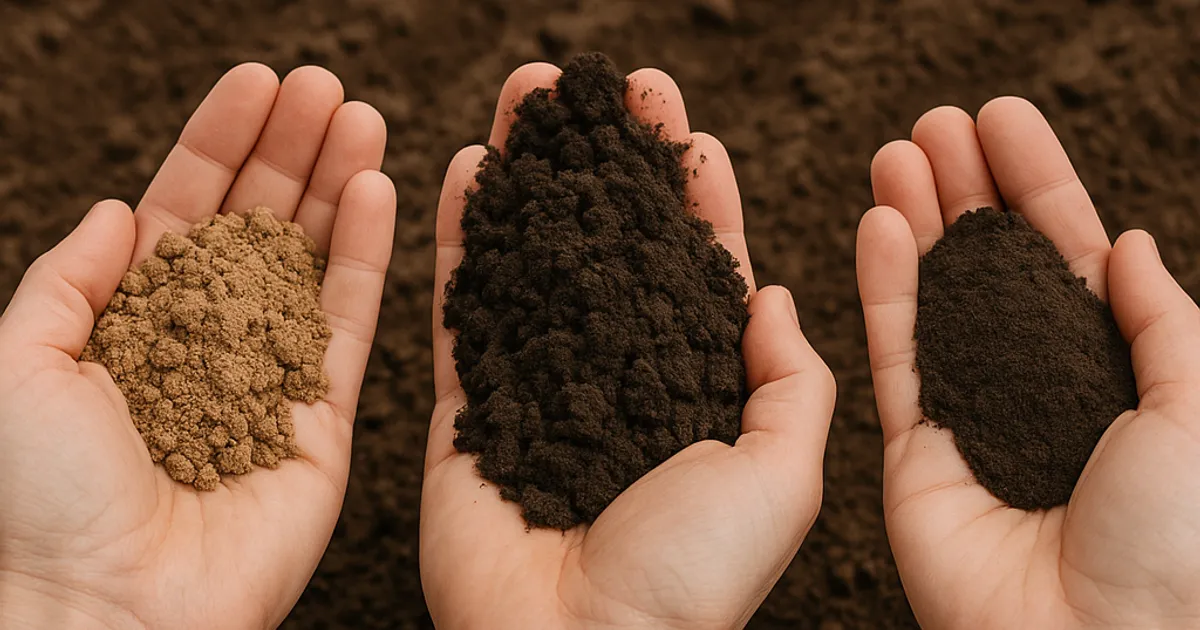
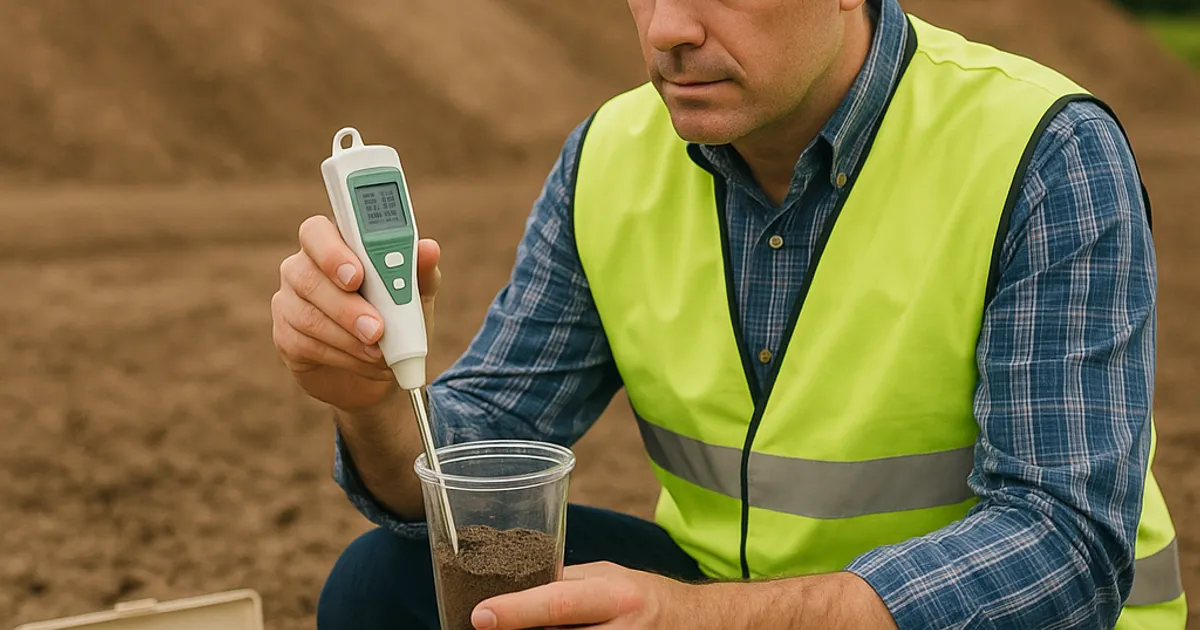
In the earthwork and excavation industry, dirt is your product, your liability, and your livelihood — all at once. Yet a surprisingly large number of contractors, haulers, and land developers move thousands of cubic yards of material every year without ever running a single soil test. That's a gamble that can cost tens of thousands of dollars in rejected loads, regulatory fines, failed foundations, and remediation contracts gone sideways.
Soil testing isn't just for agricultural operators or environmental consultants. For earthwork contractors, excavators, fill dirt suppliers, and aggregate haulers, a systematic approach to soil analysis can sharpen your bids, protect your reputation, keep regulators off your back, and unlock premium pricing for high-quality material. In markets like Denver, Los Angeles, and Seattle — where urban infill projects are booming and regulatory scrutiny is high — knowing your soil's classification, compaction characteristics, and contamination status is quickly becoming a competitive differentiator rather than an optional extra.
This guide covers everything you need to know: why soil testing matters from a business and compliance standpoint, which tests apply to your operations, how to read results, and how to build testing into your workflow in a way that pays for itself many times over.
Why Soil Testing Is a Business Imperative, Not Just a Regulatory Checkbox
The earthwork industry operates on tight margins. A single rejected truckload of contaminated fill can cost $500–$2,000 in disposal fees. A failed compaction test on a road subgrade can trigger expensive rework that wipes out an entire project's profit. A contamination discovery mid-project can halt work for weeks while environmental consultants assess the situation. According to the U.S. Environmental Protection Agency, there are more than 450,000 brownfield sites across the United States, many of which contain subsurface contamination that migrates to adjacent properties via fill material movement.
For contractors sourcing or disposing of fill dirt, the risk is real and quantifiable. A 2022 survey by the National Excavation & Safety Association found that approximately 34% of earthwork contractors reported at least one project delay in the prior two years that was attributable to soil quality issues — including unexpected contamination, unsuitable bearing capacity, or material that failed gradation requirements for intended use.
Soil testing turns unknown risk into known, manageable data. When you test before you move material, you accomplish three critical business objectives simultaneously:
- You protect yourself legally. Documented test results establish a chain of evidence that you accepted or delivered material meeting specified standards. This is invaluable if disputes arise later.
- You command better pricing. Tested and certified fill dirt consistently sells at a 15–30% premium over untested material in competitive markets, because buyers know what they're getting.
- You bid more accurately. Understanding a site's soil conditions before excavation allows you to price equipment, labor, and haul rates with confidence rather than padding your numbers with a gut-feel contingency.
Platforms like DirtMatch are built around connecting contractors who need fill dirt with those who have verified surplus material — and as the platform's user base grows, tested and documented material is increasingly preferred by project owners who want assurance before accepting a load.
Understanding Soil Classification Systems Used in the Industry
Before diving into specific tests, it's essential to understand the two primary soil classification frameworks your clients, engineers, and regulators will reference. Misunderstanding these systems is a common source of miscommunication between contractors and project engineers.
The Unified Soil Classification System (USCS)
The Unified Soil Classification System, standardized under ASTM D2487, is the most widely used system in geotechnical and construction contexts. It classifies soils into two broad categories — coarse-grained and fine-grained — and then subdivides them based on particle size distribution and plasticity characteristics.
Key USCS classifications you'll encounter regularly:
| USCS Symbol | Soil Type | Common Construction Use |
|---|---|---|
| GW | Well-graded gravel | Excellent base material, drainage |
| GP | Poorly graded gravel | Drainage fill, but poor structural base |
| GM | Silty gravel | Moderate base, needs compaction control |
| SW | Well-graded sand | Good fill, subbase material |
| SM | Silty sand | Acceptable fill with moisture control |
| ML | Low-plasticity silt | Poor fill, frost-susceptible |
| CL | Low-plasticity clay | Problematic fill, shrink/swell risk |
| CH | High-plasticity clay | Avoid as structural fill |
| PT | Peat/organic | Unsuitable for structural fill |
The AASHTO Soil Classification System
The American Association of State Highway and Transportation Officials (AASHTO) system, defined in AASHTO M145, is used primarily for highway and roadway subgrade evaluation. It classifies soils from A-1 (best) through A-7 (worst) for use as roadway materials. State DOTs across the country reference this system in their standard specifications — so if you're working on public road projects, you'll need to speak this language fluently.
Why Classification Matters for Your Business
Knowing a soil's USCS or AASHTO classification lets you instantly communicate its suitability to engineers, project owners, and material buyers without ambiguity. If you're listing surplus fill on a materials exchange, being able to say "CL material, low plasticity, tested per ASTM D2487" is far more compelling to a sophisticated buyer than "clay fill available."
The Core Soil Tests Every Earthwork Contractor Should Know
There are dozens of specialized soil tests, but for most earthwork and fill dirt operations, a focused suite of standard tests will cover the vast majority of use cases. Here's a breakdown of the essential tests, what they tell you, and what they typically cost.
1. Particle Size Analysis (Sieve Analysis and Hydrometer)
Standard: ASTM D422 / ASTM D6913
Cost: $75–$200 per sample
Purpose: Determines the distribution of particle sizes from gravel down through silt and clay. Results are plotted on a gradation curve that forms the foundation of soil classification.
Sieve analysis alone handles the coarse-grained fraction (particles larger than 0.075 mm). The hydrometer method is added when significant fine-grained material is present. Together, they give you the full gradation picture.
Business application: Aggregate producers, roadway contractors, and drainage system installers rely heavily on gradation data. Knowing your material's gradation curve lets you match it precisely to DOT specification bands for base course, subbase, or pipe bedding applications.
2. Atterberg Limits (Liquid Limit and Plastic Limit)
Standard: ASTM D4318
Cost: $100–$250 per sample
Purpose: Determines the water content thresholds at which fine-grained soils transition between solid, semi-solid, plastic, and liquid states. The Plasticity Index (PI = LL – PL) is the key output.
High-PI soils are problematic for structural fill — they shrink when dry and swell when wet, which can crack foundations, heave pavements, and destabilize slopes. Many DOT specifications and structural fill specs cap PI at 15 or less.
3. Proctor Compaction Test (Standard and Modified)
Standard: ASTM D698 (Standard Proctor) / ASTM D1557 (Modified Proctor)
Cost: $150–$350 per sample
Purpose: Establishes the maximum dry density and optimum moisture content for a given soil. Field compaction specs are expressed as a percentage of this maximum (e.g., "compact to 95% of Modified Proctor").
This test is arguably the most commercially important test for fill dirt operations. It defines the compaction target that field inspectors use to accept or reject your work. Knowing your material's compaction curve before placement prevents the costly scenario of delivering material that simply cannot achieve the specified density at reasonable moisture conditions.
4. California Bearing Ratio (CBR)
Standard: ASTM D1883
Cost: $300–$600 per sample
Purpose: Measures the bearing strength of a compacted soil relative to a standard crushed stone. Expressed as a percentage — higher is stronger. Used extensively in pavement design (both flexible and rigid).
5. Permeability / Hydraulic Conductivity
Standard: ASTM D2434 (granular soils) / ASTM D5084 (fine-grained soils)
Cost: $200–$500 per sample
Purpose: Determines how quickly water moves through compacted soil. Critical for drainage system design, infiltration basins, retaining wall backfill, and any application where drainage performance matters.
6. Contamination Screening (Phase I and Phase II ESA)
Guidance: EPA All Appropriate Inquiries Rule (40 CFR Part 312)
Cost: Phase I: $1,500–$6,000 | Phase II (targeted sampling): $5,000–$50,000+
Purpose: Identifies the presence of hazardous substances, petroleum hydrocarbons, heavy metals, and other regulated contaminants. Phase I is a records review and site reconnaissance; Phase II involves actual soil and groundwater sampling.
For earthwork contractors handling material from industrial, commercial, or unknown-history sites, Phase II sampling is increasingly required by receiving landfills, material recycling facilities, and even private fill recipients. The EPA's Brownfields Program provides excellent guidance on assessment protocols.
How Soil Testing Protects You From Regulatory and Legal Liability
The legal and regulatory landscape around fill dirt movement has tightened significantly over the past decade. States including California, Colorado, Washington, and Massachusetts have enacted increasingly strict rules governing the acceptance of imported fill material, driven largely by high-profile contamination incidents where fill from industrial sites was placed in residential developments.
State-Level Fill Material Regulations
In California, the State Water Resources Control Board has issued guidance requiring fill material placed near waterways to meet clean fill standards, with documentation required. For contractors doing work in the dirt exchange in Los Angeles or dirt exchange in San Francisco markets, this means buyers are increasingly asking for soil test results before accepting any imported fill — and local municipalities are beginning to require it for permitted grading projects.
In Colorado, the Colorado Department of Public Health and Environment (CDPHE) maintains specific numeric cleanup standards for common contaminants in soil. Contractors operating in the dirt exchange in Denver and dirt exchange in Boulder markets should be familiar with the CDPHE's Residential and Commercial/Industrial soil screening levels, which define when soil requires remediation before reuse.
Washington State's Model Toxics Control Act (MTCA) establishes cleanup standards that apply to fill material movement. In the dirt exchange in Seattle market, contractors who haul fill from commercial redevelopment sites routinely conduct confirmatory soil sampling to demonstrate that material meets MTCA standards before delivery.
Contractor Liability for Contaminated Fill
Under the federal Comprehensive Environmental Response, Compensation, and Liability Act (CERCLA), potentially responsible parties — including contractors who transported or placed contaminated fill — can be held jointly and severally liable for cleanup costs, regardless of whether they knew the material was contaminated. This is not a hypothetical risk. There are documented cases where excavation contractors who hauled material from a contaminated source site were named as PRPs in subsequent Superfund actions.
The business case for soil testing as liability protection is straightforward: the cost of a basic contamination screen ($500–$2,000 per sample composite) is negligible compared to the potential exposure of being named in an environmental enforcement action.
Building a Soil Testing Workflow Into Your Operations
Knowing that soil testing matters is one thing. Building it into your daily operations in a way that's efficient, cost-effective, and doesn't create project delays is another challenge entirely. Here's a practical framework for integrating soil testing into your business.
Step 1: Define Your Testing Triggers
Not every load of dirt needs a full battery of tests. Start by defining clear triggers that determine when testing is required:
- Unknown source material: Any fill sourced from a site with unknown land use history always requires at minimum a contamination screen.
- Public infrastructure projects: DOT and municipal projects typically require Proctor and gradation testing as part of the quality control plan.
- Large volume moves (>500 CY): The cost of testing is easily justified when the haul volume is significant.
- Material purchased for resale: If you're stockpiling and reselling fill dirt, testing is essential for quality assurance and premium pricing.
- Material going to or from regulated sites: Brownfields, former industrial properties, and sites with known spill history always require testing.
Step 2: Develop Relationships With Certified Laboratories
Not all testing labs are equal. For geotechnical tests (Proctor, gradation, Atterberg limits), look for labs accredited by the AASHTO Materials Reference Laboratory (AMRL) or the Cement and Concrete Reference Laboratory (CCRL). For environmental tests (contamination screening), labs must be state-certified for the specific analyses you need.
Building a standing relationship with a local lab — where they know your typical material types and testing needs — can reduce turnaround times and sometimes negotiate volume pricing. Many experienced contractors in high-volume markets develop preferred lab relationships that allow for 24–48 hour turnaround on routine tests.
Step 3: Collect Samples Correctly
Poor sampling technique produces unreliable results — potentially giving you false confidence or unnecessary concern. Follow these best practices:
- Representative sampling: For stockpiles, sample from multiple locations and depths (minimum 5 sampling points per 500 CY is a common rule of thumb). Combine into a composite sample or test individually depending on material variability.
- Proper containers: Geotechnical samples typically go in heavy-duty plastic bags or rigid containers. Volatile organic compound (VOC) testing requires special glass containers with zero headspace and immediate chilling.
- Chain of custody: Maintain a documented chain of custody form from sample collection through lab analysis. This documentation is critical if results are ever challenged.
- Moisture preservation: For Atterberg limits and Proctor testing, natural moisture content matters. Seal samples immediately and transport promptly.
Step 4: Interpret Results in Context
Raw lab data means little without context. Before drawing conclusions from test results, ask:
- What specification or standard applies to this project or application?
- How does the result compare to the acceptance criteria?
- Is the variability in the data representative of the stockpile, or did sampling procedures introduce error?
If you're unsure, consult with the project geotechnical engineer. Building a collaborative relationship with a local geotech firm is one of the highest-leverage professional investments an earthwork contractor can make.
Step 5: Document and Leverage Your Results
Test results are a business asset. Store them in an organized digital system and reference them when bidding on similar projects, when listing material for sale, and when responding to quality questions from clients. If you're listing fill material on DirtMatch, having documented test results lets you provide buyers with verified material specifications — a significant competitive advantage in markets where buyers are increasingly sophisticated.
Cost-Benefit Analysis: What Does Soil Testing Actually Return?
Let's put some real numbers on the ROI of soil testing for a typical earthwork operation.
Scenario 1: Contaminated Fill Discovery
A mid-sized excavation contractor in Colorado excavates 2,000 CY of material from a former auto repair shop site. Without testing, the material is hauled to a local developer's fill project. Two years later, elevated petroleum hydrocarbon levels are discovered at the fill site. The contractor is identified as a responsible party.
- Remediation contribution: $85,000
- Legal defense costs: $40,000
- Reputation damage: Incalculable
- Total exposure: $125,000+
The cost of a basic TPHC (Total Petroleum Hydrocarbons) soil screen for that 2,000 CY of material: approximately $800–$1,500 for a composite sample set.
Scenario 2: Failed Compaction Testing
A contractor places 5,000 CY of fill on a commercial development site. Field density tests fail because the material's optimum moisture content is significantly different from what was assumed. The contractor must re-work 60% of the placed fill:
- Rework labor and equipment: $22,000
- Project delay penalty: $8,500
- Total cost: $30,500
The cost of a Modified Proctor test on the fill material prior to placement: $200–$350.
Scenario 3: Premium Pricing for Tested Material
A contractor with a 10,000 CY fill dirt stockpile tests the material and documents: clean (below detection limits for all EPA Priority Pollutants), USCS classification SW-SM, Modified Proctor max dry density 118 pcf at 12% OMC, PI = 8.
Untested comparable material in the local market sells at $8/CY delivered. With documented test results and classification, the contractor commands $11/CY — a 38% premium.
- Revenue uplift on 10,000 CY: $30,000
- Testing costs: $800
- Net return: $29,200
Summary Cost-Benefit Table
| Test Type | Typical Cost | Risk Mitigated | Potential Savings/Revenue |
|---|---|---|---|
| Contamination Screen (basic) | $800–$1,500 | CERCLA liability, disposal rejection | $50,000–$500,000+ |
| Modified Proctor | $200–$350 | Failed compaction, rework | $10,000–$50,000/project |
| Gradation + Classification | $150–$300 | Spec rejection, wrong material delivery | $5,000–$25,000 |
| Full Geotechnical Suite | $700–$1,500 | All of above | Premium pricing + liability protection |
| Phase II ESA | $5,000–$50,000 | CERCLA PRP exposure | $100,000–$5,000,000+ |
Find or Post Dirt, Rock & Aggregate
Join thousands of contractors using DirtMatch to buy, sell, and exchange earthwork materials.
Try DirtMatch FreeSoil Testing for Specific Earthwork Business Types
Different segments of the dirt and earthwork industry have distinct testing priorities. Here's how soil testing applies to the most common business types.
Fill Dirt Suppliers and Stockpile Operators
For businesses that excavate, stockpile, and sell fill dirt, testing is primarily a quality assurance and marketing tool. Your key tests are contamination screening, USCS classification, and Proctor compaction data. Consider developing a standardized "material data sheet" for each stockpile that you can share with potential buyers — similar to the way aggregate producers publish gradation certificates.
As you grow your fill dirt sales operation, listing on platforms where buyers are actively searching for tested, certified material puts your product in front of the right audience. DirtMatch connects fill dirt sellers with buyers across major metro markets, and contractors who bring verified material data to their listings consistently report faster transactions and better pricing.
Excavation and Grading Contractors
For contractors focused on site work and grading, the primary testing concerns are compaction compliance (Proctor testing), subgrade bearing capacity (CBR), and contamination screening for unknown materials. Building a relationship with a geotechnical testing lab that can provide rapid turnaround on field density verification and Proctor testing will keep your projects moving without inspection delays.
Land Developers and Earthwork Project Owners
Developers sourcing fill material for site development should require documented soil test results from all fill suppliers as a condition of purchase. This protects the developer from contamination liability, ensures fill material will perform as specified, and provides documentation for future due diligence processes when the property is sold or refinanced.
Aggregate Producers
Aggregate operations — crushed stone, sand and gravel, recycled concrete — rely heavily on gradation testing (ASTM D6913), specific gravity (ASTM C127/C128), and Los Angeles Abrasion testing (ASTM C131) to certify material meets DOT and ASTM specifications. Regular lot testing with documented results is standard practice and expected by virtually all commercial and public sector buyers.
Environmental Soil Testing: Navigating the Regulatory Landscape
Environmental testing is the highest-stakes category of soil analysis for earthwork contractors. The regulatory framework is complex, varies by state, and is evolving rapidly in response to emerging contaminants like PFAS (per- and polyfluoroalkyl substances).
Standard Analytical Panels for Environmental Screening
For most fill dirt applications where contamination is a concern, a standard analytical panel might include:
- RCRA 8 Metals: Arsenic, barium, cadmium, chromium, lead, mercury, selenium, silver
- Total Petroleum Hydrocarbons (TPH): Gasoline range organics (GRO) and diesel range organics (DRO)
- Volatile Organic Compounds (VOCs): EPA Method 8260B — includes BTEX compounds (benzene, toluene, ethylbenzene, xylene)
- Semi-Volatile Organic Compounds (SVOCs): EPA Method 8270D — includes PAHs (polycyclic aromatic hydrocarbons)
- Pesticides/PCBs: If site history suggests agricultural or industrial use
The EPA's SW-846 Methods compendium is the definitive reference for environmental analytical methods and is what accredited laboratories use for these analyses.
Emerging Concern: PFAS in Fill Material
PFAS contamination has become a rapidly emerging issue in the earthwork industry. These persistent synthetic compounds, used in firefighting foams, industrial coatings, and many consumer products, have been found in soils near military bases, airports, and certain industrial facilities. Several states — including Michigan, Minnesota, and Massachusetts — have established soil screening levels for PFAS.
For earthwork contractors working near airports, military installations, or former industrial sites, PFAS screening is increasingly being required by project owners and receiving facilities. The Interstate Technology & Regulatory Council (ITRC) maintains excellent technical guidance on PFAS sampling and analysis.
Understanding Cleanup Standards
Environmental test results are only meaningful relative to applicable cleanup standards. Most states have established numeric soil cleanup standards that vary by:
- Land use category: Residential standards are typically more stringent than industrial standards
- Pathway: Direct contact, leaching to groundwater, vapor intrusion
- Receptor: Human health vs. ecological
Knowing the applicable cleanup standard before you test lets you design your sampling program correctly and interpret results in the context of actual regulatory requirements.
Integrating Soil Testing Into Your Bidding and Estimating Process
One of the most underutilized applications of soil testing in the earthwork industry is pre-bid site investigation. Contractors who invest in pre-bid soil investigation consistently outperform competitors on both pricing accuracy and project execution.
Pre-Bid Soil Investigation
For projects where soil conditions will significantly affect cost — deep excavation, large fills, roadway subgrade work — a modest investment in pre-bid testing can dramatically sharpen your estimate:
- Hand auger borings (DIY, $50–$150 in equipment cost) can identify soil type and approximate groundwater depth at multiple locations across a site before you bid.
- A single Proctor test on representative site material ($200–$350) tells you whether the native soil can be reused as structural fill or must be exported and replaced.
- A quick visual classification and a field plasticity test (rolling soil into a thread — a basic check for PI described in ASTM D2488) can reveal problem clay soils that will require specialized equipment or amended fill.
Adjusting Bid Pricing Based on Soil Data
Contractors who know their site soils before bidding can price with confidence rather than padding with uncertainty contingencies. Specifically:
- If native soils are classified as suitable fill (SW, GW, SM with low PI), factor reuse into earthwork balance calculations — potentially eliminating thousands of dollars in import fill costs.
- If native soils are unsuitable (high-PI clay, organic material), accurately quantify the export and import volumes needed rather than guessing.
- If contamination is suspected, a pre-bid Phase I ESA ($1,500–$6,000) could reveal a regulated waste scenario that requires a very different project approach — and a very different price.
For contractors who regularly move materials across projects and need to efficiently match available fill with project needs, understanding how DirtMatch works can streamline the logistics of sourcing or placing tested fill material in your region, reducing haul distances and improving margins on earthwork balance.
Quality Control Programs and Third-Party Testing Requirements
As project sizes increase and owners become more sophisticated, formal Quality Control (QC) and Quality Assurance (QA) programs are increasingly required on commercial and public sector earthwork projects. Understanding these requirements helps you staff and budget appropriately.
Special Inspection Requirements
Under the International Building Code (IBC) Section 1705.6, special inspection is required for soil bearing capacity verification, controlled fill placement, and driven pile installation on many commercial projects. This means a third-party special inspector — typically from a geotechnical engineering firm — will be on site periodically to verify compaction and soil conditions, independently of the contractor's own testing.
Building the cost of third-party special inspection into your project budget, and understanding what the inspector will be testing for, is essential to avoiding surprises during construction.
DOT Quality Assurance Programs
State Department of Transportation projects operate under formal QA programs that specify:
- Minimum testing frequency (e.g., one Proctor per material source, one field density test per 500 CY of fill placed)
- Acceptable test methods and standards
- Acceptance criteria and disposition of failing tests
- Required technician certifications (e.g., NICET certification, state-specific soil technician credentials)
If your business pursues DOT work, investing in staff certification through programs like NICET (National Institute for Certification in Engineering Technologies) or your state DOT's certified technician program pays dividends in project eligibility and credibility with inspectors.
Technology and Innovation in Soil Testing
The soil testing industry is evolving rapidly, with new technologies making testing faster, cheaper, and more accessible to contractors of all sizes.
Field-Portable XRF Analyzers
X-ray fluorescence (XRF) analyzers — handheld devices that can screen for heavy metals in soil in seconds — have become increasingly accessible to environmental consultants and specialized contractors. While XRF data is typically considered screening-level (not confirmatory) and must be confirmed by laboratory analysis, it can be enormously useful for rapid decision-making during excavation of potentially impacted material. Rental costs run approximately $500–$1,500 per day.
Electronic Cone Penetration Testing (CPT)
CPT technology has transformed geotechnical site investigation for larger projects. A instrumented cone is pushed into the ground at a controlled rate, continuously measuring tip resistance and sleeve friction. The data provides a continuous soil profile — identifying layering, relative density, and soil type — without the time and cost of conventional drill rig borings. For large earthwork projects where soil variability across the site significantly affects earthwork costs, CPT investigation is a worthwhile pre-bid investment.
Nuclear Density Gauges and Non-Nuclear Alternatives
Field compaction verification has traditionally used nuclear density gauges (NDG), which measure soil density and moisture content using low-level radioactive sources. These require regulatory licensing and safety training. Non-nuclear alternatives — including electrical impedance-based gauges and dynamic cone penetrometers — are growing in adoption due to their simpler regulatory status and comparable accuracy for many applications.
Building a Reputation for Quality Through Documented Testing
In any competitive marketplace, reputation is built on consistent quality and transparency. For earthwork contractors and fill dirt suppliers, documented soil testing is one of the most tangible ways to demonstrate your commitment to quality to clients, project owners, and regulatory agencies.
Contractors who systematically test their material, maintain organized records, and proactively share test data with clients build reputations that command premium pricing and generate repeat business. In markets where competition is fierce and margins are thin, the contractor who can hand a project owner a complete soil data package — classification, compaction, contamination screen, gradation — is the contractor who wins the contract.
This philosophy extends to how you market and list your material. Whether you're posting surplus fill for sale or searching for material to complete a project, presenting well-documented, tested material signals professionalism and builds trust with counterparties. If you're ready to start moving tested, quality-documented material more efficiently, get started with DirtMatch to connect with verified buyers and sellers in your market who value quality and documentation as much as you do.
Actionable Takeaways for Your Dirt Business
Soil testing is not an academic exercise — it's a practical business tool with measurable financial returns. Here's a concise action plan to implement what you've learned:
Define your testing triggers today. Write down the specific project types, material sources, and volume thresholds that will automatically trigger a soil test in your operation.
Identify and qualify a local lab. Research AMRL-accredited geotechnical labs and state-certified environmental labs in your region. Establish a contact, understand their turnaround times and pricing, and request a fee schedule.
Build testing costs into your bids. For projects where soil testing is warranted, include it as a line item in your proposals. Clients who push back on testing costs need to understand the liability they're accepting — and you need to protect yourself regardless.
Create a material data sheet template. Develop a standardized one-page document that summarizes test results for each material source or stockpile. Use it every time you market or sell fill material.
Train your field crews on sampling. Basic sampling protocol training for your operators takes a few hours and dramatically improves the quality of data you get from testing. A bad sample produces bad data — garbage in, garbage out.
Document everything. Chain of custody forms, lab reports, field notes, and project records should be stored digitally in a systematic way. These records protect you and add value to your operation.
Stay current on regulations. Environmental soil regulations are changing rapidly, particularly around PFAS and urban fill control. Subscribe to your state environmental agency's update list and maintain relationships with a local environmental consultant.
The earthwork industry is evolving, and the contractors who will thrive in the coming decade are those who combine operational efficiency with rigorous quality management. Soil testing sits at the intersection of both — it makes your operations more efficient by reducing surprises, and it makes your quality management more credible by providing objective, documented data.
Ready to put your tested, documented fill material to work in the market? Explore how DirtMatch connects quality-focused earthwork contractors with buyers and sellers across the country, making it easier than ever to match verified material with the projects that need it.