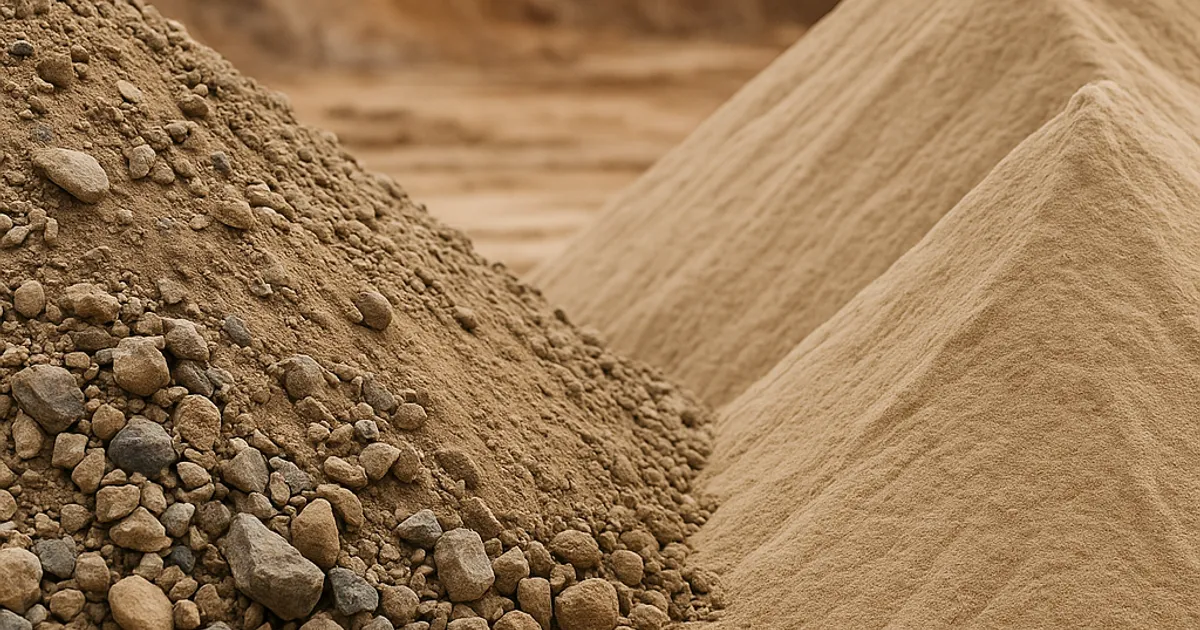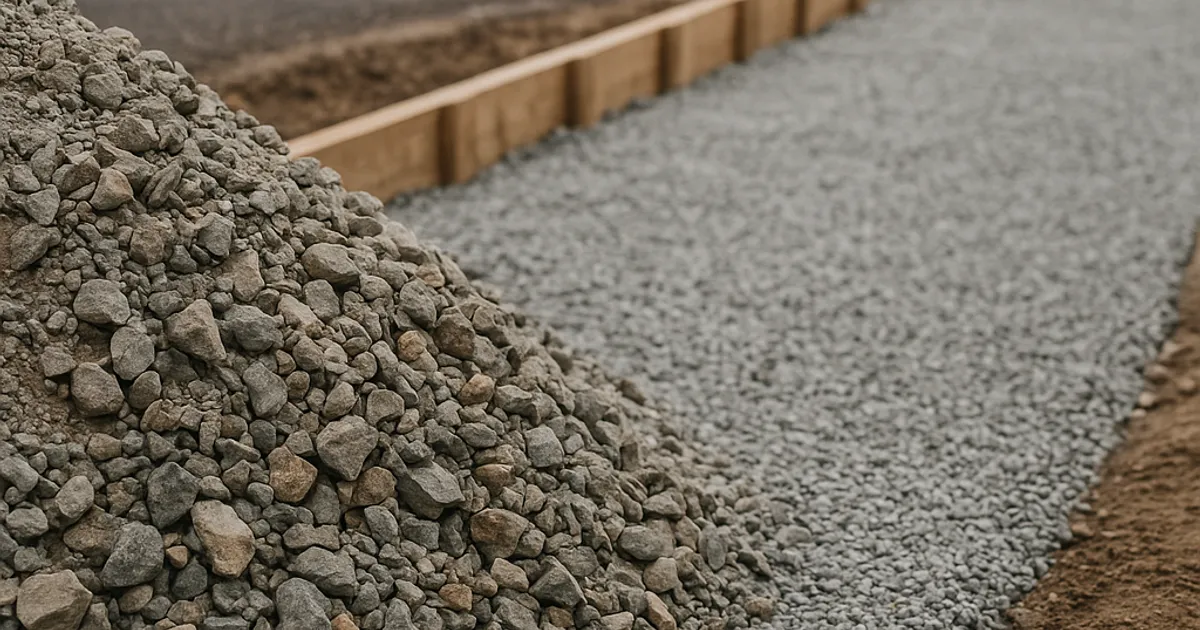
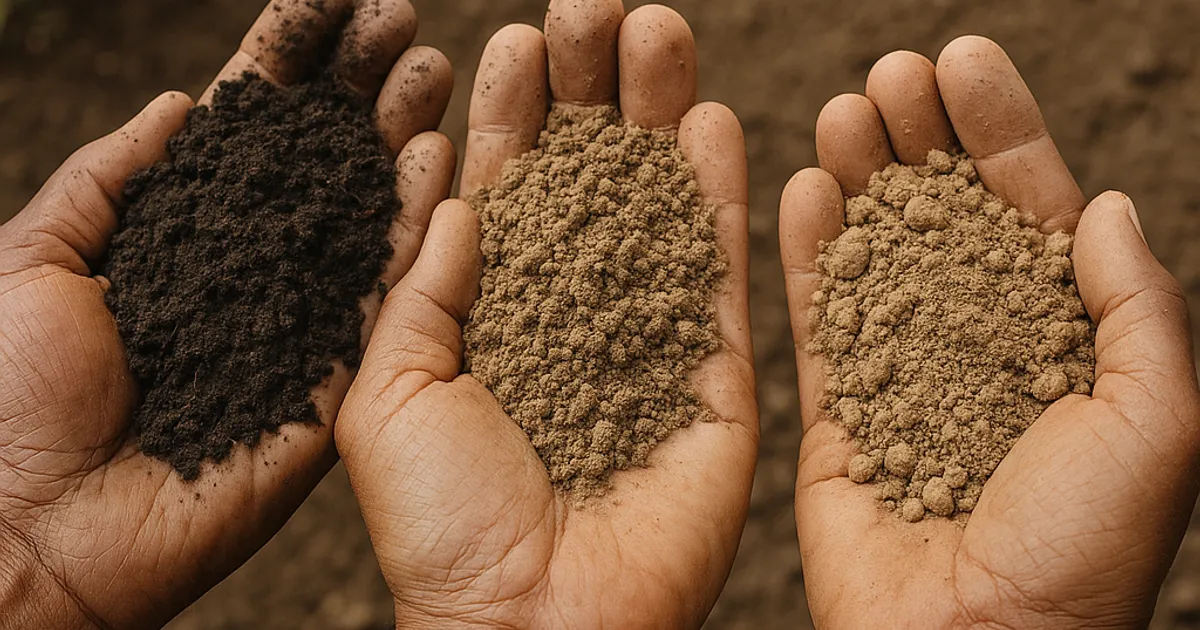
Walk into any hardware store or call any landscaping supplier, and you'll find bags and bulk bins labeled "topsoil," "garden soil," and "fill dirt" sitting within a few feet of each other. To the untrained eye, they all look like... dirt. Brown, earthy, and vaguely similar. But to a contractor, landscaper, civil engineer, or serious gardener, choosing the wrong material can mean dead plants, failed compaction tests, structural settling, or costly re-dos that run well into the tens of thousands of dollars.
The differences between these three soil categories are rooted in geology, organic chemistry, particle size distribution, and intended engineering function. Understanding those differences isn't just academic — it's practical knowledge that saves money, time, and frustration on every project, from a backyard raised bed to a commercial grading job covering dozens of acres.
This guide digs deep (pun intended) into the science and real-world application of topsoil, garden soil, and fill dirt. We'll cover composition, cost benchmarks, regulatory standards, regional sourcing considerations, and the smart strategies professionals use to source the right material at the right price.
What Is Topsoil? The Foundation of the Natural World
Topsoil is the uppermost layer of the Earth's natural soil profile — typically the first 2 to 8 inches of ground surface. It's what nature spent thousands of years building through the decomposition of organic matter, weathering of parent rock, biological activity from microorganisms, earthworms, fungi, and root systems, and the gradual accumulation of nutrients, minerals, and humus.
From a scientific standpoint, topsoil is characterized by its high organic matter content, which typically ranges from 2% to 10% by weight depending on the region and land use history. According to the USDA Natural Resources Conservation Service (NRCS), healthy topsoil contains billions of microbial organisms per teaspoon — a living ecosystem that drives nutrient cycling and supports plant growth.
Topsoil Composition and Characteristics
Topsoil is generally classified by its texture — the ratio of sand, silt, and clay particles it contains. The ideal topsoil for most applications falls into the "loam" category, with a texture profile of roughly:
- Sand: 25–50%
- Silt: 25–50%
- Clay: 10–25%
- Organic matter: 2–10%
This balance gives loamy topsoil its trademark characteristics: good drainage (thanks to sand), moisture retention (thanks to silt and clay), and nutrient-holding capacity (thanks to organic matter and clay particles with high cation exchange capacity).
In terms of pH, topsoil typically ranges from 6.0 to 7.5, though this varies significantly by region. Soils in the Pacific Northwest — like those around dirt exchange in Seattle — tend to be more acidic due to high rainfall leaching base cations. Soils in arid regions like dirt exchange in Denver or the Southwest are often more alkaline.
Grades of Topsoil
Not all topsoil is the same quality. The industry generally recognizes three informal grades:
| Grade | Description | Best Use |
|---|---|---|
| Premium/Select | High organic content, screened to remove debris, consistent texture | Lawn establishment, garden beds, high-value landscaping |
| General Purpose | Moderate organic matter, may contain small stones or clay clumps | Filling low spots, general landscaping |
| Economy/Bulk | Minimally processed, variable composition | Large-volume grading, base layers under premium soil |
Some states and municipalities are beginning to adopt formal topsoil standards. For example, the American Association of State Highway and Transportation Officials (AASHTO) and individual state DOTs often specify minimum organic matter content and particle size distribution for topsoil used in highway revegetation projects.
Topsoil Costs
As of 2024, bulk topsoil prices in the United States range from $12 to $55 per cubic yard for the material itself, before delivery. Delivery adds anywhere from $50 to $200+ per load depending on distance and local trucking rates. Screened premium topsoil in high-demand urban markets — such as dirt exchange in San Francisco or Boston — can run $65 to $90 per cubic yard delivered.
For context, a standard pickup truck bed holds approximately 1 cubic yard of soil; a standard tandem dump truck carries 10 to 14 cubic yards.
What Is Garden Soil? A Manufactured Growing Medium
Here's where many homeowners and even some contractors get confused: garden soil is not simply topsoil. It is an engineered, blended product designed to optimize plant growth in specific contexts — particularly raised beds, containers, and planting areas where the native soil is poor or nonexistent.
While topsoil is a naturally occurring material that's harvested and sold with varying degrees of processing, garden soil is a manufactured product. It typically starts with a base of topsoil or compost and then incorporates a range of amendments to improve its performance for cultivation.
What Goes Into Garden Soil?
A typical bagged or bulk garden soil blend might contain:
- Compost (aged plant material, food scraps, manure): Provides slow-release nutrients and improves microbial activity
- Peat moss or coco coir: Improves moisture retention and aeration
- Perlite or vermiculite: Creates air pockets to prevent compaction and improve drainage
- Bark fines or wood chips: Adds texture and long-term organic matter
- Fertilizers: Often added in bagged products for immediate plant availability
- Wetting agents: Help hydrophobic organic materials absorb water uniformly
The result is a lightweight, nutrient-rich, highly aerated growing medium that outperforms raw topsoil for intensive plant cultivation — but at a significant cost premium.
Garden Soil Standards and Labeling
Unlike topsoil, which has some regional regulatory standards for erosion control and highway applications, garden soil is largely an unregulated product category. The U.S. Composting Council's Seal of Testing Assurance (STA) program provides third-party verification for compost-based products, and some premium garden soil products carry this certification — a useful indicator of quality for buyers.
The Consumer Reports and university extension programs have repeatedly noted that bagged "garden soil" products vary wildly in actual composition. A 2019 study from Purdue University Extension found that some bagged topsoil and garden soil products contained less than 1% organic matter — barely better than subsoil — making label scrutiny and supplier verification essential.
Garden Soil vs. Potting Mix: Don't Confuse Them
It's worth noting that garden soil is not the same as potting mix, even though both are sold for plant cultivation. Garden soil is intended for in-ground or raised bed use and is too dense for container gardening. Potting mixes are typically soilless, composed almost entirely of peat, perlite, and bark, designed to be lightweight and free-draining for container environments.
Garden Soil Costs
Bagged garden soil from major retailers (Miracle-Gro, Scotts, Black Gold, etc.) typically runs $5 to $12 per cubic foot at retail, which translates to roughly $135 to $324 per cubic yard — significantly more expensive than bulk topsoil. Bulk garden soil blends from local suppliers are more economical, typically ranging from $35 to $80 per cubic yard depending on composition and region.
What Is Fill Dirt? The Workhorse of Construction
Fill dirt is a fundamentally different animal from topsoil and garden soil. Where topsoil and garden soil are valued for their biological activity and fertility, fill dirt is valued for precisely the opposite: it should be inert, stable, and compactable.
Fill dirt typically comes from excavation projects — foundation digging, road cuts, utility trenching, site grading — and consists primarily of subsoil: the mineral soil layers found below the topsoil horizon. It may also include clay, rock, gravel, and decomposed stone. The key defining characteristic of good fill dirt is the absence of organic matter, which decomposes over time and causes settling, voids, and structural instability.
Why Organic Matter Is the Enemy of Fill
This is counterintuitive to many people: the organic matter that makes topsoil so valuable actually makes it terrible as structural fill. Here's why:
Organic matter — roots, wood, plant debris, humus — decomposes over years and decades. As it breaks down underground, it loses volume, creating voids that cause the soil above to settle unevenly. In construction, even modest settlement can crack foundations, buckle pavement, misalign utility lines, and create drainage problems.
ASTM International Standard ASTM D2487, the Unified Soil Classification System (USCS), explicitly classifies soils based on their engineering properties, and highly organic soils (classified as "Pt" — peat) are generally considered unsuitable for structural fill without significant remediation.
Types of Fill Dirt
| Type | Composition | Compaction | Best Use |
|---|---|---|---|
| Clean Fill | Clay, silt, sand with <1% organics | Good to excellent | Foundation pads, road base, general site elevation |
| Select Fill | Granular, well-graded sand and gravel | Excellent | Structural fills near foundations, retaining walls |
| Common Fill | Mixed subsoil, clay-heavy | Moderate | General grading, non-structural raises |
| Engineered Fill | Tested, specified by geotechnical engineer | Verified | Critical structural applications, large commercial projects |
Fill Dirt Compaction Standards
For structural applications, fill dirt must be compacted to meet specific density requirements — typically expressed as a percentage of Proctor density (ASTM D698 for Standard Proctor, ASTM D1557 for Modified Proctor). Residential construction typically requires 90–95% compaction. Commercial and highway projects may require 95–100% Modified Proctor density.
Fill placed in lifts (usually 6 to 12 inches thick) is compacted with vibratory rollers, plate compactors, or sheepsfoot rollers, then tested with a nuclear density gauge or sand cone test to verify compliance. State DOTs maintain their own fill specifications — for example, Caltrans in California references specific R-value and sand equivalent requirements for fill materials used in roadway construction.
Fill Dirt Availability and the Material Exchange Economy
One of the most significant things to understand about fill dirt is that it is often a byproduct of excavation — meaning vast quantities are available for free or very low cost from construction sites that need to remove soil. The challenge is logistics: finding who has dirt, where it is, how much is available, and whether it's clean and suitable for your intended use.
This is exactly the problem that DirtMatch solves. Rather than paying premium prices for hauled-in fill from a quarry or supplier, contractors and developers can use DirtMatch's platform to connect with nearby excavation projects that have surplus fill available — often eliminating material costs entirely and dramatically reducing hauling distances. In dense urban markets like dirt exchange in Los Angeles and dirt exchange in San Diego, where trucking costs and dump fees are high, this kind of material matching can reduce fill acquisition costs by 30–50%.
Fill Dirt Costs
When purchased from a supplier, fill dirt is generally the least expensive of the three soil types:
- Common fill dirt: $5 to $15 per cubic yard (material only)
- Select granular fill: $15 to $30 per cubic yard
- Engineered/tested fill: $25 to $50+ per cubic yard
- Delivery: $50 to $300+ per load depending on distance and truck size
However, when surplus fill from a nearby excavation project is matched to a receiving site — eliminating purchase cost and minimizing haul distance — effective costs can approach zero for the material itself.
Side-by-Side Comparison: Topsoil, Garden Soil, and Fill Dirt
To make the differences crystal clear, here's a comprehensive comparison across the most important characteristics:
| Characteristic | Topsoil | Garden Soil | Fill Dirt |
|---|---|---|---|
| Origin | Natural upper soil horizon | Manufactured blend | Excavated subsoil |
| Organic Matter | 2–10% | 15–40% | <1% (ideally) |
| Texture | Loam to clay-loam | Light, aerated | Variable (clay to gravel) |
| Biological Activity | High | Very high | Low to none |
| Nutrient Content | Moderate | High (amended) | Very low |
| Compactability | Poor to moderate | Very poor | Good to excellent |
| Structural Use | No | No | Yes |
| Plant Growth | Good | Excellent | No |
| Drainage | Moderate | Good to excellent | Variable |
| Cost (bulk, per CY) | $12–$55 | $35–$80 | $5–$30 |
| Typical Depth Used | 2–6 inches | 6–12 inches | 1 foot to many feet |
Soil Contamination: The Hidden Risk Factor
One of the most important — and most overlooked — considerations when sourcing any of these three soil types is contamination. Contaminated soil can expose property owners, contractors, and the public to significant health, liability, and regulatory risks.
Contaminants to Watch For
In topsoil and garden soil:
- Heavy metals (lead, arsenic, cadmium) from historical industrial use, old paint, or pesticide applications
- Petroleum hydrocarbons from fuel spills or underground storage tanks
- Pesticide and herbicide residues
- Weed seeds and invasive plant propagules
In fill dirt:
- Construction debris (concrete, brick, asphalt — "urban fill" or "NYC fill" is notorious for mixed debris)
- Petroleum products
- Solvents and industrial chemicals
- Heavy metals from industrial sites
Regulatory Framework for Soil Quality
The U.S. Environmental Protection Agency (EPA) has established Soil Screening Levels (SSLs) for dozens of contaminants under the Superfund program. Many states have adopted their own cleanup standards — California's Department of Toxic Substances Control (DTSC), for example, maintains Environmental Screening Levels (ESLs) that are often more stringent than federal guidelines.
For commercial fill projects, geotechnical engineers and environmental consultants often require:
- Phase I Environmental Site Assessment (ASTM E1527-21) for source sites
- Phase II testing with soil sampling and laboratory analysis when Phase I reveals concerns
- Waste characterization under state solid waste regulations if soil is being transported off-site
In California, Texas, and several other states, there are specific regulations governing the use of "beneficial reuse" fill — soil from excavation projects that is transported to another site for fill purposes. These regulations may require testing, manifesting, and destination approval.
Weed Contamination in Topsoil
For horticultural applications, weed seed contamination in topsoil is a serious and costly problem. The Weed Science Society of America notes that weed seeds can remain viable in soil for years to decades. Poorly screened or improperly composted topsoil can introduce dozens of weed species to a garden bed, creating ongoing management costs that far exceed the initial soil savings.
Quality suppliers heat-treat or thermally process compost to kill weed seeds (USDA NOP standards require compost reach 131–170°F for several days), and reputable topsoil operations screen material through 3/8-inch to 5/8-inch mesh to remove debris and break up clumps — but not all do.
Choosing the Right Soil for Your Project
Now that we've established what each material is, let's get practical about how to match soil type to project type.
Lawn Establishment and Repair
For establishing a new lawn from seed or sod, topsoil is the right choice. A 2–4 inch layer of quality screened topsoil provides the tilth (loose, workable texture) that grass roots need to establish, while offering enough organic matter for early fertility without the excessive softness that would make the lawn feel spongy underfoot.
If the existing grade is significantly low, the protocol is:
- Bring grade up to within 4–6 inches of finish grade using fill dirt (compacted in lifts)
- Top with 4–6 inches of topsoil
- Seed or sod
Vegetable Gardens and Raised Beds
Garden soil or a high-quality topsoil amended with 30–40% compost is ideal for intensive vegetable production. The USDA recommends raised bed mixes contain at least 25–35% organic matter by volume for optimal vegetable yields. If building a raised bed from scratch, a popular and research-backed mix is:
- 60% topsoil
- 30% compost
- 10% perlite or coarse sand
Foundation and Site Preparation
Fill dirt only — never topsoil or garden soil — should be used for raising grades near foundations, filling utility trenches, or building structural pads. The presence of organic matter causes long-term settlement that can damage foundations. Most residential building codes require fill under slabs and near foundations to be tested for compaction.
Erosion Control and Slope Stabilization
For seeded slopes, highway embankments, and erosion control applications, state DOT specifications typically call for 4–6 inches of topsoil (meeting minimum organic matter content of 2–4%) over compacted fill, followed by seeding or hydraulic mulching. This is one area where topsoil specifications are well-defined and legally binding.
Tree and Shrub Planting
For ornamental trees and shrubs, it's often better to amend the native soil rather than replace it. Research from the University of Florida IFAS Extension shows that backfilling planting holes with dramatically different soil can create a "container effect," where roots circle within the amended zone rather than extending into native soil. Modest amendment — 10–25% compost blended into native soil — typically produces better long-term tree establishment.
Find or Post Dirt, Rock & Aggregate
Join thousands of contractors using DirtMatch to buy, sell, and exchange earthwork materials.
Try DirtMatch FreeRegional Soil Considerations Across the United States
Soil type, availability, and quality vary dramatically by region, and understanding your local geology makes you a smarter buyer.
The Pacific Northwest
The Seattle metro area sits atop glacial soils — a complex mix of glacial till (dense, gravelly, well-compacted clay) and glacial outwash (sandy, well-drained) deposited during the last ice age. Glacial till is often an excellent structural fill material, while outwash sands are prized for drainage applications. Native topsoil in the region tends to be dark and organic-rich due to high rainfall and abundant organic inputs. The dirt exchange in Seattle market benefits from significant construction activity in the tech corridor, generating substantial fill surplus from large excavation projects.
The Colorado Front Range
Denver and Boulder sit at the transition between the Rocky Mountain foothills and the High Plains. Native soils in the area are often clay-heavy bentonite (expansive clay that swells significantly when wet — a nightmare for foundations), overlying shale and sandstone. Fill projects in this region often require geotechnical testing to identify and avoid expansive clay. The dirt exchange in Boulder and dirt exchange in Denver markets are active, with significant residential and commercial development generating both fill surplus and demand.
Southern California
Los Angeles and San Diego sit in a seismically active region where fill quality is taken very seriously. The California Division of Safety of Mines and the California Building Code impose strict requirements on fill placed near habitable structures, requiring compaction testing and engineering certification for fills exceeding certain depths. The region's Mediterranean climate means irrigation is required for most landscaping, making soil water retention characteristics critical for topsoil and garden soil applications.
The Northeast
Boston and the broader New England region are characterized by glacial soils, rocky ledge, and variable glacial deposits. Rocky fill (ledge rock, broken granite, and gneiss) from blasting operations is a major fill material in the region. Topsoil quality varies widely; historically developed areas often have contaminated or disturbed soils. The dirt exchange in Boston market is shaped by dense urban development, Big Dig legacy infrastructure, and ongoing transit and utility projects.
How to Evaluate Soil Quality Before You Buy
Whether you're purchasing topsoil for a landscape project or accepting fill dirt from an excavation, performing due diligence before the material arrives on-site saves significant headaches.
Visual Inspection Checklist
For topsoil:
- Dark brown to black color (indicates organic matter)
- Crumbly, not sticky or plasticky
- Earthy smell (not sour or chemical)
- Minimal debris (rocks, roots, chunks of clay)
- No visible contamination (staining, sheen, debris)
For fill dirt:
- Consistent, mineral color (tan, gray, reddish — no dark organic layers)
- Absence of debris (construction waste, roots, stumps)
- No petroleum sheen or chemical odor
- Identifiable source and documentation of origin
Laboratory Testing
For topsoil, a basic soil test through a university extension lab ($15–$30) or commercial lab ($30–$100+) provides:
- pH
- Organic matter %
- Macronutrients (N, P, K)
- Secondary nutrients (Ca, Mg, S)
- Texture analysis (optional, $30–$60 additional)
For fill dirt used in structural applications, a geotechnical laboratory performs:
- Proctor compaction test (ASTM D698 or D1557): Determines maximum dry density and optimum moisture content
- Atterberg limits (ASTM D4318): Measures plasticity of fine-grained soils
- Grain size analysis (ASTM D422): Particle size distribution
- Organic content test (ASTM D2974): Quantifies organic matter percentage
- Swell/shrink testing: Critical for expansive soils
Geotechnical testing for fill typically costs $500 to $3,000+ depending on the number of samples and tests required.
Documentation You Should Demand
For large fill projects, responsible contractors and buyers should request:
- Site of origin documentation (address, previous land use)
- Phase I or Phase II ESA reports if from industrial or commercial sites
- Laboratory test results
- Volume/weight tickets from transport
- Chain of custody documentation
For those sourcing fill through a matching platform, knowing exactly where material originates is essential. When you get started with DirtMatch, project listings include material descriptions, source site information, and testing status — giving receiving sites the transparency they need to make confident sourcing decisions.
The Economics of Soil: Cost Optimization Strategies for Contractors and Developers
For earthwork professionals, material costs are one of the largest controllable variables in project budgets. Here's how smart operators minimize soil costs without compromising quality.
Strategy 1: Match Surplus Fill with Receiving Sites
Every excavation project generates fill that has to go somewhere. Every grading project needs fill to come from somewhere. Traditionally, the two were connected by brokers, word-of-mouth, or expensive hauls to and from commercial fill sites. Material matching platforms have changed this equation dramatically.
By connecting surplus and demand, DirtMatch enables contractors to find nearby fill sources, dramatically cutting haul distances and eliminating or reducing material purchase costs. In dense metro areas where dump fees run $40–$80 per ton and hauling costs $8–$15 per mile per load, reducing a 20-mile haul to a 3-mile haul can save thousands of dollars per project. Understanding how DirtMatch works takes only a few minutes, and the platform covers both single-project users and contractors with ongoing material management needs.
Strategy 2: Specify Correctly to Avoid Overspending
A common budget error is specifying expensive topsoil for areas where it isn't needed. Consider:
- Non-planted, paved, or covered areas: fill dirt only
- Lawn areas: 3–4 inches of topsoil over fill is sufficient
- Annual flower beds: moderate-quality topsoil, amended with compost
- Vegetable gardens: invest in high-quality garden soil or custom blend
Strategy 3: Source Topsoil Locally from Land Clearing
Land clearing and site grubbing operations strip and stockpile topsoil. This material is often available at significantly below-market prices — or even free with haul-away — from developers who need to dispose of it. Local landscaping networks and material exchanges can surface these opportunities.
Strategy 4: Compost Amendments as Topsoil Extenders
For large landscape projects, purchasing bulk compost ($20–$40/CY) and blending with moderate-quality topsoil ($15–$25/CY) often produces a better horticultural product at lower cost than purchasing premium topsoil. University trials at Cornell and UC Davis have consistently shown that compost-amended moderate soils outperform unamended "premium" topsoil for plant establishment after the first growing season.
Strategy 5: Volume Estimation Accuracy
A critical cost control measure: accurately estimate material volumes to avoid over-ordering (wasteful) or under-ordering (project delays). The standard conversion factors are:
- 1 cubic yard = 27 cubic feet
- 1 ton of topsoil ≈ 0.8–1.0 cubic yards (depending on moisture)
- 1 ton of fill dirt ≈ 0.6–0.9 cubic yards (clay-heavy fills are denser)
- Compaction factor: fill typically settles 10–25% after compaction (order accordingly)
Environmental and Sustainability Considerations
The movement of soil is not a neutral environmental act. Responsible earthwork professionals increasingly consider the ecological and regulatory implications of soil sourcing and disposal.
Stormwater and Erosion Control
Bare soil — whether topsoil stockpiles or graded fill areas — is a major source of stormwater pollutants. EPA's National Pollutant Discharge Elimination System (NPDES) Construction General Permit requires sites disturbing one acre or more to implement a Stormwater Pollution Prevention Plan (SWPPP). Exposed topsoil and fill must be stabilized with erosion controls (silt fencing, hydromulch, rolled erosion control products) within specified timeframes — often 14 to 21 days.
Soil Carbon Sequestration
Topsoil management has emerged as a climate change issue. Healthy topsoil stores approximately 10 billion tons of carbon globally according to USDA estimates. Poor agricultural and construction practices that disturb or bury topsoil release stored carbon and degrade soil health. Increasingly, green building standards like LEED and SITES encourage topsoil preservation — stripping and stockpiling topsoil before construction, then replacing it post-grade — rather than allowing it to be buried or carted away.
Invasive Species Vectors
Soil movement can transport invasive plant seeds, soil pathogens, and pest insects to new areas. Several states have regulations restricting the movement of soil from areas known to harbor invasive species. The Emerald Ash Borer, for example, can spread in soil and wood debris, leading to state-level restrictions on soil movement from affected counties.
Working with Suppliers: Questions to Ask Before You Buy
Whether you're a homeowner buying a few yards of topsoil or a contractor sourcing hundreds of yards of fill, the questions you ask a supplier reveal a lot about the material quality.
For Topsoil Suppliers:
- What is the approximate organic matter content?
- Has the material been screened, and to what mesh size?
- Where was the topsoil sourced — residential land clearing, farm fields, or other?
- Has it been tested for pH, nutrients, or contaminants?
- Is there a soil test report available?
- What is the texture classification (sandy loam, loam, clay loam)?
For Fill Dirt Sources:
- What is the address of the source site and its previous land use?
- Has the material been tested for contaminants?
- Is there a Phase I or Phase II ESA for the source site?
- What is the approximate clay/silt/sand breakdown?
- Are there any signs of petroleum, chemicals, or construction debris?
- What compaction characteristics can you expect?
Red Flags to Watch For
- Vague answers about material origin
- Reluctance to provide documentation
- Unusually low pricing (may indicate contaminated or mixed material)
- Visual signs of debris, discoloration, or chemical odor
- Inconsistent color or texture in stockpiles
For contractors who regularly need to source or dispose of fill, having a reliable network of vetted material sources is invaluable. Platforms like DirtMatch maintain project and material listings that include source information, helping users make informed decisions about fill acceptance — reducing liability risk and ensuring material suitability before the trucks roll.
Practical Step-by-Step Guide: Selecting Soil for Common Projects
Project: Establishing a New Lawn on a Construction Lot
- Assess existing grade — identify low spots and determine target finish grade
- Remove debris — clear construction waste, rocks, and debris from subgrade
- Install fill dirt — bring low areas to within 4–6" of finish grade using compacted fill (90%+ Proctor)
- Install topsoil — spread 4–6" screened topsoil, lightly raked level
- Soil test — if budget allows, test pH and nutrients, amend as needed
- Seed or sod — following agronomic recommendations for your region and grass species
- Erosion control — apply straw mulch or erosion control blankets on slopes
Project: Building a Raised Vegetable Garden
- Choose location — minimum 6 hours direct sun, accessible water source
- Frame construction — cedar, pine, or composite lumber, typically 8–12" deep
- Base layer (optional) — hardware cloth to prevent burrowing pests
- Soil blend — mix 60% quality topsoil or compost, 30% finished compost, 10% perlite
- Initial fertility — incorporate balanced granular fertilizer per soil test recommendations
- Mulch — 2–3" organic mulch between plants to retain moisture and suppress weeds
Project: Filling Low Spots Near Foundation
- Identify low spots — grade should slope away from foundation at 5–6% for 10 feet
- Select fill material — use clean fill dirt with low clay content to minimize heave
- Avoid topsoil — organic matter will settle and undermine grading goals
- Place in lifts — compact in 6" layers if filling more than 12" total depth
- Final grade with topsoil — 2–3" topsoil and seed for finished appearance
- Maintain grade — inspect and adjust annually; organic matter in topsoil will gradually compress
Conclusion: The Right Soil for the Right Job
Topsoil, garden soil, and fill dirt each serve essential — and distinctly different — purposes. Topsoil is the ecological workhorse of the natural world, built over millennia and invaluable for establishing vegetation and supporting plant growth. Garden soil is a precision tool for intensive cultivation, engineered to maximize plant performance in controlled environments. Fill dirt is the structural backbone of earthwork, providing stable, inert mass for grading, building, and infrastructure.
Using these materials correctly requires understanding their composition, engineering properties, regulatory requirements, and cost structures. It requires evaluating suppliers carefully, demanding documentation for large projects, and thinking strategically about how soil sourcing decisions affect project budgets, timelines, and long-term performance.
For earthwork professionals and large-scale buyers, the opportunity to reduce material costs through intelligent matching of surplus fill with project demand is substantial. Whether you're managing a commercial development in Southern California, a landscaping project in the Pacific Northwest, or a grading job on the Front Range, sourcing the right soil at the right price makes the difference between a profitable project and a costly one.
The dirt beneath our feet is anything but simple — and treating it that way pays dividends on every project you take on.