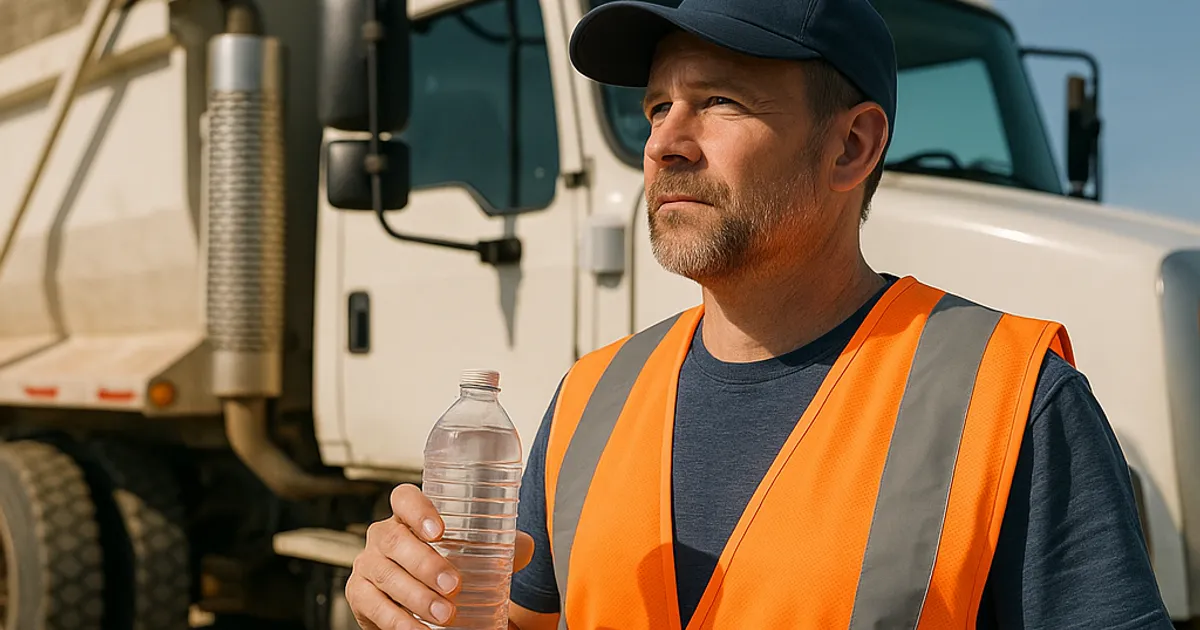

When the economy contracts, construction slows, development projects stall, and the phones in trucking and excavating offices stop ringing as frequently. For an industry that operates on thin margins even in good times — typical net profit margins for trucking companies hover between 2% and 6% according to the American Trucking Associations — a downturn doesn't just sting. It can threaten the existence of businesses that took decades to build.
But economic slowdowns are not extinction events for well-managed contractors. History shows that recessions create winners as well as losers. The companies that survive — and even grow — during lean periods share common traits: disciplined cost management, diversified revenue streams, strong customer relationships, and a willingness to embrace technology that gives them a competitive edge. The 2008–2009 financial crisis wiped out thousands of construction-related businesses, yet a significant number of trucking and excavating firms not only endured but emerged stronger, having captured market share from competitors who weren't prepared.
This guide is built for owners and operators of trucking and excavating companies who are looking hard at their businesses right now and asking: What do we do when the work dries up? We'll cover everything from operational cost reduction and fleet management to digital tools, diversification strategies, government contracting, and the kind of long-term resilience planning that separates businesses that thrive from those that merely survive.
Understanding the Economic Landscape for Earthwork and Trucking
Before you can navigate a slow economy, you need to understand what's actually happening in the market — and why trucking and excavating businesses are particularly vulnerable to economic cycles.
Why These Industries Are Cyclically Sensitive
Construction is one of the most cyclically sensitive sectors of the economy. According to data from the U.S. Bureau of Labor Statistics, construction employment can swing by 15–20% between expansion and recession periods, far more than the broader economy. Earthwork and excavation are early-stage construction activities, meaning they feel slowdowns before the broader industry does. When developers stop pulling permits, excavators stop getting called.
Heavy trucking tied to construction — hauling dirt, aggregate, rock, concrete rubble, and fill material — is similarly front-loaded in the construction cycle. A single stalled commercial development might eliminate 60–100 truck loads per week from a regional market. Multiply that across a metro area and the impact on independent owner-operators and small fleets is immediate and severe.
Key Economic Indicators to Watch
Smart operators watch leading indicators rather than lagging ones:
- Housing starts and building permits (released monthly by the Census Bureau) — a drop in permit issuance precedes excavation slowdowns by 2–4 months
- Dodge Momentum Index — tracks commercial real estate planning, a reliable predictor of future excavation demand
- Diesel fuel prices — directly impact operating costs and often correlate with broader economic stress
- Federal Reserve interest rate decisions — higher rates slow construction lending and development activity almost immediately
- State DOT budget announcements — infrastructure spending is often counter-cyclical, increasing during recessions as stimulus
Understanding these signals gives you a 60–90 day runway to make operational adjustments before cash flow problems become existential.
The 2024–2025 Market Reality
As of 2024–2025, the earthwork and trucking sector faces a unique combination of pressures: elevated interest rates cooling commercial real estate development, rising equipment costs (new excavator prices increased 18–22% between 2020 and 2024), insurance premium increases averaging 8–12% annually, and a persistent driver shortage estimated at over 80,000 drivers according to ATA research. At the same time, federal infrastructure spending through the Infrastructure Investment and Jobs Act (IIJA) is pumping billions into roads, bridges, and utilities — creating pockets of strong demand even amid broader slowness.
The takeaway: the market isn't uniformly slow. It's segmented. The businesses that know where the work is — and can access it efficiently — win.
Ruthless Cost Management: Protecting Your Margins
In a slow economy, revenue is harder to generate and every dollar of cost savings goes directly to the bottom line. Cost management isn't about slashing blindly — it's about understanding exactly where your money goes and making strategic cuts that don't impair your capacity to work.
Conduct a Full Cost Audit
Start with a detailed line-by-line review of every expense category:
Fixed Costs to Examine:
- Equipment loan and lease payments
- Insurance premiums (liability, equipment, workers' comp, cargo)
- Facility rent or mortgage
- Software subscriptions and administrative costs
- Salaried staff
Variable Costs to Optimize:
- Fuel consumption per mile and per hour
- Maintenance and repair frequency
- Subcontractor costs
- Overtime labor
- Aggregate, fill material, and disposal fees
For trucking operations, fuel typically represents 35–45% of total operating costs. Even a 5% improvement in fuel efficiency across a fleet of 10 trucks running 100,000 miles per year can save $15,000–$25,000 annually depending on diesel prices.
Fleet Right-Sizing
One of the most painful but necessary steps during a downturn is right-sizing your fleet. Equipment sitting idle costs money every day — loan payments, insurance, depreciation, and storage. A rough industry benchmark: idle equipment should be liquidated if it hasn't generated revenue for 60+ consecutive days and there's no credible work pipeline.
Consider:
- Selling underperforming units on the secondary market (values remain relatively strong for late-model equipment through 2024)
- Subletting equipment to other contractors on a daily or weekly rental basis
- Renegotiating lease terms — many lenders and leasing companies would rather restructure than repossess
Fuel Management Strategies
With diesel averaging $3.50–$4.50/gallon nationally in recent years, fuel management is a high-leverage area:
- Install telematics systems to monitor idle time — the average commercial truck idles 6–8 hours per day, burning roughly 0.8 gallons/hour
- Implement fuel card programs (Fleetcor, WEX, Shell Fleet) that provide bulk pricing and detailed consumption reporting
- Train drivers on eco-driving techniques — smooth acceleration, proper tire inflation, and route optimization can improve fuel economy by 10–15%
- Consider aerodynamic upgrades for long-haul trucks (side skirts, boat tails) that can improve highway fuel economy by 5–7%
Insurance Premium Reduction
Construction-related insurance is expensive and getting more so. Strategies to reduce premiums without sacrificing coverage:
- Increase deductibles on equipment coverage if you have cash reserves
- Shop coverage annually — don't auto-renew without getting at least 3 competing quotes
- Implement formal safety programs — documented safety training and incident tracking can qualify you for premium credits of 5–15%
- Bundle policies with a single carrier for multi-policy discounts
- Review workers' compensation classifications — misclassification is common and can result in significant overpayment
Revenue Diversification: Finding Work in New Places
Contracting businesses that depend on a single customer segment or project type are inherently fragile. Diversification isn't just a growth strategy — in a slow economy, it's a survival strategy.
Infrastructure and Public Works Projects
While private commercial development slows dramatically during recessions, public infrastructure spending often increases. The federal Infrastructure Investment and Jobs Act allocated $1.2 trillion over a decade, including:
- $110 billion for roads and bridges
- $66 billion for passenger and freight rail
- $55 billion for water infrastructure
- $65 billion for broadband expansion (which requires significant trenching and conduit work)
State DOTs regularly award contracts for grading, earthwork, drainage, and aggregate hauling — work that perfectly matches the capabilities of most excavating and trucking firms. Getting on approved vendor lists takes time, but the investment pays off in steady, recession-resistant revenue.
How to Access Public Contracts:
- Register on SAM.gov for federal contracting opportunities
- Contact your State DOT's contractor prequalification office
- Monitor state and local bid boards (most states have online portals)
- Consider pursuing DBE (Disadvantaged Business Enterprise) certification if you qualify — it opens additional bidding opportunities
Material Hauling and Dirt Brokering
One of the most underappreciated revenue streams for excavating and trucking businesses during slow periods is material exchange — connecting sites that have surplus dirt, rock, or aggregate with sites that need it. This can eliminate or dramatically reduce disposal costs while generating hauling revenue.
This is precisely the problem that DirtMatch was built to solve. The platform connects contractors who have excess excavated material with those who need fill, enabling both sides to reduce costs and keep trucks moving even when primary construction work is scarce. During slow periods when traditional project work is thin, material hauling can fill scheduling gaps and keep drivers and equipment generating revenue.
Utility and Telecommunications Work
Telco infrastructure buildout — fiber optic, 5G, and broadband expansion — continued aggressively even during the 2020 economic contraction. This work requires significant trenching, boring, and backfill operations. Utility companies and their prime contractors regularly subcontract excavation work, and they tend to operate on their own capital budget cycles that don't perfectly correlate with private real estate development.
Environmental Remediation
Soil remediation, contaminated site cleanup, and environmental earthwork projects are another recession-resistant niche. The EPA's Superfund program and RCRA corrective action requirements generate steady excavation work regardless of economic conditions. This market requires some specialized knowledge and potentially additional certifications, but the work is often less competitive than standard construction excavation.
Residential Services During Commercial Slowdowns
When commercial work slows, residential can partially fill the gap. Services like:
- Septic system installation and repair
- Drainage and grading work
- Pool excavation
- Driveway installation and gravel hauling
- Land clearing
...tend to be smaller in scale but require less capital commitment, often pay faster, and can be marketed directly to homeowners through digital channels.
Technology Adoption: Doing More With Less
Economic downturns accelerate technology adoption among survivors. Companies that invest in the right tools during slow periods emerge with structural cost advantages that persist long after the recovery.
Telematics and Fleet Management
Modern fleet telematics systems (Samsara, Verizon Connect, Geotab) provide real-time GPS tracking, engine diagnostics, driver behavior monitoring, and automated reporting. For an investment of $25–$60 per vehicle per month, operators typically see:
- 10–15% reduction in fuel costs through idle reduction and route optimization
- 20–30% reduction in unauthorized vehicle use
- Significant reduction in maintenance costs through predictive diagnostics
- Lower insurance premiums (many carriers offer 5–10% discounts for telematics-equipped fleets)
The ROI on telematics typically pays back in under 6 months for fleets of 5+ vehicles.
Construction Project Management Software
For excavating businesses, project management software (Procore, B2W Estimate, Heavy Bid, or HCSS) provides bid tracking, cost coding, production reporting, and change order management. During slow economies, accurate bidding becomes even more critical — the margin for error disappears. Software that helps you build accurate cost estimates based on real historical production data from your own fleet can mean the difference between winning profitable jobs and winning jobs that lose money.
Digital Material Matching Platforms
As mentioned earlier, platforms designed specifically for the earthwork industry can dramatically expand your access to hauling opportunities. Understanding how DirtMatch works takes just a few minutes — contractors post available material or material needs, and the platform matches them with nearby opportunities, reducing haul distances, cutting disposal costs, and keeping equipment generating revenue. For trucking companies looking to fill capacity gaps during slow periods, this kind of tool can be the difference between red and black months.
Drone Survey and Site Assessment Technology
Drones equipped with photogrammetry software (DJI + Pix4D, or integrated platforms like DroneDeploy) can produce highly accurate topographic surveys and cut/fill calculations in a fraction of the time and cost of traditional survey methods. For excavating contractors, this capability:
- Enables faster, more accurate bidding
- Reduces rework by catching design issues early
- Provides documentation for dispute resolution
- Can be marketed as a value-added service to attract clients
Drone survey equipment and software can be acquired for $5,000–$15,000 — an investment that can pay back on a single large project.
Cash Flow Management: The Lifeblood of Your Business
More construction businesses fail due to cash flow problems than actual insolvency. You can have a profitable business on paper and still fail if you can't meet payroll. Cash flow management during a slow economy requires deliberate, systematic action.
Accelerate Receivables
- Offer early payment discounts (1–2% net 10) to clients who can pay quickly
- Invoice immediately upon completion of each phase of work — don't batch invoices at month-end
- Require deposits on new work, particularly from clients with whom you don't have a long history
- Use lien rights aggressively — file preliminary notices on every project to preserve your right to lien if payment is slow
- Consider invoice factoring for large receivables — factoring companies advance 80–90% of invoice value for a fee of 1–5%, providing immediate liquidity
Manage Payables Strategically
Conversely, slow your outflows:
- Pay vendors on the last acceptable day within terms — don't pay early
- Negotiate extended payment terms with equipment suppliers and material vendors
- Communicate proactively with creditors if you anticipate payment difficulty — most would rather work with you than pursue collections
Maintain a Cash Reserve
The businesses that survive recessions typically maintain 2–3 months of operating expenses in liquid reserves. Building this reserve during good times — and protecting it fiercely during downturns — provides the runway needed to outlast slow periods. If you don't have reserves built, focus aggressively on profitable work and cost reduction until you do.
Explore Credit Options Before You Need Them
Credit is easiest to obtain when you don't need it. If you haven't already:
- Establish a business line of credit with your bank (SBA lines of credit are available up to $5 million through approved lenders)
- Apply for an SBA 7(a) loan if you need working capital with longer repayment terms
- Check your eligibility for USDA Business & Industry loan programs if you operate in rural areas
Having credit available as a backstop gives you options when cash flow becomes tight.
Workforce Strategy: Retaining Talent Without Breaking the Bank
One of the most difficult challenges in a slow economy is managing your workforce. Labor is your largest variable cost, but experienced operators, drivers with clean CDLs, and skilled laborers are genuinely scarce — and losing them to competitors during a downturn can leave you unable to ramp up when conditions improve.
Strategies for Workforce Management During Slow Periods
Reduce hours before reducing headcount. Cutting from full-time to 32 hours per week preserves more jobs and maintains workforce cohesion better than layoffs that are difficult to reverse.
Cross-train employees. A driver who can also operate a skid steer or excavator is more valuable and more deployable. Cross-training during slow periods costs relatively little and increases labor flexibility.
Be transparent with key employees. Uncertainty kills morale and drives good people to look for other opportunities. Honest communication about business conditions — and your plan to manage through them — builds loyalty.
Consider profit-sharing arrangements that reduce base pay slightly but give employees upside when conditions improve. This can align incentives and reduce fixed labor costs.
Document certifications and training. Use slow periods to get employees certified (OSHA 10, OSHA 30, equipment-specific certifications, hazmat endorsements). Certifications increase employee value and can open doors to more specialized, better-paying work. OSHA training requirements are detailed at OSHA.gov.
Recruiting During Downturns
Counterintuitively, slow economies can be good times to recruit. Competitors laying off workers create a pool of experienced talent. If you have the financial stability to add a key operator or experienced driver at below-peak wages, you can emerge from the downturn with a stronger team than you entered with.
Find or Post Dirt, Rock & Aggregate
Join thousands of contractors using DirtMatch to buy, sell, and exchange earthwork materials.
Try DirtMatch FreeBuilding Customer Relationships That Survive the Cycle
In good economies, contractors can afford to be transactional. In slow economies, relationships are everything. The contractors who maintain deep, trusted relationships with general contractors, developers, and project owners get called first when work does emerge.
Become a Problem-Solver, Not Just a Subcontractor
The highest-value positioning in any economic environment is as someone who makes your customer's life easier, not just someone who performs a task. Offer to:
- Provide value engineering suggestions that can reduce earthwork costs
- Help with permit compliance and environmental requirements
- Assist with material sourcing and disposal logistics
- Provide accurate quantity takeoffs and schedule input
General contractors who trust your expertise will bring you into projects earlier and keep you on their preferred vendor lists through slow periods.
Nurture Relationships Proactively
Don't wait for bid invitations. During slow periods:
- Visit key GC contacts in person
- Share market intelligence (you know about material prices, soil conditions, regional permit timelines)
- Refer business to GCs from your network — reciprocity is powerful
- Stay connected via LinkedIn and industry associations
Offer Flexible Pricing Structures
During slow economies, even well-funded developers are watching costs carefully. Consider offering:
- Unit pricing (per cubic yard, per ton-mile) that provides transparency and predictability
- Incentive clauses for early completion
- Value engineering guarantees — commit to finding X% in savings or refund the difference
Flexibility in pricing structure, not just price itself, can differentiate you from competitors.
Strategic Bidding: Win the Right Jobs, Not Just Any Job
In a slow economy, the temptation to bid low and win work at any cost is powerful — and dangerous. Unprofitable jobs destroy cash flow, tie up equipment that could be earning on better opportunities, and can lead to disputes and liens that damage your reputation.
Know Your True Costs
Before bidding any job, you must know your actual cost per hour for every piece of equipment, your fully-loaded labor costs (including benefits, workers' comp, and payroll taxes — typically 1.3–1.5x base wages), and your overhead allocation. Many contractors bid based on instinct or what they think the market will bear, without knowing whether the job is actually profitable at that price.
Build a proper cost model that includes:
- Equipment ownership cost (depreciation + financing) per hour
- Equipment operating cost (fuel, maintenance, tires) per hour
- Labor cost fully loaded per hour
- Overhead allocation (what portion of your fixed costs this job must cover)
- Risk contingency (5–15% depending on project complexity and unknowns)
Your floor price is the number below which you lose money. Know that number cold.
Use Selective Bidding
Bidding takes time and money. During slow periods, the temptation is to bid everything. The smarter approach is to be selective:
| Job Characteristic | Favorable | Unfavorable |
|---|---|---|
| Customer relationship | Established, trusted | New, unknown |
| Payment terms | Net 30 or better, joint check | 60+ days, GC discretion |
| Site conditions | Known, accessible | Unknown, complex |
| Scope definition | Clear, complete plans | Vague, incomplete |
| Competition | 2–3 bidders | 8+ bidders |
| Material disposal | Reuse on-site | Long haul to disposal |
| Contract terms | Balanced | One-sided, no lien rights |
Jobs with multiple unfavorable characteristics should either command a significant risk premium or be passed on entirely.
Geographic Expansion of Your Bid Area
If your local market is particularly slow, consider expanding your geographic bidding radius. For trucking operations, even a 30–50 mile expansion can open significantly more opportunity. For excavating work, larger projects may justify mobilizing further from your yard. Platforms like DirtMatch can be valuable here — they surface material hauling opportunities across broader geographic areas, helping contractors find work that pure local networking wouldn't reveal.
Government Contracting and Public-Sector Opportunities
Public sector work is one of the most reliable sources of revenue during economic downturns, and it's significantly underutilized by small and mid-size earthwork contractors who don't understand the process.
Federal, State, and Local Opportunities
The federal government spends over $600 billion annually on contracts, with a specific mandate that 23% of that spending go to small businesses. State and local governments add hundreds of billions more. For earthwork and trucking businesses, relevant opportunities include:
- State DOT projects — grading, earthwork, aggregate hauling, drainage
- Army Corps of Engineers — flood control, levee work, dredging
- Bureau of Land Management — road maintenance, erosion control
- Local municipalities — street repair, utility work, parks development
- School districts and public universities — campus development and renovation
Becoming a Certified Small Business Contractor
The SBA's small business certifications (8(a) Business Development, HUBZone, WOSB, VOSB, SDVOSB) can provide significant competitive advantages in public contracting. Some contracts are set aside exclusively for certified small businesses, reducing competition dramatically.
The certification process takes 3–6 months but can be done proactively while you're managing your current workload.
Teaming Arrangements
Small contractors can access larger public contracts by teaming with other firms — one provides bonding capacity, another brings specialized equipment or certifications. Formal teaming agreements and mentor-protégé relationships are recognized and encouraged in federal contracting.
Leveraging Digital Platforms to Find and Fill Work
The construction industry has historically relied on personal networks and word of mouth for work acquisition. While relationships remain essential, digital platforms have fundamentally changed how efficiently contractors can find opportunities — particularly important when the market is slow and every lead matters.
Material Exchange Platforms
For trucking and excavating businesses, one of the highest-value digital tools is a platform that facilitates the exchange of earthen materials. Contractors regularly generate surplus excavated material that needs to be moved, while other sites need fill dirt, clean aggregate, or recycled concrete. Without a matching platform, both parties rely on brokers, phone calls, and luck.
DirtMatch has built a platform specifically for this need — connecting dirt sources with dirt needs across metropolitan markets. If you're in an area like dirt exchange in Denver or the dirt exchange in Los Angeles, you can find posted opportunities for material pickup or delivery in your area, potentially filling your trucks during periods when primary project work is thin. For contractors who have never tried a digital material exchange, getting started is straightforward — get started with DirtMatch and explore what's available in your market.
Social Media and Content Marketing
During slow periods, many contractors reduce marketing spend. The smart ones do the opposite — they increase visibility when competitors go quiet:
- LinkedIn — ideal for B2B relationships with GCs, developers, and engineers
- Instagram/Facebook — effective for reaching residential customers and local builders
- Google Business Profile — critical for local search visibility; ensure yours is complete and actively managed
- YouTube — equipment walkthroughs, project time-lapses, and educational content build credibility and generate organic leads
Content marketing has a cumulative effect — content created during a slow period continues generating leads long after conditions improve.
Online Estimating and Lead Generation
Platforms like BuildingConnected, iSqFt, and SmartBid provide access to invitation-to-bid networks used by GCs and construction managers. Registering on these platforms gives you visibility to projects you might never hear about through your existing network.
Long-Term Resilience: Building a Business That Weathers Any Storm
The contractors who not only survive recessions but emerge stronger from them share a common set of structural characteristics that were built during good times — not scrambled together in crisis.
The Resilience Checklist
Financial Resilience:
- ✅ 90+ days of operating expenses in liquid reserves
- ✅ Revolving line of credit available
- ✅ Equipment debt-to-revenue ratio under 25%
- ✅ Diversified customer base (no single client over 30% of revenue)
Operational Resilience:
- ✅ Documented standard operating procedures for all key functions
- ✅ At least 2 qualified operators for every critical piece of equipment
- ✅ Formal safety program with documented training records
- ✅ Fleet maintenance schedule maintained current
Market Resilience:
- ✅ Active in at least 3 different market segments
- ✅ Government/public sector capability (bonding, certifications)
- ✅ Digital presence and lead generation systems
- ✅ Registered on material exchange and bid platforms
Relationship Resilience:
- ✅ Active relationships with at least 10 GC/developer contacts
- ✅ Membership in relevant industry associations (AGC, NUCA, NTTC)
- ✅ Subcontractor relationships that allow rapid capacity adjustment
The Role of Industry Associations
The Associated General Contractors of America (AGC) and the National Utility Contractors Association (NUCA) provide market intelligence, education, networking, and advocacy that are particularly valuable during economic downturns. Association membership gives you access to industry benchmarking data, legal resources, and a network of peers who are navigating the same challenges.
Planning for the Recovery
Every recession ends. The businesses that have maintained their equipment, retained key personnel, preserved their financial stability, and continued building relationships are positioned to win disproportionate market share in the recovery. Ramp-up is faster when you haven't sold all your equipment or lost all your operators.
Plan explicitly for the recovery:
- Identify equipment you'd want to acquire when conditions improve
- Maintain relationships with key operators and drivers even through reduced hours
- Continue bidding actively to maintain pipeline visibility
- Track the leading indicators discussed earlier so you can move fast when the market turns
Summary: Your Slow-Economy Action Plan
Navigating a slow economy in trucking and excavating isn't about one big move — it's about executing consistently across multiple fronts simultaneously. Here's a condensed action plan:
Immediate (0–30 days):
- Conduct full cost audit and identify 10–15% reduction opportunities
- Review and renegotiate insurance, equipment, and vendor contracts
- Assess fleet and identify idle units for potential liquidation or subletting
- Register on digital platforms for material exchange and bid opportunities
Short-Term (30–90 days):
- Develop or improve digital marketing presence
- Register with state DOT prequalification and public bidding platforms
- Implement telematics if not already in place
- Begin prospecting in new customer segments (utility, remediation, residential)
Medium-Term (90–180 days):
- Pursue SBA certifications if eligible
- Cross-train employees to increase operational flexibility
- Build or strengthen cash reserves
- Formalize relationships with teaming partners for larger public contracts
Ongoing:
- Monitor leading economic indicators monthly
- Nurture GC and developer relationships consistently
- Track all bid wins/losses and refine your pricing model
- Maintain resilience checklist quarterly
The slow economy that seems like a threat today can be the forcing function that makes your business fundamentally stronger than it's ever been. The contractors who emerge from downturns as market leaders didn't just wait for conditions to improve — they used the time to build advantages their competitors weren't willing to build.
The tools, platforms, and strategies covered in this guide are available to every operator willing to do the work. The question is which ones will act.