Dirt is one of the most abundant materials on earth—and somehow, it's always either in the wrong place or impossible to find at the right price. Construction sites generate millions of cubic yards of surplus soil every year, while landscapers, homeowners, and developers scramble to source quality fill at reasonable cost. According to the U.S. Environmental Protection Agency, construction and demolition activities generate over 600 million tons of debris annually in the United States, with excavated soil making up a significant portion of that volume.
The challenge isn't just moving dirt—it's doing it legally, efficiently, and cost-effectively. Whether you're a general contractor sitting on 2,000 cubic yards of surplus clay after a foundation dig, or a homeowner trying to raise a low-lying backyard before the rainy season hits, the steps you take (and skip) will determine whether the project comes in on budget and on schedule—or turns into a logistical nightmare.
This guide covers every must-do for dirt removal and acquisition, from soil classification and regulatory compliance to finding the right match between supply and demand. Let's dig in.
1. Understand What Kind of Soil You're Actually Dealing With
Before you move a single cubic yard, you need to know what type of soil you have or need. Soil is not a monolithic material—its composition dramatically affects its value, usability, and even whether it can legally be moved to certain sites.
Soil Classification Basics
The USDA Natural Resources Conservation Service classifies soils into 12 textural classes based on sand, silt, and clay content. For construction and earthwork purposes, the most relevant categories are:
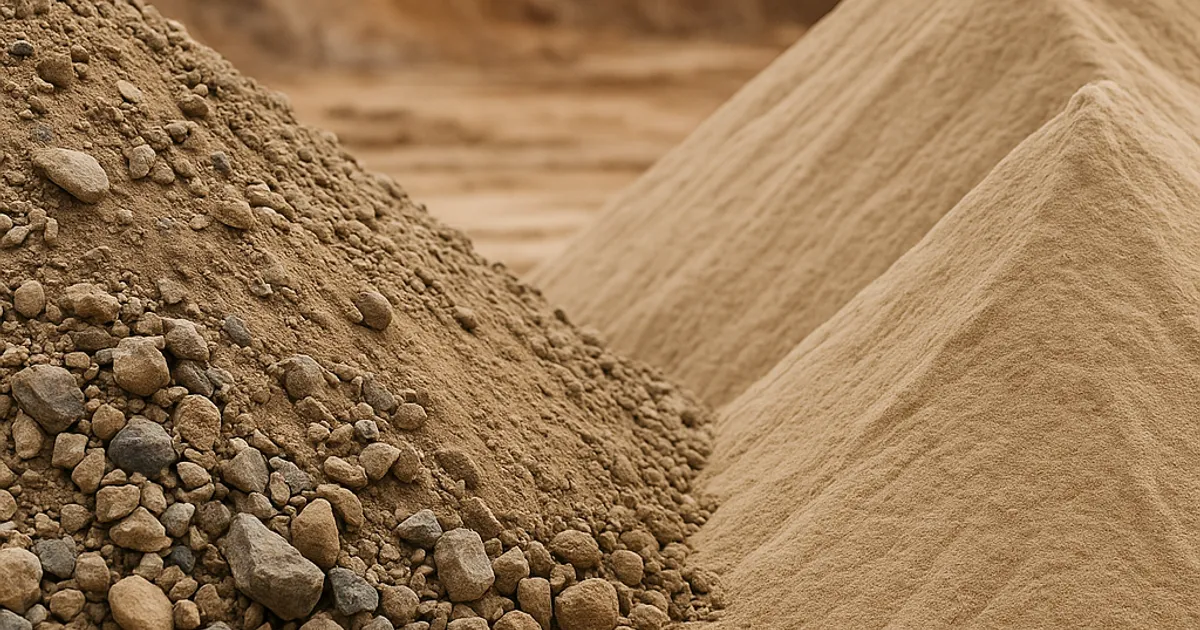
- Clean fill dirt: Inorganic soil free of organic material, debris, or contamination. This is the gold standard for fill applications and is most readily accepted at recipient sites.
- Topsoil: The upper 2–8 inches of soil, rich in organic matter and nutrients. Valuable for landscaping and agricultural applications but generally unsuitable as structural fill.
- Clay: Dense, low-permeability soil that expands and contracts with moisture. Has specific structural uses but is often problematic and difficult to compact properly.
- Sandy loam / silty loam: Moderate drainage, good workability. Often the preferred fill for residential grading.
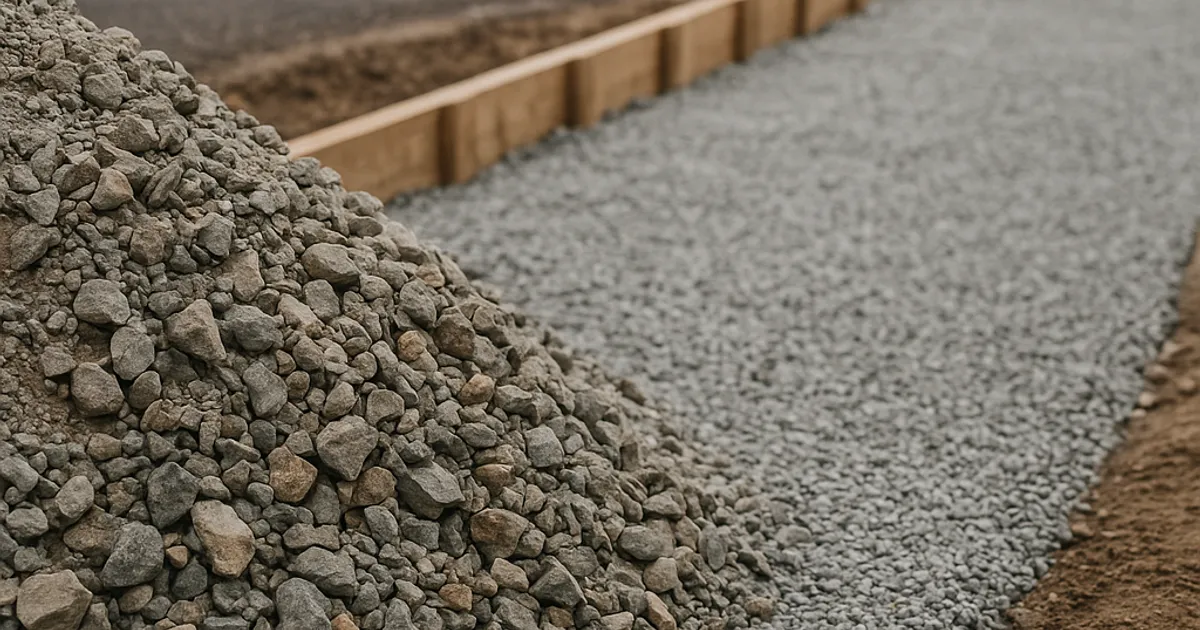
- Rock and aggregate: Includes decomposed granite, rip-rap, crushed stone, and native rock that must be classified separately from soil.
ASTM and OSHA Classification Standards
For trench and excavation work, OSHA's 29 CFR 1926 Subpart P requires all excavated soil to be classified as Type A, Type B, or Type C based on cohesive strength, fissuring, and layering. Type A is the most stable (e.g., cemented soils, hard clay), while Type C includes granular soils, submerged soil, and previously disturbed soil. This classification doesn't just affect worker safety—it can also influence where excavated soil can legally be placed or reused.
ASTM D2487 (the Unified Soil Classification System) is the industry standard for geotechnical classification and is referenced in most state DOT specifications for fill material. Before hauling dirt to or from a site, confirm which classification the material falls under, because it affects both marketability and permitting.
Practical Step: Get a Soil Test First
A basic soil test costs between $15 and $200 depending on depth and parameters. For larger projects, a geotechnical investigation with a boring log can run $500–$3,000. Don't skip this step. Contaminated soil—even soil that looks perfectly clean—can trigger remediation requirements costing tens of thousands of dollars if improperly disposed of.
2. Check for Contamination Before You Move Anything
This is the single most important step that contractors and homeowners routinely skip—and the consequences can be severe. Moving contaminated soil off a site without proper testing and disposal protocols can result in EPA enforcement actions, state environmental agency fines, and personal liability.
What Contaminants to Watch For
Common soil contaminants include:
- Petroleum hydrocarbons (PHCs): Common near gas stations, industrial sites, and older residential properties with underground storage tanks.
- Heavy metals: Lead, arsenic, cadmium, and chromium are frequently found near smelters, industrial corridors, battery manufacturing, and older urban properties.
- Volatile organic compounds (VOCs): Associated with dry cleaners, auto shops, and chemical manufacturing.
- Polychlorinated biphenyls (PCBs): Found near electrical substations and older industrial facilities.
- Asbestos: A concern on any demolition site involving structures built before 1980.
Phase I and Phase II Environmental Site Assessments
For commercial and industrial sites, lenders and buyers typically require a Phase I Environmental Site Assessment (ESA) under ASTM E1527-21 standards. This is a records and visual review that identifies recognized environmental conditions (RECs). If red flags are found, a Phase II ESA involves actual soil and groundwater sampling.
For smaller residential projects, a targeted soil screen test for PHCs and metals is a reasonable starting point. Many state environmental agencies publish lookup tools where you can check if a parcel has a history of reported contamination.
Regulatory Framework: RCRA and State Programs
The federal Resource Conservation and Recovery Act (RCRA) governs the disposal of hazardous waste, including contaminated soil. Under RCRA Subtitle C, hazardous soil must be managed at a permitted treatment, storage, and disposal facility (TSDF). However, most construction soil that is "clean" falls under RCRA's solid waste provisions rather than hazardous waste.
Most states have their own beneficial reuse programs and generic cleanup standards. California's Department of Toxic Substances Control (DTSC), for example, has specific thresholds for reuse of excavated soil under the Voluntary Cleanup Program. Texas operates under TCEQ's Brownfields program. Know your state's rules before you move a single truck.
3. Know the True Cost of Dirt Removal
Dirt removal costs are often underestimated because contractors and homeowners look only at the haul rate and miss the full picture. Here's a realistic breakdown:
Cost Components for Dirt Removal
| Cost Item | Typical Range |
|---|---|
| Excavation (if not already done) | $50–$200 per cubic yard |
| Loading (excavator/loader time) | $75–$150 per hour |
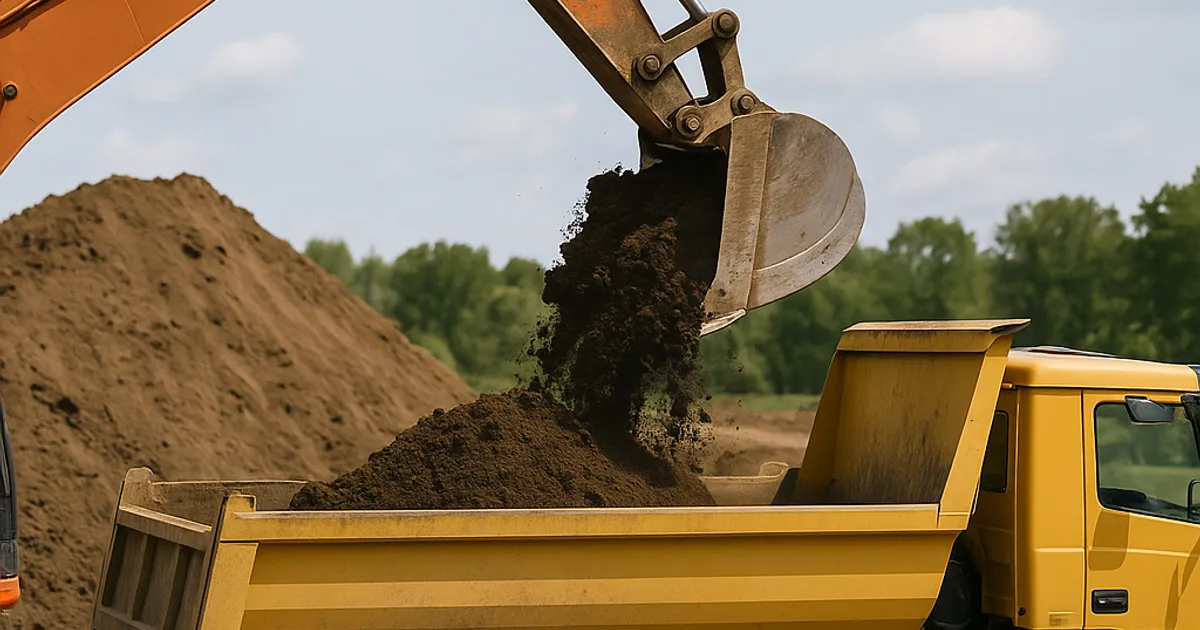
| Trucking (per load, 10–14 CY per truck) | $150–$400 per load |
| Tipping fees at landfill/disposal site | $25–$75 per ton |
| Environmental testing (per sample) | $50–$500 per sample |
| Permits and disposal manifests | $50–$500 per project |
| Site cleanup and compaction at destination | $30–$100 per CY |
For a mid-size residential excavation of 200 cubic yards, total removal costs can range from $3,000 to $12,000—and that's assuming the soil is clean and a tipping facility is nearby. If you're in a dense metro area like San Francisco or Seattle, trucking costs alone can double those figures.
The Economics of Matching Supply and Demand
Here's where smart operators find their margin: instead of paying tipping fees to dump soil at a landfill, they find a nearby project that needs fill. This is the model behind soil exchanges and matching platforms. A contractor who would otherwise pay $4,000 to dispose of 300 cubic yards of clean fill can instead deliver it to a site that needs it—sometimes even charging a delivery fee.
Platforms like DirtMatch facilitate exactly this kind of exchange, connecting contractors who have surplus soil with projects that need fill material, often within the same metro area. By cutting out the landfill and reducing hauling distance, both parties save money—and the environmental impact is reduced significantly.
Fuel and Logistics Costs Are the Hidden Variable
A fully loaded tandem dump truck averages 4–6 miles per gallon of diesel. At current diesel prices (~$3.80/gallon as of 2024), a 30-mile round trip costs roughly $20–$30 in fuel per load. Multiply that by 50 loads and you're looking at $1,000–$1,500 in fuel costs alone. Finding a closer dump site or fill source through a matching platform can eliminate a substantial portion of this overhead.
4. Permitting and Legal Requirements You Cannot Ignore
Moving dirt legally requires more paperwork than most people expect. Skipping permits doesn't just expose you to fines—it can result in stop-work orders, mandatory removal of improperly placed fill, and even criminal liability in extreme cases.
Grading Permits
Most jurisdictions require a grading permit for any earthmoving project that moves more than a certain volume—often 50 cubic yards—or disturbs more than a certain area. California's Building Code (CBC), for example, requires grading permits for cuts or fills exceeding 50 cubic yards under Section 1803. Local municipalities often have even stricter thresholds.
Grading permits typically require submission of a grading plan prepared by a licensed civil engineer, including drainage calculations and erosion control measures.
Stormwater Permits: NPDES Coverage
Federal law under the Clean Water Act requires any construction site disturbing one or more acres to obtain a National Pollutant Discharge Elimination System (NPDES) permit for stormwater discharge. This applies whether you're removing or adding soil. The permit requires implementation of a Stormwater Pollution Prevention Plan (SWPPP) that includes erosion control, sediment barriers, and revegetation requirements.
You can find your state's NPDES construction general permit requirements through EPA's NPDES Construction Resources.
Wetlands and Protected Areas: Section 404
If your project is anywhere near a waterway, wetland, or floodplain, you may need a Section 404 permit from the U.S. Army Corps of Engineers before placing any fill material. Placing fill in jurisdictional wetlands without a permit is a federal offense and can result in mandatory restoration costs that far exceed the value of the project itself.
Fill Material Acceptance Criteria
If you're trying to donate or sell your excess soil to another site, that site's owner or contractor may require documentation proving the material meets their specifications. Common requirements include:
- Soil test results (pH, gradation, organic content)
- Phase I or II ESA for industrial-origin soil
- Proctor compaction test results (ASTM D1557 or D698)
- Material Safety Data Sheet (MSDS) if applicable
Having this documentation ready before you approach potential recipient sites speeds up the acceptance process considerably.
5. Finding Free or Low-Cost Fill Dirt: A Buyer's Playbook
If you need fill dirt, the best deals aren't at the landscaping supply store—they're at construction sites within a few miles of your project. The key is knowing where to look and how to ask.
Where Construction Surplus Soil Comes From
- Foundation excavations: A typical two-car garage foundation can generate 80–150 cubic yards of surplus soil. Residential subdivisions may generate thousands of cubic yards.
- Road and highway projects: State DOT and municipal road projects often have massive surplus cut material, especially in hilly terrain.
- Utility trenching: Water, sewer, and gas line projects generate linear trenches of excavated soil along their entire length.
- Basement additions: Urban infill projects and home additions frequently have small to mid-size volumes of clean fill available.
How to Approach Site Owners or Contractors
Don't just show up at a job site and ask for dirt. Here's the right approach:
- Identify the general contractor or project owner through public permit records (most jurisdictions post these online).
- Contact them with specifics: how many cubic yards you need, your site address, whether you can arrange trucking, and what type of soil you can accept.
- Offer to handle logistics: contractors are more likely to say yes if you remove a burden from them.
- Get a written agreement: even a simple email confirmation that the material is uncontaminated fill protects both parties.
Online Platforms and Matching Tools
The most efficient modern approach is using a dedicated dirt exchange platform. DirtMatch works by allowing contractors and site owners to post surplus soil availability or fill material needs, then algorithmically matches supply with demand based on location, material type, and volume. This eliminates hours of phone calls and site visits. For contractors in cities like Denver or Los Angeles where job sites are dense and hauling costs are high, this kind of platform can identify matches within a 10–20 mile radius that would otherwise never connect.
What to Ask Before Accepting Free Fill
Free isn't always free. Ask these questions before accepting any donated or discounted fill material:
- What is the origin of the soil? (Residential, commercial, industrial?)
- Has the soil been tested? Can you provide results?
- Is there any visible debris, organic material, or discoloration in the soil?
- What is the approximate clay content? (High clay is problematic for structural applications)
- Are there any rocks or oversized material that could cause compaction issues?
6. Logistics Planning: The Art of Moving Dirt Efficiently
The difference between a smooth dirt operation and a chaotic one usually comes down to logistics planning. Here's how professionals approach it.
Calculate Your Volumes Accurately
Soil volume calculations are deceptively complex because soil changes volume when it's disturbed. The three states of soil volume are:
- Bank measure (BCY): Soil in its natural, undisturbed state in the ground.
- Loose measure (LCY): Soil after excavation, which expands by 10–30% depending on type.
- Compacted measure (CCY): Soil after placement and compaction, which shrinks by 10–20% from bank measure.
This means if you excavate 100 BCY of clay, you may load 130 LCY onto trucks, but only fill 85–90 CCY at the destination. Using the right conversion factors prevents costly over- or under-ordering.
Truck Load Optimization
| Truck Type | Approximate Capacity (LCY) | Best Use Case |
|---|---|---|
| Pickup with trailer | 1–3 CY | Small residential projects |
| Single-axle dump truck | 7–10 CY | Mid-size residential |
| Tandem axle dump truck | 12–16 CY | Standard commercial fills |
| Semi-trailer (Super 10) | 18–24 CY | Large commercial/industrial |
| Bottom dump trailer | 20–26 CY | Road projects, large fills |
Matching truck type to project scale is critical. Using 10 pickup loads when 3 tandem axle loads would suffice is a common mistake that multiplies trip costs and labor time.
Haul Road and Access Planning
Before the first truck arrives, verify:
- Weight limits on local roads: Many residential streets and rural bridges have posted weight limits (often 10 tons) that a loaded dump truck will exceed. Check with your county road department.
- Truck turning radius: A tandem dump truck needs roughly a 45-foot turning radius. Can your site accommodate this without damage to curbs, landscaping, or utilities?
- Staging area: Where will trucks queue? On-street staging often requires a traffic control permit.
- Hours of operation: Many municipalities restrict truck traffic to weekday daytime hours. Verify with local ordinances before scheduling early morning or Saturday deliveries.
Erosion and Dust Control During Transport
Uncovered truck loads can scatter debris on public roads—a violation of most state motor vehicle laws and local ordinances. Standard practice includes:
- Tarpaulins over all truck loads
- Wheel wash stations or rumble strips at site exits to prevent tracking mud onto roads
- Watering of active haul roads to suppress dust
- Silt fencing and inlet protection at both origin and destination sites
Find or Post Dirt, Rock & Aggregate
Join thousands of contractors using DirtMatch to buy, sell, and exchange earthwork materials.
Try DirtMatch Free7. Environmental Best Practices for Soil Reuse
The most sustainable outcome for surplus soil is beneficial reuse—getting it to a site where it serves a purpose rather than occupying landfill space. This is increasingly supported by regulatory frameworks across the country.
Beneficial Reuse Programs
Many states now have formal beneficial reuse programs for uncontaminated excavated soil. Under these programs, clean fill that meets established criteria can be reused at permitted sites without triggering hazardous waste disposal requirements. Examples include:
- California DTSC's Excavated Material Reuse Policy: Allows non-hazardous excavated soil to be reused at certain sites with proper documentation.
- New York's Part 360 Solid Waste Regulations: Includes provisions for beneficial use determinations (BUDs) for clean fill.
- Texas TCEQ's MSW rules: Allow clean fill to be reused without a solid waste authorization under certain conditions.
Check your state environmental agency's website for applicable beneficial reuse policies before assuming you need to pay landfill tipping fees.
Carbon Footprint of Dirt Hauling
A fully loaded diesel dump truck emits approximately 1.6 kg of CO₂ per mile. If a contractor makes 50 trips of 30 miles each (to a distant landfill), that's 2,400 miles traveled and roughly 3,840 kg of CO₂ emitted—just for the hauling. Finding a nearby recipient site through a matching platform can cut that distance by 60–80%, dramatically reducing the project's carbon footprint.
For projects in environmentally conscious markets like Seattle, Boulder, or San Francisco, demonstrating reduced hauling distances is an increasingly important part of green building certifications including LEED v4, which awards points under Materials and Resources for construction waste diversion.
Soil Amendments for Improved Reuse Value
Sometimes surplus soil needs minor treatment to become usable fill:
- Lime stabilization: Adding hydrated lime to high-plasticity clay improves workability and compressive strength. Typically 3–8% lime by dry weight reduces plasticity index significantly.
- Portland cement treatment: Similar to lime, adds structural rigidity. Often used for subgrade stabilization.
- Organic amendment: Adding compost to low-nutrient fill improves topsoil quality for revegetation.
These treatments add cost but can dramatically increase the material's value and expand the pool of recipient sites willing to accept it.
8. Special Considerations for Residential Projects
Homeowners face a distinct set of challenges when removing or sourcing dirt. Unlike commercial contractors who have established hauling relationships and equipment, residential projects require more resourcefulness.
Common Residential Dirt Removal Needs
- Basement or crawl space excavation: Adding a basement or converting a crawl space to a livable area generates substantial soil volume.
- Pool installation: A standard 12×24-foot in-ground pool excavation generates approximately 60–90 cubic yards of soil.
- Grading for drainage: Regrading a yard to redirect water away from a foundation is one of the most common residential earthmoving tasks.
- Retaining wall construction: Building a retaining wall often involves backfill of specific material (typically 3/4-inch crushed stone or ASTM No. 57 stone) behind the wall, requiring both removal of native soil and import of suitable drainage material.
Homeowner Tips for Getting Rid of Excess Dirt
- Post on local Facebook groups or Nextdoor: Many homeowners successfully give away small volumes (under 20 CY) this way.
- Contact local landscapers: Landscapers frequently need fill for raised beds, berms, and grading.
- List on a dirt exchange platform: Even small volumes (5–10 CY) are worth posting—a nearby gardener or landscaper may be glad to take it.
- Call local nurseries: Some nurseries blend topsoil products and may accept clean topsoil donations.
- Rent a dumpster: For very small volumes, a debris dumpster (check that soil is allowed—many companies charge extra for dirt's weight) is the most convenient option.
Homeowner Tips for Sourcing Fill Dirt
- Time your project to coincide with nearby construction: Check your neighborhood for active permits using your municipality's permit lookup tool.
- Be flexible on material type: If you need fill for raising grade (not for a garden), almost any clean inorganic fill will work.
- Factor in spreading and compaction: Budget for the labor to spread and compact fill material even if the material itself is free.
- Know your drainage: Adding fill without proper grading can redirect water toward your foundation rather than away from it. Always slope fill away from structures at a minimum 2% grade.
9. Contractor Best Practices: Running a Tight Dirt Operation
For earthwork contractors and general contractors who regularly deal with surplus soil and fill needs, systematizing the process is the difference between profit and loss on earthwork line items.
Build a Network Before You Need It
The worst time to find a dump site is the day you start excavating. Experienced contractors maintain ongoing relationships with:
- Local nurseries and garden centers that accept topsoil
- County road departments that accept clean fill for road shoulder maintenance
- Neighboring development sites with ongoing fill needs
- Aggregate companies that operate fill sites or quarry pits
Pre-negotiated tipping agreements—even informal ones—save enormous time and money when the clock is running on an excavation job.
Documentation and Chain of Custody
For commercial projects, maintaining a material tracking log is essential. This log should record:
- Date and time of each truckload
- Driver name and truck license plate
- Cubic yards or tons per load
- Origin and destination of material
- Any soil test certifications applicable to the batch
This documentation protects you legally if the receiving site later claims the material was contaminated, and it's required for SWPPP compliance on NPDES-covered sites.
Cost-Recovery Strategies for Surplus Soil
Contractors who think creatively about surplus soil can turn a cost center into a modest revenue stream:
- Sell topsoil by the yard: Clean, screened topsoil retails for $25–$65 per cubic yard. If you're generating 500 CY of topsoil from a site clearing operation, that's $12,500–$32,500 in potential revenue.
- Charge delivery fees: Even when giving material away, charge a small delivery or handling fee to cover trucking.
- Partner with landscapers: Establish a standing arrangement where a local landscaping company takes all your surplus topsoil in exchange for a discounted rate on their future fill needs.
Using DirtMatch Pro gives contractors access to advanced matching features, project posting tools, and a broader network of verified soil recipients and providers—tools that can meaningfully reduce the cost and friction of managing surplus material across multiple active job sites.
10. Regional Variations: How Location Changes Everything
Dirt removal and sourcing dynamics vary enormously by region. Urban markets, geography, soil type, and local regulations all shape what's practical and cost-effective.
High-Cost Urban Markets
In cities like Boston, San Francisco, and Los Angeles, trucking costs, permitting complexity, and limited haul road access make dirt management one of the most expensive line items on an excavation project. In dense urban environments, contractors may be forced to use smaller trucks due to street width restrictions, multiplying the number of trips and the overall cost.
For urban contractors managing these challenges, platforms like the dirt exchange in Boston or dirt exchange in Los Angeles help identify the closest possible dump or fill source—critical when every mile of hauling adds measurable cost.
Western Markets: Water, Rock, and Expansive Soils
In Denver, Boulder, and the broader mountain west, contractors commonly encounter expansive soils (high-plasticity clays that swell dramatically when wetted), caliche (calcium carbonate hardpan), and shallow bedrock—all of which require specialized excavation equipment and complicate fill reuse. Colorado's Front Range, for example, has well-documented issues with swelling soils that have caused hundreds of millions of dollars in foundation damage.
The dirt exchange in Denver and dirt exchange in Boulder are particularly active because the construction boom along the Front Range generates enormous volumes of surplus cut material from hillside developments, while lower-elevation infill projects frequently need structural fill.
Pacific Northwest: Wet Soils and Strict Environmental Rules
Seattle and the broader Pacific Northwest present unique challenges: soils are often saturated for much of the year, making them difficult to excavate and virtually impossible to compact properly until they dry out. Washington State Department of Ecology has strict rules around soil disturbance near salmon-bearing streams, and virtually every significant project requires SWPPP compliance and often a Section 404 consultation. The active dirt exchange in Seattle reflects both the high volume of construction and the logistical complexity of managing wet, heavy soils in an urban environment with limited truck routing options.
Southern and Southeastern Markets
In the Southeast, red clay soils (Ultisols) dominate. These soils are cohesive when dry but become extremely slippery and plastic when wet. They're often unwanted as fill because of their drainage issues, but they're usable in certain structural applications when properly compacted. Tipping fees at C&D landfills in the Southeast tend to be lower than in the Northeast, but longer haul distances (due to more rural development patterns) often offset those savings.
11. Technology and Innovation in Dirt Management
The earthwork industry is increasingly adopting technology to solve the fundamental supply-demand mismatch in soil movement.
GPS Fleet Tracking and Load Optimization
Large earthmoving operations now use GPS-enabled fleet management systems to track truck loads in real time, optimize dispatch sequencing, and reduce idle time. Systems like Trakkit and Dump Truck Manager allow dispatchers to see exactly where each truck is in the cycle, preventing bottlenecks at loading and dump sites.
Drone-Based Volume Calculation
Drone photogrammetry has revolutionized stockpile measurement. A qualified operator can fly a site in 20–30 minutes and generate a 3D point cloud accurate to within 1–2% of actual volume. This eliminates the error inherent in traditional survey methods and prevents costly disputes about how much material was actually moved.
Digital Soil Exchanges
The most significant technological advancement for the broader industry is the rise of digital soil exchange platforms. These platforms solve a market inefficiency that has existed since construction began: two projects five miles apart, one with surplus soil and one with a fill need, simply not knowing about each other. By aggregating supply and demand data geographically, these platforms enable matches that would otherwise never happen.
DirtMatch is purpose-built for this function, with a matching engine designed specifically for the dirt, rock, and aggregate market. Contractors can post available material with details on volume, soil type, location, and availability timeline—and receive notifications when a matching need is posted nearby. For anyone regularly managing earthwork projects, understanding how DirtMatch works is worth the few minutes it takes.
12. Building a Long-Term Soil Management Strategy
Whether you're an individual contractor or a project developer managing multiple sites, the most cost-effective approach to dirt removal and acquisition is strategic rather than reactive.
Pre-Construction Earthwork Planning
The best earthwork outcomes start at the design phase, not the excavation phase. Civil engineers and earthwork contractors should collaborate early to:
- Balance cut and fill on-site: The ideal scenario is a balanced earthwork plan where the volume excavated equals the volume needed for site grading, minimizing both import and export.
- Sequence grading with adjacent projects: In large developments, phasing grading so that material excavated in Phase 1 is stockpiled and reused in Phase 2 saves enormous trucking cost.
- Identify disposal and source sites before mobilizing: Having dump sites and fill sources confirmed before the excavator arrives on site prevents the scrambling and idle time that destroys earthwork margins.
Stockpile Management
If you're storing surplus soil on-site temporarily, proper stockpile management is non-negotiable:
- Maximum stockpile slopes of 2:1 (horizontal:vertical) for most soil types
- Erosion control on all stockpile slopes (erosion blankets, hydromulch, or seeding if stored more than 14 days)
- Silt fence or rock check dams around the stockpile perimeter
- Avoid stockpiling within 50 feet of waterways or storm drains
Per NPDES construction general permit requirements, stockpiles must be addressed in your SWPPP and inspected regularly for erosion and runoff.
Building Vendor and Recipient Relationships
The most successful earthwork contractors treat soil exchange as a relationship business. They maintain a rolling list of:
- Trusted dump sites that accept clean fill with minimal paperwork
- Reliable fill sources they can call when a project needs imported material on short notice
- Soil testing labs that can turn results in 24–48 hours when speed matters
- Environmental consultants they can engage quickly if contamination is suspected
Supplementing these personal relationships with a platform like DirtMatch expands the network beyond personal contacts and opens up connections that would otherwise take years of relationship-building to establish organically.
Final Thoughts: Every Cubic Yard Counts
Dirt is not glamorous, but it is fundamental. The soil under every structure, road, and landscape feature is the foundation—literally—of built civilization. Managing it well means understanding what you have, respecting the regulatory framework around its movement, planning logistics with precision, and leveraging available tools to match supply with demand as efficiently as possible.
Whether you need to get rid of 2,000 cubic yards of surplus clay or source 500 yards of clean structural fill before your next project phase, the principles are the same: test it, permit it, document it, and move it as efficiently as possible—ideally to or from a site that needs exactly what you have.
For contractors and site owners ready to stop burning money on unnecessary tipping fees or long haul routes for fill material, getting started with DirtMatch is one of the most practical steps available. The platform exists precisely to solve the dirt management problem that costs the construction industry billions in unnecessary disposal and hauling costs every year.
Every cubic yard matters. Move it smarter.