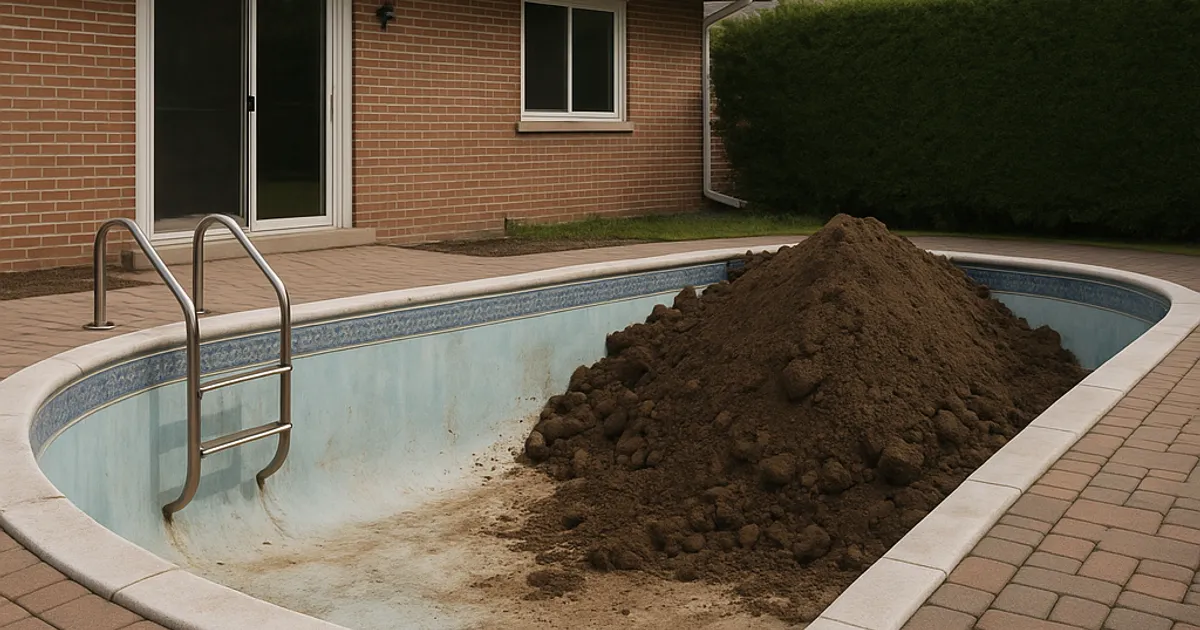
That old in-ground pool in your backyard may have once been the centerpiece of summer fun, but for many homeowners it's become a liability — expensive to maintain, hazardous if neglected, and a barrier to selling or repurposing your property. Whether your pool is cracked, outdated, or simply unwanted, filling it in is a logical solution. But before you call a contractor and start ordering fill dirt, there's a great deal more to consider than you might expect.
Pool removal and backfill is a surprisingly technical undertaking involving structural demolition, drainage engineering, soil compaction standards, permitting, and significant material volumes. Done poorly, a filled pool can create a sinkhole-like depression in your yard, compromise your foundation, fail a home inspection, and cost you tens of thousands of dollars to remediate. Done correctly, it opens your yard to new possibilities — a flat usable lawn, a garden, an addition, or a patio — while adding back value to your property.
This guide covers everything a homeowner or contractor needs to know before filling in a swimming pool, from understanding the two primary removal methods to sourcing fill dirt efficiently and cost-effectively.
Understanding Why Pool Removal Is Growing in Popularity
Pool removal has become a significant and growing segment of the residential excavation industry. According to the Pool & Hot Tub Alliance, there are approximately 5.7 million in-ground swimming pools in the United States. While new pool construction surged during the COVID-19 pandemic — with installations increasing by over 21% in 2020 and 2021 — a corresponding wave of removal and fill-in projects is expected as those same pools age and maintenance costs escalate.
The average annual cost to maintain an in-ground pool ranges from $3,000 to $5,000 per year when factoring in chemicals, energy, cleaning, and routine repairs. When a pool reaches the end of its structural life — typically 20 to 30 years for fiberglass and 30 to 50 years for concrete — those maintenance costs can balloon dramatically. A single structural crack in a gunite pool shell can cost $1,000 to $5,000 to repair, and replastering an aging pool runs between $6,000 and $15,000.
Beyond maintenance, safety and real estate considerations play a major role. Unmaintained pools are a drowning hazard, particularly for homes with young children or in neighborhoods with visiting kids. From a real estate standpoint, pools are a polarizing feature — the National Association of Realtors has noted that pools add value in warm climates like Florida, Arizona, and Southern California but can actually deter buyers in regions with shorter swimming seasons. For sellers in cooler climates, removing a pool before listing can make the property more marketable and eliminate a buyer's negotiating chip.
Insurance costs also factor in. A pool is classified as an "attractive nuisance" under property law, meaning homeowners can be held liable for accidents even involving trespassers. Eliminating this risk by filling in the pool can reduce liability exposure and sometimes even lower homeowner's insurance premiums.
The Two Methods of Pool Removal: Partial vs. Full
Before any fill dirt is ordered, you need to make a fundamental decision about how the pool will be removed. There are two primary approaches — partial removal (sometimes called "pool abandonment") and full removal — and they differ dramatically in cost, complexity, and long-term outcomes.
Partial Pool Removal (Abandonment Fill)
In a partial removal, the pool structure is not fully excavated. Instead, crews use a jackhammer or excavator to punch drainage holes through the bottom of the pool shell, knock down the top 18 to 36 inches of the walls (the depth varies by local code), and then fill the remaining shell with a combination of rubble from the demolished walls, clean fill dirt, and compacted soil.
The advantages of partial removal are primarily cost-related. Because you're not excavating the entire pool shell, labor and equipment time is significantly reduced. Partial removal typically costs between $3,000 and $7,000 depending on pool size, local labor rates, and disposal fees.
However, partial removal comes with important caveats:
- It must be disclosed to future buyers during a real estate transaction in most states
- It generally cannot support a structure (home addition, garage, or heavy patio) being built over it
- Settling and slight surface depressions can occur over time as organic material decomposes
- Some municipalities do not permit partial removal and require full excavation
Full Pool Removal
Full removal involves completely excavating and hauling away the entire pool shell — concrete, gunite, fiberglass, or vinyl liner with its steel or concrete walls — and then properly backfilling and compacting the void. This is the more thorough, structurally sound option.
Full removal costs between $9,000 and $19,000 for a typical 15x30-foot pool, and can exceed $25,000 for larger pools or those in constrained access situations. The cost includes demolition, hauling, fill dirt, compaction, and finish grading.
The benefits of full removal are substantial:
- The backfilled area can support structures and heavy landscaping
- No disclosure requirements in most jurisdictions (check local law)
- No long-term settling issues when properly compacted
- Clean slate for any future use of the space
For most homeowners who plan to sell the property, build an addition, or simply want a worry-free resolution, full removal is the recommended approach.
Permits and Local Regulations You Cannot Skip
One of the most commonly overlooked aspects of pool filling is the permit process. In virtually every jurisdiction in the United States, filling in a swimming pool requires a demolition or grading permit — and often both.
The specific requirements vary by municipality, county, and state, but common regulatory elements include:
- Demolition permit: Required before breaking down the pool shell structure
- Grading or fill permit: Required when importing fill material and altering site drainage
- Utility disconnection verification: Gas, electric, and water lines serving the pool must be properly capped and documented before fill begins
- Inspection milestones: Many jurisdictions require inspections at the drainage hole stage, after initial fill placement, and at final grade
In California, the California Department of Housing and Community Development and local building departments enforce strict grading ordinances under the California Building Code (CBC) Chapter 18, which governs excavation, grading, and fill. In Texas, cities like Austin and Dallas have their own pool demolition ordinances that require licensed contractors and engineered fill plans for any pool within a certain distance of structures or property lines.
Failure to pull permits can result in:
- Stop-work orders
- Fines ranging from $500 to $5,000 or more
- Required remediation at your own expense
- Title issues that surface during a property sale
- Failure of homeowner's insurance claims related to site work
Pro tip: Always check with your local building department before hiring a contractor. In many cities, a licensed contractor will handle permitting as part of their scope, but you should confirm this in writing before signing any contract.
How Much Fill Dirt Do You Actually Need?
Calculating fill volume is a straightforward but critical step. Pool dimensions vary widely, but a standard in-ground pool holds between 20,000 and 30,000 gallons of water — which translates to a considerable amount of fill material.
Volume Calculation Formula
For a rectangular pool: Volume (cubic yards) = Length (ft) × Width (ft) × Average Depth (ft) ÷ 27
For a 16×32-foot pool with an average depth of 5 feet: 16 × 32 × 5 = 2,560 cubic feet ÷ 27 = 94.8 cubic yards
For a kidney or freeform pool, contractors typically calculate using average length and width measurements or use a volume formula adjusted with a shape factor of 0.85.
Important: In a partial removal scenario, the demolished wall rubble often fills 20–35% of the void, reducing the required imported fill volume. In a full removal, the entire excavated space must be filled with imported material.
Fill Material Swell and Compaction Factors
Native soil and imported fill compact when tamped, meaning you need to order more material than the raw volume calculation suggests. Industry standard compaction rates mean that fill soil loses 10–15% of its volume after mechanical compaction. Contractors typically add a 15–20% overage factor when ordering fill to account for this.
For our example pool above, 94.8 cubic yards of void volume would require ordering approximately 112–115 cubic yards of fill dirt to ensure complete, properly compacted fill.
Finding high-quality fill dirt at an affordable price is often one of the largest variable costs in the project. This is exactly where platforms like DirtMatch add real value — by connecting homeowners and contractors with nearby excavation and construction projects that have surplus fill dirt available, often for free or at significantly reduced hauling costs compared to purchasing from a commercial supplier.
Fill Material Requirements: What Goes Into a Filled Pool
Not all fill is created equal. The type of material you use to fill a pool has long-term consequences for site stability, drainage, and future use. Contractors and inspectors follow established standards — most notably ASTM D698 (Standard Proctor compaction test) and ASTM D1557 (Modified Proctor) — to verify that fill material has been properly selected and compacted.
Acceptable Fill Materials
| Material | Suitable for Pool Fill? | Notes |
|---|---|---|
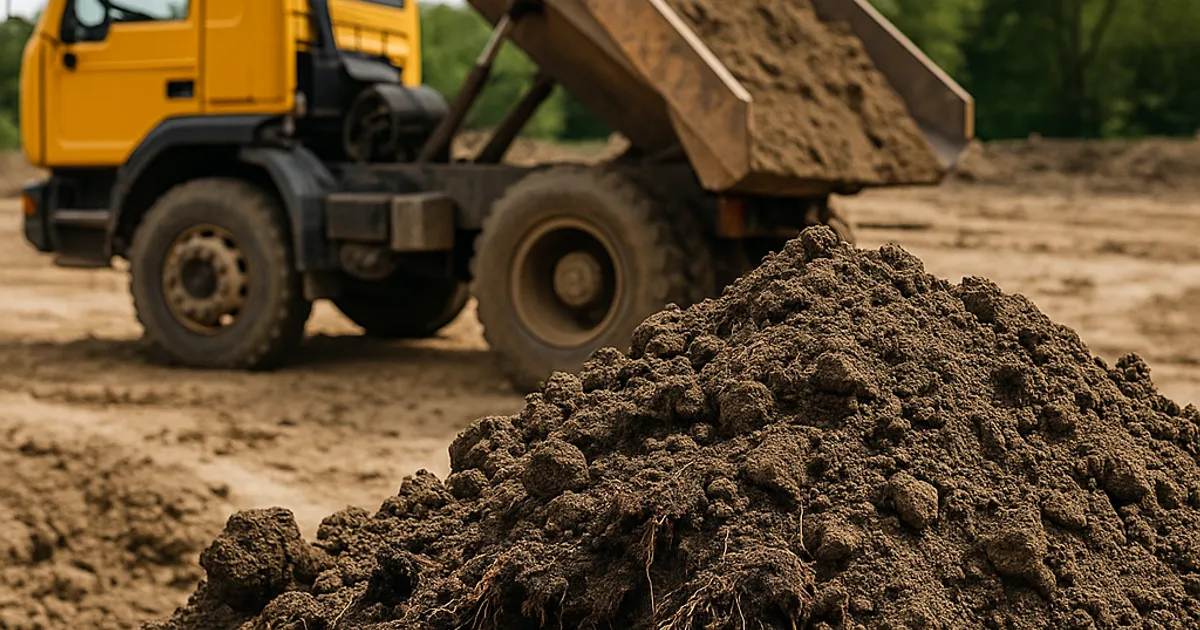
| Clean structural fill dirt | ✅ Yes | Best option; free of organics and debris |
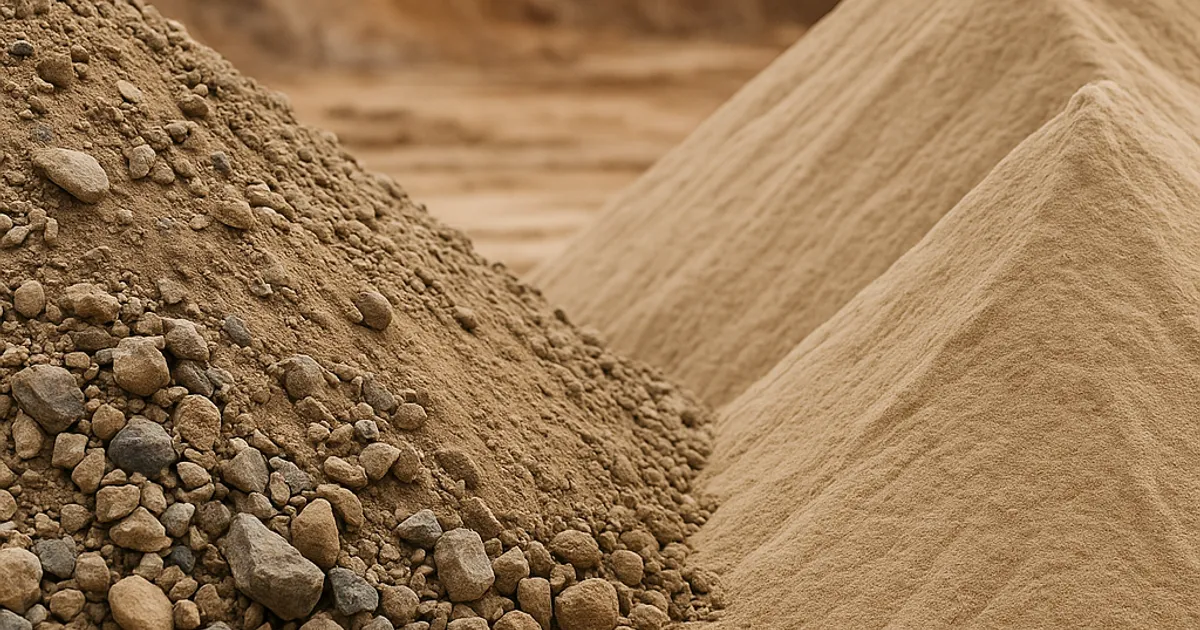
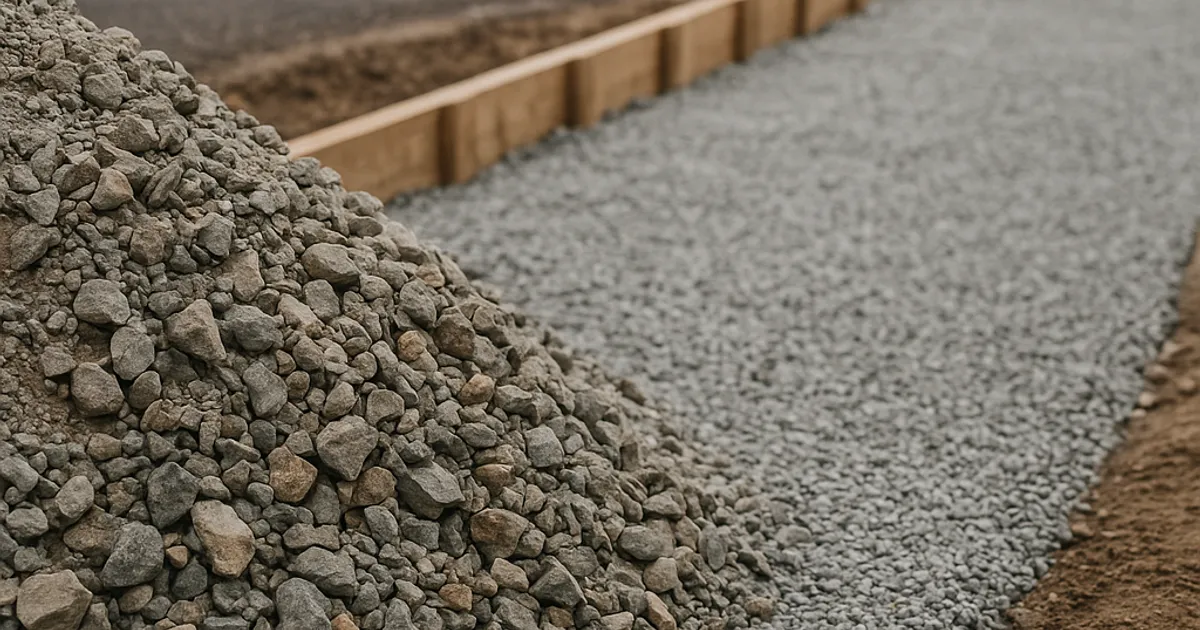
| Crusher run / road base | ✅ Yes | Excellent drainage and compaction |
| Coarse sand | ✅ Yes | Good drainage, may need containment |
| Rubble from pool walls | ✅ Partial | Acceptable in bottom layers only |
| Topsoil | ⚠️ Top layer only | Only for final 6–12" for vegetation |
| Clay-heavy soil | ⚠️ Limited | Poor drainage; avoid near structures |
| Organic material (roots, wood) | ❌ No | Decomposes and causes settling |
| Contaminated soil | ❌ No | EPA and local code prohibit use |
| Demolition debris (mixed) | ❌ No | Unpredictable settling; code violation |
The ideal fill sequence for a properly executed pool fill is:
- Drainage layer: 6–12 inches of gravel or crushed stone at the base to prevent hydrostatic pressure buildup
- Structural fill: Clean fill dirt or compacted crusher run placed in 6–8 inch lifts (layers) with mechanical compaction between each lift using a plate compactor or vibratory roller
- Transition layer: Native soil or sandy loam in the upper 18–24 inches
- Topsoil cap: 4–6 inches of topsoil for seeding or sodding
The requirement to compact fill in lifts cannot be overstated. Dumping fill into a pool void all at once — without compacting in layers — is one of the most common and costly mistakes in pool removal projects. Uncompacted fill will settle unevenly over months and years, creating depressions, damaging nearby structures, and requiring expensive remediation.
Drainage Engineering: A Step Most Homeowners Underestimate
Proper drainage design is arguably the most technically complex aspect of filling in a swimming pool. A pool shell, by design, is a waterproof basin. Once filled, that same site can become a collection point for groundwater and surface runoff if drainage is not properly engineered.
The Drainage Hole Requirement
In both partial and full removal scenarios, the bottom of the pool shell (if any shell material remains) must have adequate drainage holes punched or drilled through it. Most building codes and engineering standards specify a minimum hole diameter of 2 inches, spaced no more than every 3–4 linear feet across the pool floor.
Without these holes, rainwater infiltrating the fill material has nowhere to go — and can create a perched water table within the fill zone, accelerating settling, promoting mold and root intrusion in partial fills, and creating hydrostatic pressure.
Surface Drainage and Grading
The final grade of the filled pool area must direct surface water away from your home's foundation. The standard slope recommended by the International Residential Code (IRC) is a minimum of 6 inches of fall over the first 10 feet away from the foundation. If the pool is close to the house, an engineered drainage swale or French drain may be required to redirect water flow.
In regions with heavy clay soils — common in parts of Texas, the Midwest, and the Southeast — the risk of water pooling over the filled area is especially high. In these cases, contractors often install a sub-surface perforated drain pipe connected to a daylight outlet or dry well within the fill zone.
If you're in a region like the Pacific Northwest, where rainfall intensity is high, drainage planning becomes even more critical. Contractors doing pool fills in the dirt exchange in Seattle market frequently deal with saturated soils and must use well-draining fill materials and robust sub-drainage systems to pass final inspections.
The Step-by-Step Process of Filling In a Pool
Understanding the process from start to finish helps homeowners make better decisions and communicate effectively with contractors.
Step 1: Utility Disconnection
All utility connections to the pool — electrical (pump, lights, heater), gas (if applicable), and water supply — must be disconnected and capped by licensed tradespeople. Electrical disconnection must comply with NFPA 70 (National Electrical Code) Article 680. This step is non-negotiable and is typically verified during the first inspection.
Step 2: Permit Acquisition
Submit applications for demolition and grading permits. This can take 1–6 weeks depending on your municipality. Some jurisdictions require a licensed civil engineer to stamp a grading plan before permits are issued.
Step 3: Water Removal and Pool Draining
The pool must be fully drained before demolition begins. Draining a pool improperly — discharging directly to storm drains — may violate local stormwater ordinances. Many municipalities require pool water to be drained to the sanitary sewer or absorbed on-site. Check with your local water authority.
Step 4: Demolition of Pool Structure
For partial removal: jackhammer or excavator breaks down the top 18–36" of walls; drainage holes are punched in the pool floor. For full removal: an excavator breaks apart and removes the entire shell structure. Concrete and gunite debris is hauled to a recycling facility or permitted disposal site.
Step 5: Fill Placement in Compacted Lifts
Fill dirt is imported and placed in 6–8 inch lifts. Each lift is mechanically compacted to achieve at least 90–95% of maximum dry density as measured by ASTM D698 or D1557. A geotechnical inspector may be required on-site to conduct proctor testing during this phase for permitted projects.
Step 6: Inspections
Coordinate inspections as required by your permit conditions. Common inspection stages include: post-drainage hole, mid-fill (at pool rim level), and final grade.
Step 7: Final Grade and Topsoil
Once fill reaches grade, 4–6 inches of topsoil is applied, slopes are verified, and the area is seeded, sodded, or prepared for hardscaping.
Step 8: Final Permit Sign-Off
The building inspector issues a certificate of completion, which should be retained with your property records for future disclosure and title purposes.
Find or Post Dirt, Rock & Aggregate
Join thousands of contractors using DirtMatch to buy, sell, and exchange earthwork materials.
Try DirtMatch FreeThe Real Cost of Filling In a Pool: A Detailed Breakdown
Understanding where the money goes helps homeowners budget realistically and identify where savings are possible.
Cost Components for Full Pool Removal (15×30 Pool)
| Cost Item | Estimated Range | Notes |
|---|---|---|
| Demolition labor | $2,000–$5,000 | Excavator operator + crew |
| Equipment rental / mobilization | $1,000–$2,500 | Excavator, compactor, dump trucks |
| Demolition debris hauling & disposal | $1,500–$4,000 | Per load; 3–6 loads typical |
| Fill dirt (80–120 CY) | $800–$4,800 | $10–$40/CY; highly regional |
| Compaction testing / geotechnical | $500–$1,500 | Required for permitted projects |
| Permit fees | $200–$1,000 | Varies by municipality |
| Utility disconnection | $300–$800 | Electrical, gas, water |
| Final grading and topsoil | $500–$1,500 | Seeding or sodding extra |
| Total (Full Removal) | $9,000–$19,000 | Average ~$12,000–$14,000 |
Where to Save: Fill Dirt Costs
Fill dirt is one of the most variable cost line items in the entire project. Commercial fill dirt suppliers typically charge $15–$40 per cubic yard, plus delivery fees that can add $150–$400 per truckload. For a project requiring 100+ cubic yards, that's a significant expense.
However, many excavation and construction projects in your area are simultaneously trying to dispose of surplus fill dirt — and they'll often provide it for free or at minimal cost if you can arrange pickup or they can dump at your site. The challenge has always been connecting those two parties efficiently.
This is precisely the problem that DirtMatch was built to solve. By matching contractors who have surplus fill with projects that need it, DirtMatch can dramatically reduce or eliminate the fill dirt cost line item in a pool removal project. Contractors in markets like dirt exchange in Los Angeles and dirt exchange in Denver regularly use the platform to source clean structural fill from nearby grading and site development projects at a fraction of the cost of commercial suppliers.
Environmental Considerations and Soil Testing
Before importing any fill material into your pool void, it's important to understand the environmental implications — both for what you're putting in and what might already be in the ground.
Soil Contamination Risks
If your pool was installed in an older home (pre-1980s), there's a possibility that the surrounding soil or pool materials contain legacy contaminants including lead-based paint chips, asbestos-containing materials in older pool deck coatings, or petroleum-based sealants. The U.S. Environmental Protection Agency (EPA) provides resources for checking whether your property is near a known contamination site.
For commercial properties or homes in industrial areas, a Phase I Environmental Site Assessment may be required before any grading permit is issued.
Fill Dirt Contamination
Importing contaminated fill is both an environmental violation and a health risk. Contaminated fill can include soil from industrial sites, brownfields, or areas with petroleum spills. Responsible fill sourcing means requesting a source declaration from the fill provider — ideally documentation confirming the material originated from a clean construction or excavation site.
When using a platform like DirtMatch, fill providers on the platform are typically construction and grading contractors whose material comes from verified excavation sites — giving you confidence in the material's origin compared to anonymous sources.
Chemical Residue from Pool Water
Pool chemicals — primarily chlorine, muriatic acid, and algaecides — can affect soil pH and microbiology in the immediate area. When draining your pool, it's advisable to let chlorine levels drop to below 1 ppm before discharging to minimize impact on soil organisms and any adjacent vegetated areas. Local stormwater authorities often have specific requirements around pool discharge.
Property Value Impact: What Removal Does to Your Home's Worth
The financial calculus of pool removal is nuanced and depends heavily on geography, neighborhood norms, and buyer demographics.
When Removal Adds Value
In regions with shorter summers — New England, the Pacific Northwest, the upper Midwest, and at higher elevations — pools are often seen as maintenance burdens by buyers. Real estate agents in these markets frequently advise sellers to remove neglected pools before listing. A clean, level yard where a pool once stood is seen as more versatile and attractive to a broader buyer pool.
In markets like dirt exchange in Boston, where a pool is usable for only 3–4 months per year, removing an aging pool can meaningfully improve list-to-sale ratios and reduce buyer objections during inspection.
When Removal May Reduce Value
In year-round warm climates — Southern California, Florida, Arizona, and Hawaii — pools are expected amenities in mid-to-upper price ranges, and removing one can actually reduce appraised value. In these markets, renovation rather than removal is often the better investment.
The Disclosure Requirement
In most states, sellers are required to disclose material facts about the property — and a filled pool qualifies as a material fact, particularly in partial removal scenarios. Real estate attorneys and title companies increasingly require documentation of pool removal permits and inspections as part of the closing process. Keeping your permit records, inspection sign-offs, and compaction test reports is essential.
Hiring the Right Contractor: What to Look For
Pool removal and backfill is not a DIY project for most homeowners. It requires heavy equipment, technical knowledge of compaction standards, and experience navigating the permit process. Choosing the wrong contractor can result in failed inspections, settling issues, and significant remediation costs.
Key Contractor Qualifications
- Licensed general contractor or demolition contractor with experience in pool removal (ask for portfolio and references)
- Bonded and insured: Minimum $1 million general liability; workers' compensation coverage
- Familiar with local codes: Ask specifically whether they've pulled pool demolition permits in your municipality before
- Uses mechanical compaction: Any contractor proposing to fill without mechanical compaction in lifts should be disqualified immediately
- Provides compaction testing: On permitted projects, a third-party geotechnical test is often required; your contractor should facilitate this
Questions to Ask Before Hiring
- Have you completed pool removals in this city/county before?
- Will you handle all permitting, or is that my responsibility?
- What type of fill material do you plan to use, and what is its source?
- How will you compact the fill, and how often will you test compaction?
- What warranty, if any, do you offer against settling?
- Can you provide references from similar pool removal projects?
Get at least three written bids before selecting a contractor. Bids that are significantly below the market range often signal corners being cut — particularly on fill quality, compaction, or permit compliance.
For contractors looking to take on more pool demolition and backfill projects, understanding how DirtMatch works can help them source fill material efficiently and competitively bid projects with lower material costs.
Special Considerations for Different Pool Types
The pool's construction type affects the removal strategy, cost, and fill requirements.
Concrete / Gunite Pools
The most common type for in-ground installations. Concrete pools are the most expensive to fully remove due to the structural mass involved. An average 15x30 gunite pool contains 15–20 tons of concrete. Full removal generates 3–6 dump truck loads of debris. Concrete rubble from the demolition is often recycled at concrete crushing facilities.
Fiberglass Pools
Fiberglass shells are lighter but must be completely excavated and removed — they cannot be broken up in place like concrete. Removal typically requires cutting the shell into sections for extraction. Full fiberglass pool removal is often faster than concrete but requires careful handling to avoid soil contamination from fiberglass particulate.
Vinyl Liner Pools
Vinyl liner pools have steel or polymer wall panels beneath the liner. These are generally the least expensive to remove. The liner and wall panels are extracted, leaving a prepared excavation that is then filled and compacted.
Above-Ground Pools
Above-ground pools are a different scenario entirely. They sit on the surface, and removal typically involves disassembling the structure and restorating the ground surface beneath — which may require minor grading and topsoil work. Costs are dramatically lower ($300–$800 in most cases).
After the Fill: Landscaping and Site Restoration
Once the pool is filled and inspected, you have a blank canvas for whatever use you envision. The final topsoil layer and surface treatment should match the intended use.
Lawn Restoration
For a simple lawn, apply 4–6 inches of quality topsoil, grade smoothly with a slight positive slope away from the house, and overseed with a turf mix appropriate for your climate. Water consistently for 3–4 weeks to establish germination. Expect some minor settling in the first 12–18 months even with well-compacted fill — this is normal and typically addressed with a topdressing of additional soil.
Patio or Hardscape
If you plan to install a paver patio or concrete slab over the filled area, ensure your fill was compacted to 95% of maximum dry density (ASTM D1557 Modified Proctor). Anything less risks differential settling that will crack or heave your hardscape. For a concrete slab, a structural fill inspection report from a licensed geotechnical engineer is advisable and may be required by your contractor's insurance.
Garden Beds and Planting
A filled pool area is an excellent location for a raised garden bed or landscape installation. The deep fill provides good drainage if properly constructed. Introduce a full topsoil profile (6–12 inches) for deep-rooted plantings, and avoid planting large trees directly over the fill zone for the first 5 years as root systems can interact with settling fill.
Additions and Outbuildings
Building a structure over a full removal fill site is possible but requires a geotechnical report and engineered foundation design. Most structural engineers will require either a compaction test report achieving 95%+ density or a soil bearing capacity test (ASTM D1194 or D3441) before approving a foundation over a filled pool area. Plan for at least 12–24 months of settlement monitoring before committing to a permanent structure in most cases.
Key Takeaways and Action Steps
Filling in a swimming pool is a multi-phase project that requires careful planning, proper permitting, quality fill material, and professional execution. Here's a concise action plan:
- Decide on partial vs. full removal based on your intended use of the space and local permit requirements
- Contact your local building department to understand permit requirements before hiring anyone
- Get three written bids from licensed contractors with documented pool removal experience
- Source your fill dirt strategically — commercial fill is expensive, but surplus fill from nearby construction sites can dramatically reduce costs
- Verify fill material quality — insist on clean structural fill with documentation of origin
- Demand compaction in lifts — no exceptions; this is the single most important technical requirement
- Document everything — keep permits, inspection reports, and compaction tests with your property records
- Plan your finish grade and drainage before fill placement begins, not after
For homeowners and contractors looking to source clean fill dirt efficiently, get started with DirtMatch to connect with nearby excavation projects that have surplus material available — potentially saving thousands on your pool fill project while diverting clean soil from landfills.