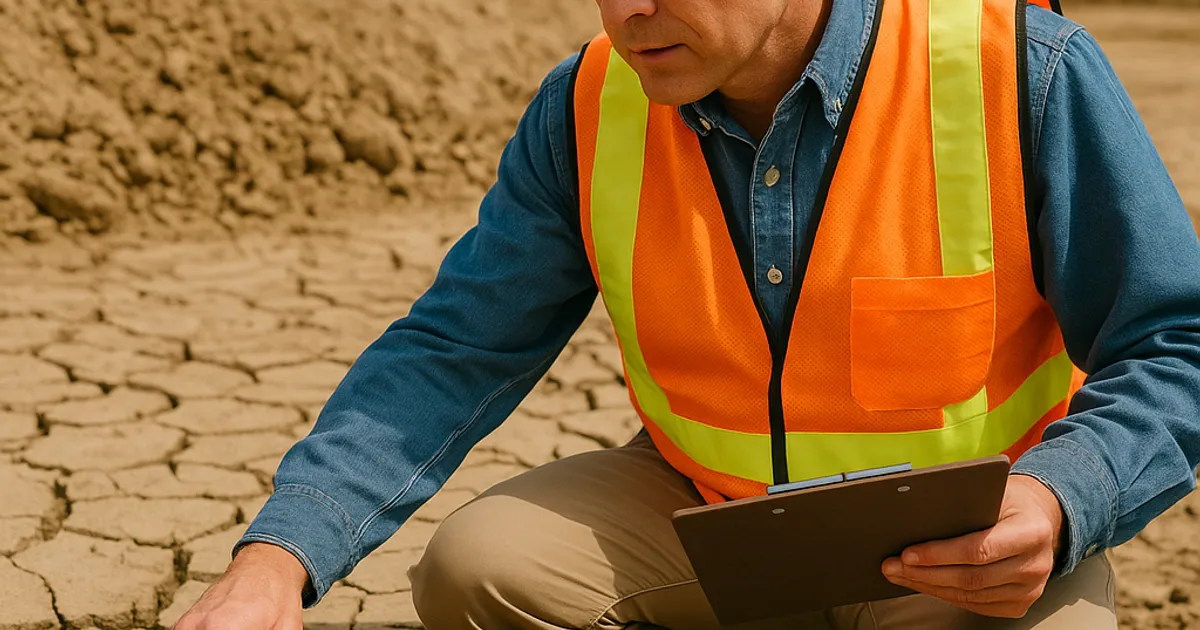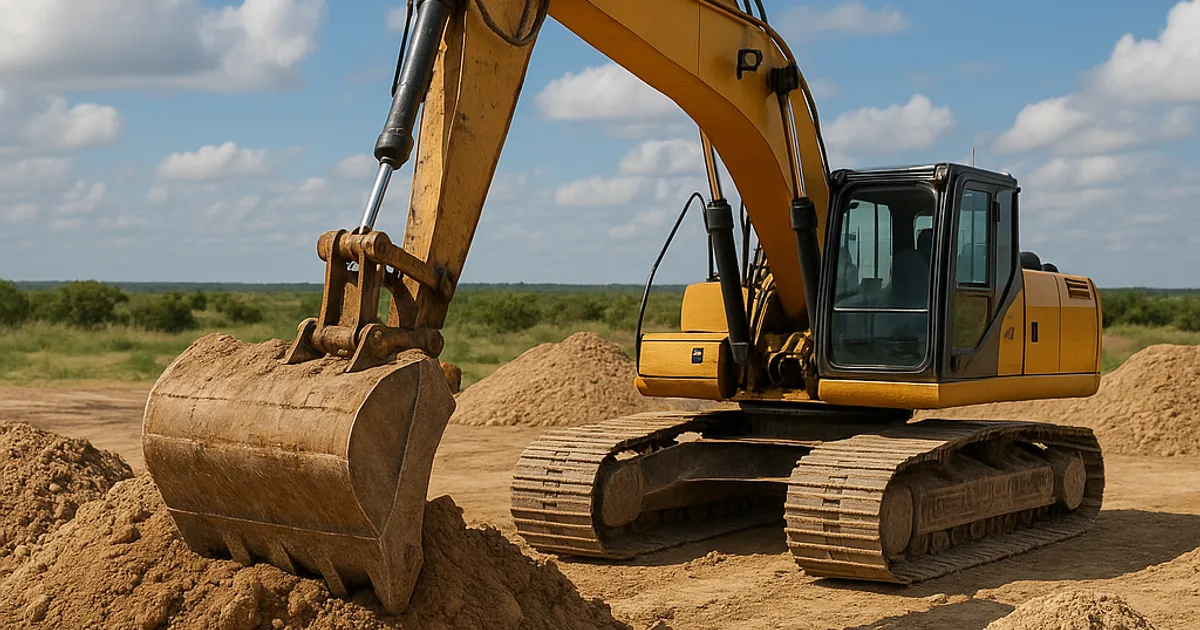
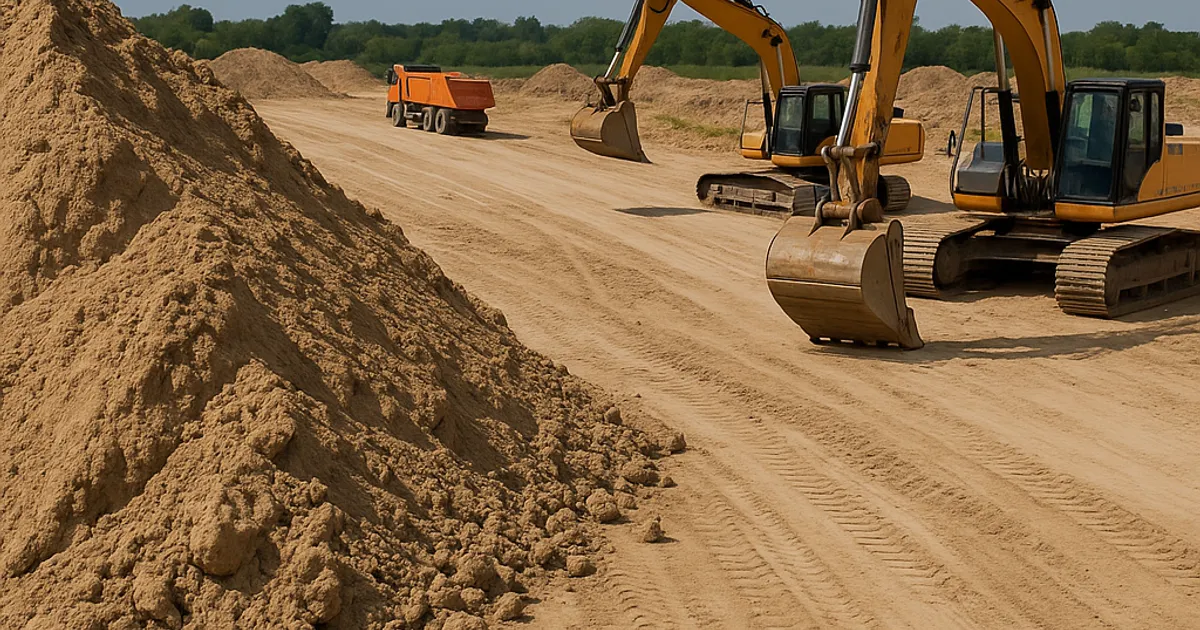
Texas is one of the most active construction markets in the United States, with billions of dollars in residential, commercial, and infrastructure projects breaking ground every year across the Dallas–Fort Worth Metroplex, Houston, Austin, San Antonio, and beyond. Every one of those projects involves earthwork — and earthwork means fill dirt.
But not just any dirt will do. "Clean fill" is a legally and technically defined category of material in Texas, and using non-compliant fill can expose a project to regulatory penalties, environmental liability, structural failure, and costly remediation. Whether you're grading a residential lot in Frisco, building a detention pond in Katy, or constructing a commercial pad in Midland, understanding what Texas law and engineering standards require for fill material is essential.
This guide covers the complete framework — from the Texas Commission on Environmental Quality (TCEQ) regulations to ASTM soil classification standards, from Plasticity Index requirements to real-world sourcing strategies — so you can move dirt with confidence.
What Is "Clean Fill Dirt" in Texas?
The term "clean fill" sounds intuitive, but its legal meaning in Texas is precise. Under TCEQ rules, clean fill dirt is broadly defined as uncontaminated soil, rock, sand, gravel, clay, or similar inert material that contains no regulated solid waste, hazardous materials, construction debris, or other prohibited substances.
The Texas Commission on Environmental Quality codifies this definition in 30 TAC (Texas Administrative Code) Chapter 330, which governs municipal solid waste. Under this framework, clean fill is specifically exempted from solid waste permitting requirements — but only when it genuinely meets the definition of "clean." The moment a load of fill contains paint, asbestos, petroleum-soaked soil, treated wood, concrete with rebar, or any other regulated material, it loses its clean fill classification and must be handled as solid waste.
Key substances that automatically disqualify fill from "clean" status in Texas include:
- Petroleum hydrocarbons (TPH above background levels)
- Heavy metals (lead, arsenic, chromium, mercury above TCEQ Protective Concentration Levels)
- Volatile Organic Compounds (VOCs) from solvents, fuels, or industrial chemicals
- Asbestos-containing materials (ACM) in any form
- Construction and demolition debris — treated lumber, drywall, roofing materials
- Herbicide- or pesticide-contaminated soil above action thresholds
- Regulated solid waste of any kind
It's worth emphasizing that TCEQ's definition focuses on what is absent from the material, not just on what it looks like. Visually clean soil from an industrial site may be chemically contaminated. This is why testing protocols matter so much — and why responsible contractors don't rely on visual inspection alone.
For a broad view of fill material available and needed across the state, the Fill Dirt in Texas marketplace currently shows over 2 million cubic yards of material available statewide, reflecting just how active the Texas fill market truly is.
TCEQ Regulations Governing Fill Material in Texas
The Texas Commission on Environmental Quality is the primary state agency regulating clean fill use. Its rules are embedded throughout Title 30 of the Texas Administrative Code, and understanding the relevant chapters is non-negotiable for any contractor or developer handling significant volumes of fill.
30 TAC Chapter 330 — Municipal Solid Waste
Chapter 330 defines the conditions under which soil and similar materials are exempt from solid waste permitting. The clean fill exemption is one of the most important provisions in Texas environmental law for earthwork professionals. Under §330.3(e), materials that constitute "clean fill" as defined by the TCEQ are not subject to solid waste regulations — but the burden of proof falls on the generator or user of the material.
This means documentation matters. If TCEQ inspectors visit a fill site and question the origin or composition of the material, operators must be able to demonstrate compliance. A credible documentation chain includes the origin site address, any available soil testing records, and a statement from the generator affirming the material meets clean fill criteria.
30 TAC Chapter 350 — Texas Risk Reduction Program (TRRP)
For fill material sourced from sites that have undergone environmental investigation or remediation, the Texas Risk Reduction Program (TRRP) sets the Protective Concentration Levels (PCLs) that determine whether soil is safe for reuse. The TRRP establishes different PCLs for residential and commercial/industrial land uses, recognizing that a child playing in a backyard faces different exposure risks than an adult working on a commercial site.
The TRRP PCLs are referenced during soil sampling analysis to determine if excavated material from a brownfield, former gas station, or industrial property can be legally reused as fill. Material exceeding PCLs for the intended land use must be managed as regulated waste — it cannot simply be hauled to another site and buried.
TCEQ General Permit TXR150000 — Construction Stormwater
Large earthwork projects (disturbing one acre or more) must also comply with the TCEQ's General Permit TXR150000, which implements EPA stormwater construction requirements at the state level. While this permit primarily governs erosion and sediment control, it directly affects fill placement practices — particularly regarding the stability of filled areas and preventing sediment-laden runoff from leaving the site.
ASTM and Engineering Standards for Fill Material Specifications
Beyond TCEQ's environmental regulations, fill dirt must also meet engineering specifications for the structural application it's intended to serve. These specifications are governed by nationally recognized standards from ASTM International, the American Association of State Highway and Transportation Officials (AASHTO), and the Texas Department of Transportation (TxDOT).
Soil Classification: ASTM D2487 (USCS)
The Unified Soil Classification System (USCS), standardized under ASTM D2487, is the primary framework engineers use to classify soils by grain size and plasticity. Common fill materials in Texas fall into these USCS categories:
| USCS Symbol | Description | Typical Fill Use |
|---|---|---|
| GW | Well-graded gravel | Structural fill, road base |
| GP | Poorly graded gravel | Drainage, base course |
| SW | Well-graded sand | General fill, pipe bedding |
| SM | Silty sand | General fill |
| CL | Lean clay | General fill (limited) |
| CH | Fat clay (high plasticity) | Generally unsuitable |
| MH | Elastic silt | Generally unsuitable |
| PT | Peat / organic | Prohibited fill |
Texas soils present unique challenges. Much of North Texas (including the Dallas area) is underlain by expansive clay — technically classified as CH or CL under USCS — with Plasticity Index (PI) values that can exceed 50 in some areas. Using high-PI clay as structural fill without treatment (such as lime stabilization) can result in heaving, cracking foundations, and failed pavements.
Plasticity Index Requirements
For most structural and residential fill applications in Texas, geotechnical engineers specify a maximum Plasticity Index (PI) for fill material. Common thresholds include:
- PI ≤ 20 for general structural fill under slabs and foundations
- PI ≤ 35 for general grading and non-structural fill
- PI ≤ 15 for TxDOT embankment fill on state highway projects
- Non-plastic for select fill, bedding sand, and drainage layers
The Plasticity Index is determined by laboratory testing per ASTM D4318, measuring the difference between the Liquid Limit and the Plastic Limit of a soil. This test is a standard requirement in geotechnical specifications across Texas.
Compaction Standards: ASTM D698 and D1557
Fill dirt isn't just placed — it's compacted in lifts to achieve required density. Texas projects typically specify compaction based on the Standard Proctor Test (ASTM D698) or the Modified Proctor Test (ASTM D1557), with field density verified by nuclear density gauge or sand cone testing per ASTM D1556.
Common compaction requirements in Texas:
| Application | Minimum Compaction |
|---|---|
| Residential building pad | 95% Standard Proctor |
| Commercial foundation subgrade | 95–98% Standard Proctor |
| TxDOT embankment fill | 95% Modified Proctor |
| Utility trench backfill | 90–95% Standard Proctor |
| Parking lot subgrade | 95% Standard Proctor |
Lifts are typically limited to 8 inches of loose material (compacting to approximately 6 inches) to allow moisture and compactive effort to penetrate uniformly. Thicker lifts are a leading cause of compaction failures on fill projects.
TxDOT Fill Material Specifications for Road and Highway Projects
For projects involving Texas Department of Transportation rights-of-way or state-funded road construction, fill material must comply with TxDOT's Standard Specifications for Construction and Maintenance of Highways, Streets, and Bridges — commonly referred to simply as the "TxDOT Standard Specs."
The most relevant specifications for fill material include:
TxDOT Item 132 — Embankment
Item 132 governs embankment construction using on-site or imported fill material. Key requirements include:
- Liquid Limit ≤ 45 for Type A fill (structural)
- Plasticity Index ≤ 20 for Type A embankment material
- Organic content ≤ 2% by weight
- No debris, roots, or frozen material
- Maximum particle size of 4 inches for embankment, 3 inches within the top 6 inches
Type B fill (used in non-critical areas) has more relaxed PI requirements but still prohibits organic material and debris.
TxDOT Item 247 — Flexible Base (Aggregate)
For aggregate fill used as road base, TxDOT Item 247 specifies gradation requirements, Los Angeles Abrasion limits, and compressive strength thresholds. While not technically "fill dirt," flexible base aggregate is frequently sourced from the same supply networks and must meet distinct specifications from general earth fill.
Local County and Municipal Requirements
Beyond TxDOT, individual counties and municipalities often have their own grading ordinances. Dallas County, Tarrant County, Harris County, and the City of Austin all maintain engineering standards that reference or supplement TxDOT specs. Some municipalities require a Grading Plan approved by a licensed Professional Engineer (PE) before fill can be placed on sites exceeding a certain area or depth.
Soil Testing Protocols for Clean Fill Verification in Texas
Verifying that fill material meets both environmental and engineering requirements requires laboratory testing. For projects in Texas, a standard clean fill verification program typically includes:
Environmental Testing
Phase I and Phase II Environmental Site Assessments (ESAs) are the standard starting point for evaluating whether a source site is likely to produce contaminated fill. However, ESAs are site-level evaluations — they assess the source property, not every individual pile of dirt.
For high-volume fill projects, or fill sourced from potentially impacted areas, direct soil sampling per TCEQ TRRP protocols is recommended:
- Sampling frequency: One composite sample per 500 cubic yards of material is a common baseline
- Analytical suite: BTEX (benzene, toluene, ethylbenzene, xylene), TPH (GRO and DRO fractions), RCRA metals (8 metals including lead, arsenic, chromium), VOCs by EPA Method 8260
- Reporting limit comparison: Results compared against TCEQ PCLs for the intended land use (residential vs. commercial/industrial)
Geotechnical Testing
For engineering compliance, a geotechnical testing program typically includes:
- Grain size analysis (ASTM D422 / D7928) — characterizes gravel, sand, silt, and clay fractions
- Atterberg Limits (ASTM D4318) — determines Liquid Limit, Plastic Limit, and Plasticity Index
- Standard or Modified Proctor Compaction Test (ASTM D698 / D1557) — establishes maximum dry density and optimum moisture content
- In-place density testing (ASTM D1556 / D6938) — verifies compaction of placed fill
- Organic content test (ASTM D2974) — confirms organics below specified limits
A registered Professional Engineer (PE) should review testing results and provide a written recommendation confirming the material is suitable for its intended use.
Special Considerations for Fill in the Dallas–Fort Worth Area
The Dallas–Fort Worth Metroplex sits on some of the most challenging soils in North America. The Austin Chalk and Eagle Ford Shale formations underlie much of the region, producing expansive clay soils with Plasticity Index values ranging from 30 to over 60. This creates unique fill material challenges:
Expansive Clay Issues
Locally sourced clay fill in the DFW area frequently fails PI limits without treatment. Options include:
- Lime stabilization — Adding 3–8% hydrated lime by weight reduces PI dramatically (often from 45+ to under 20) and is specified on virtually every major road and foundation project in North Texas
- Importing select fill — Bringing in low-PI sandy or gravelly soils from outside the immediate area
- Blending — Combining local clay with imported sand to achieve target PI specifications
Shrink-Swell Potential
Expansive soils in DFW can shrink significantly during drought and swell during wet periods. Fill placed at inappropriate moisture content can shift dramatically after construction, causing foundation movement, pavement cracking, and retaining wall failure. Engineers in the DFW area typically require fill to be placed within ±2% of optimum moisture content and may specify post-treatment testing after lime stabilization.
Municipal Grading Requirements
Cities like Frisco, McKinney, Allen, and Plano have active development review processes that require grading plans, fill certifications, and compaction reports. The City of Dallas Engineering Standards reference TxDOT specifications and additionally require third-party special inspection services for fill on commercial projects.
For contractors and developers navigating these requirements in the Metroplex, finding compliant fill material efficiently is critical. DirtMatch, a platform connecting earthwork contractors with fill dirt sources and project needs, lists thousands of active fill material posts across Texas — including projects in the DFW area where compliant, low-PI fill is in constant demand.
Find or Post Dirt, Rock & Aggregate
Join thousands of contractors using DirtMatch to buy, sell, and exchange earthwork materials.
Try DirtMatch FreeHow to Source Compliant Clean Fill Dirt in Texas
Finding fill that is both environmentally clean and geotechnically suitable is one of the most persistent operational challenges for Texas earthwork contractors. The traditional approach — calling around to suppliers, posting on Craigslist, or relying on word of mouth — is slow, inefficient, and often results in mismatched material.
Common Fill Dirt Sources in Texas
Excavation overcut from construction projects is the most abundant source of fill in Texas. High-rise developments, highway projects, utility corridors, and commercial site preparations routinely generate hundreds of thousands of cubic yards of surplus soil. This material may be clean fill if the source site is unimpacted — but verification is required.
Quarries and aggregate producers supply processed materials including decomposed granite, limestone screenings, caliche, and cleaned sand — materials that typically meet clean fill standards by nature of their origin and processing.
Land clearing operations generate topsoil and subsoil that may or may not meet PI limits for structural applications. Organic-rich topsoil is generally unsuitable for structural fill but may be appropriate for landscape grading.
Commercial fill suppliers exist in most Texas markets and offer material that has typically been characterized for basic engineering properties. In 2026, standard fill dirt commonly ranges from $10 to $30 per cubic yard delivered, depending on material type, order volume, haul distance, and local availability. Engineered or select fill, smaller orders, and longer hauls may reach $30 to $40 per cubic yard or more.
For projects that benefit from brokered soil supply and coordinated hauling, Soil Depot is an example of a quality dirt supplier serving major Texas markets.
The Role of Digital Marketplaces
The most efficient way to source or offload clean fill in Texas today is through digital platforms that match material availability with project demand. The DirtMatch platform operates exactly this way — connecting contractors who have surplus excavation material with projects that need fill, often within the same region, dramatically reducing haul distances and costs.
The platform currently shows over 2 million cubic yards of fill material available and over 1.8 million cubic yards needed across Texas, with more than 1,800 matches made in the last 30 days. For example, there's currently a listing for 20,000 yards of clean fill dirt needed in Lampasas, TX — the kind of large-volume opportunity that benefits both the project needing material and the contractor looking to offload excavation spoils from a nearby site.
For smaller residential projects, the platform handles those too — a 10-yard clean fill listing in Hawkins, TX illustrates how the marketplace serves the full spectrum of project sizes.
Prohibited Materials in Texas Fill Projects
Texas law and engineering standards are equally clear about what cannot be used as clean fill. Violations can result in TCEQ enforcement actions, mandatory remediation, stop-work orders, and civil penalties up to $25,000 per day per violation under Texas Water Code §7.102.
Regulated Solid Wastes
Any material classified as solid waste under 30 TAC Chapter 330 cannot be placed as fill without an appropriate solid waste permit. This includes:
- Construction and demolition (C&D) debris — concrete, asphalt, brick, drywall, lumber
- Treated wood (CCA-treated lumber contains arsenic and chromium)
- Petroleum-contaminated soil (PCS) exceeding TCEQ action levels
- Industrial process waste of any kind
- Municipal solid waste or commingled garbage
Organic Material
Organic soils — including topsoil rich in humus, peat, and decomposed vegetation — are generally prohibited from structural fill applications. Organics decompose over time, causing long-term settlement and volume change. TxDOT specifications prohibit material with organic content exceeding 2% by weight in embankments, and most geotechnical specifications align with this threshold.
Frozen, Wet, or Contaminated Material
Fill that is excessively wet (significantly above optimum moisture content) cannot be properly compacted and will trap water pockets that consolidate over time. While not illegal per se, placing overly wet fill is a serious engineering error that can void geotechnical certifications and create long-term structural problems.
Documentation and Compliance Best Practices
Maintaining a robust paper trail is essential for any Texas project involving fill dirt. TCEQ inspectors, local building officials, and project owners' geotechnical engineers may all request documentation at various stages.
Recommended Documentation Package
| Document | Purpose | When Required |
|---|---|---|
| Fill Material Certification | Attests material meets clean fill definition | All projects |
| Soil Testing Report | Environmental and/or geotechnical lab results | Medium to large projects |
| Source Site Documentation | Address, land use history of fill origin | Best practice; required if questioned |
| Compaction Test Reports | Field density test results, by lift | All engineered fill |
| Grading Plan | PE-stamped site plan showing fill limits and grades | Required by most municipalities |
| Waste Characterization (if needed) | For material that may have been near regulated activities | When source site has environmental history |
| Bills of Lading / Weight Tickets | Quantity documentation for each load | Large projects, government contracts |
Third-Party Special Inspection
For commercial and public projects, most local jurisdictions in Texas require Special Inspections by an approved testing laboratory, as referenced in the International Building Code (IBC) Chapter 17. The special inspector verifies that fill is being placed in accordance with the approved geotechnical report, tests compaction at required frequencies, and provides written field reports and a final summary letter to the building official.
Lime Treatment of Expansive Clays in Texas: What You Need to Know
Given the prevalence of expansive clays across Texas — particularly in the Blackland Prairie region that covers much of the Dallas–Fort Worth Metroplex — lime stabilization is a foundational soil improvement technique that every Texas earthwork contractor should understand.
How Lime Stabilization Works
Hydrated lime (calcium hydroxide, Ca(OH)₂) reacts with clay minerals in a two-stage process:
- Immediate modification: Lime reacts with water in the soil, raising pH and causing cation exchange that rapidly reduces plasticity. Most high-PI clays drop 20–30 PI points within 24–72 hours of mixing.
- Long-term pozzolanic cementation: Over weeks to months, silica and alumina from clay particles react with calcium from lime to form cementitious compounds (CSH and CAH), increasing strength and reducing swell potential permanently.
Lime Treatment Specifications
In Texas, lime-treated subgrade and fill specifications typically reference TxDOT Item 260 (Lime Treatment — Road-Mixed) or TxDOT Item 263 (Lime Treatment — Plant Mixed). Standard lime application rates range from 3% to 8% by dry weight of soil, with the exact rate determined by laboratory mix design (per TxDOT Tex-121-E or similar procedures).
Key requirements for lime treatment:
- Mellowing period: After initial mixing and hydration, a mellowing period of 24–48 hours is required before final mixing and compaction
- Pulverization: At least 100% of the treated material must pass a 1.5-inch sieve; at least 60% must pass a No. 4 sieve after mellowing
- Compaction: Typically specified at 95–98% Standard or Modified Proctor
- Curing: A 7-day minimum cure before trafficking is common on TxDOT projects
Cost Considerations: Budgeting for Clean Fill in Texas
Understanding the full cost of clean fill isn't just about the price per cubic yard of dirt. Texas contractors and developers need to account for a range of direct and indirect costs.
Fill Dirt Cost Components
| Cost Element | Typical Range (2024) | Notes |
|---|---|---|
| Material cost (delivered) | $8–$25/CY | Varies by material type and haul distance |
| Material cost (pit run, pickup) | $3–$12/CY | Buyer arranges hauling |
| Hauling (per load, 10–14 CY) | $150–$400 | Distance-dependent |
| Environmental testing | $500–$3,000 per project | Depends on scope |
| Geotechnical testing (Proctor + Atterberg) | $300–$600 per sample set | Lab fees |
| Compaction testing (field) | $75–$150 per test | Frequency per project specs |
| Lime treatment (if needed) | $3–$8/SY (2" depth) | Material + labor |
| Special inspection services | $800–$2,500 per report | Required for commercial projects |
Shrinkage and swell factors add another layer of complexity. Native Texas clays can swell 10–20% when wetted after placement, while sandy materials may compact 15–20% from their loose volume. Accurate quantity calculations require a shrinkage factor — typically 1.15 to 1.25 for clay fills — applied to net volume calculations.
Reducing Costs Through Local Matching
One of the most effective ways to reduce fill costs is to source material as close to the project as possible. Every mile of haul adds to trucking costs — at typical rates, 20 extra miles of one-way haul adds approximately $40–$60 per truck load. For a 10,000 CY project requiring 700+ truck loads, that difference can exceed $35,000.
This is where platforms like DirtMatch deliver measurable value. By matching projects with nearby surplus fill sources, the platform helps contractors find material within practical haul distances — turning what would otherwise be expensive long-haul fill into a cost-efficient local exchange. Contractors who have used fill matching platforms report haul cost reductions of 30–50% on medium to large projects.
Environmental Liability and Landowner Responsibility
One aspect of clean fill requirements that property owners often underestimate is the environmental liability associated with accepting contaminated fill — even unknowingly.
Under Texas law (and CERCLA at the federal level), a property owner who accepts contaminated fill may become a Potentially Responsible Party (PRP) responsible for remediation costs, even if they did not generate the contamination. This is not a theoretical risk — TCEQ regularly investigates unpermitted fill sites where landowners accepted cheap or free dirt that turned out to be petroleum-contaminated soil or industrial waste.
Protecting Yourself as a Fill Recipient
- Require a written fill certification from the generator for every load
- Verify the source address and cross-reference with TCEQ's online database of known contaminated sites
- Conduct your own sampling on large fill volumes before final burial, especially if you didn't witness every load
- Include contractual indemnification clauses in your fill acceptance agreements
- Consult an environmental attorney for large fills on high-value properties
For contractors sourcing fill through DirtMatch, listings include source location information that allows recipients to conduct basic due diligence on material origin — a significant advantage over informal word-of-mouth fill arrangements where source information is often vague or unverifiable.
Summary: Key Takeaways for Texas Clean Fill Compliance
Texas presents a complex but navigable regulatory and engineering environment for fill dirt. Here's a consolidated checklist for any project involving fill material in the Lone Star State:
Regulatory Compliance:
- ✅ Confirm material meets TCEQ's clean fill definition under 30 TAC Chapter 330
- ✅ For fill from impacted sites, compare analytical results against TCEQ TRRP PCLs
- ✅ Projects disturbing ≥1 acre require TCEQ Stormwater General Permit compliance
- ✅ Maintain documentation chain for all fill material: origin, testing, quantities
Engineering Requirements:
- ✅ Classify fill material per ASTM D2487 (USCS)
- ✅ Test Plasticity Index per ASTM D4318; verify against project specifications
- ✅ Establish compaction targets via Standard or Modified Proctor (ASTM D698 / D1557)
- ✅ Verify compaction by field testing at specified frequencies
- ✅ Apply lime treatment for high-PI local clays per TxDOT Item 260 specifications
Sourcing Best Practices:
- ✅ Source fill from documented, low-risk origin sites whenever possible
- ✅ Minimize haul distance to control trucking costs
- ✅ Use digital matching platforms to find compliant fill nearby
- ✅ Obtain written fill certifications from generators
- ✅ For high-stakes projects, engage a licensed geotechnical engineer to review fill material specifications and testing
Texas's construction boom shows no signs of slowing, and the demand for compliant clean fill will continue to grow with it. Contractors and developers who understand the regulatory framework, invest in proper testing, and build reliable fill supply chains will be positioned to execute projects efficiently — and avoid the costly surprises that come from cutting corners on fill material quality.
If you're ready to start sourcing or offloading clean fill dirt for your Texas project, get started with DirtMatch and connect with the most active fill material marketplace in the state.