For decades, sourcing dirt was a phone-and-handshake business. You called your quarry rep, asked around the job site, or paid whatever the nearest supplier charged because you had no other realistic option. Haul costs ballooned, schedules slipped, and project managers quietly absorbed the overruns because "that's just how dirt works."
In 2026, that excuse no longer holds up.
The earthwork industry is in the middle of a quiet but significant transformation. Material exchange platforms, GPS-integrated logistics, and data-driven procurement strategies are reshaping how contractors find, price, and move fill dirt, topsoil, rock, and aggregate. The contractors winning bids and protecting margins aren't just better at grading—they're smarter about sourcing.
This guide breaks down exactly how top-performing contractors are sourcing dirt in 2026: the strategies, the tools, the cost benchmarks, and the regulatory landscape you need to navigate.
Why Dirt Sourcing Has Always Been Broken
The construction industry spends an estimated $1.8 trillion annually in the United States alone, according to US Census construction spending data, yet earthwork material logistics have historically been treated as an afterthought. The result? Massive inefficiencies that compound across every phase of a project.
Consider the numbers: A single cubic yard of fill dirt might cost $5–$15 at the source, but when you factor in loading, hauling, dumping fees, and fuel, the delivered cost can balloon to $35–$80 per cubic yard—or higher in dense metro areas. On a project requiring 10,000 cubic yards of fill, that gap between source cost and delivered cost can represent $300,000 or more in avoidable expense.
The traditional sourcing model created three chronic problems:
1. Geographic blindness. Contractors rarely had visibility into what materials were available within a 10–20 mile radius of their project. The result was routinely hauling dirt from 40–60 miles away while a compatible source sat underutilized across town.
2. Information asymmetry. Suppliers set prices based on demand signals they could see; contractors accepted those prices because they had no benchmark. Without market transparency, buyers always negotiated from a position of weakness.
3. Waste-as-default. Excess cut material from one project ended up in landfills while nearby projects purchased virgin fill. The EPA's Brownfields Program has long noted that construction and demolition debris—including excavated soil—represents one of the largest waste streams in the country. Much of it never needed to be waste at all.
The contractors who thrive in 2026 understand that solving the sourcing problem isn't just about saving money—it's about building a competitive advantage that compounds over time.
The Rise of the Material Exchange Model
The most significant structural shift in dirt sourcing over the past several years has been the emergence of dedicated material exchange platforms—digital marketplaces where contractors can list surplus excavated material, post fill dirt needs, and connect with compatible projects in their region.
This model borrows from well-established patterns in other industries. The same logic that made freight brokerage marketplaces transformative for trucking is now being applied to earthwork materials. Instead of a contractor with 5,000 yards of clean sandy loam paying to haul it to a landfill, they list it on an exchange. Instead of a grading contractor calling six quarries to find competitive pricing, they post a need and let qualified suppliers respond.
The efficiency gains are real and measurable. Contractors using material exchange networks consistently report:
- Haul distance reductions of 25–50% compared to traditional sourcing
- Material cost savings of 15–40% depending on region and material type
- Faster project mobilization due to pre-vetted, nearby sources
- Reduced landfill fees by diverting surplus cut material to nearby fill needs
Platforms like DirtMatch are at the forefront of this shift, connecting contractors and excavators across the country with nearby sources of fill dirt, clean topsoil, rock, and aggregate. Rather than relying on cold calls and geographic luck, contractors can search by material type, location radius, volume, and availability—getting to the right source in minutes instead of days.
Understanding Dirt Quality Before You Source
One of the most expensive mistakes contractors make is sourcing material without adequately specifying what they actually need. Not all dirt is the same, and substituting the wrong material type can trigger rework, failing compaction tests, drainage failures, and—in worst cases—structural problems months or years after project closeout.
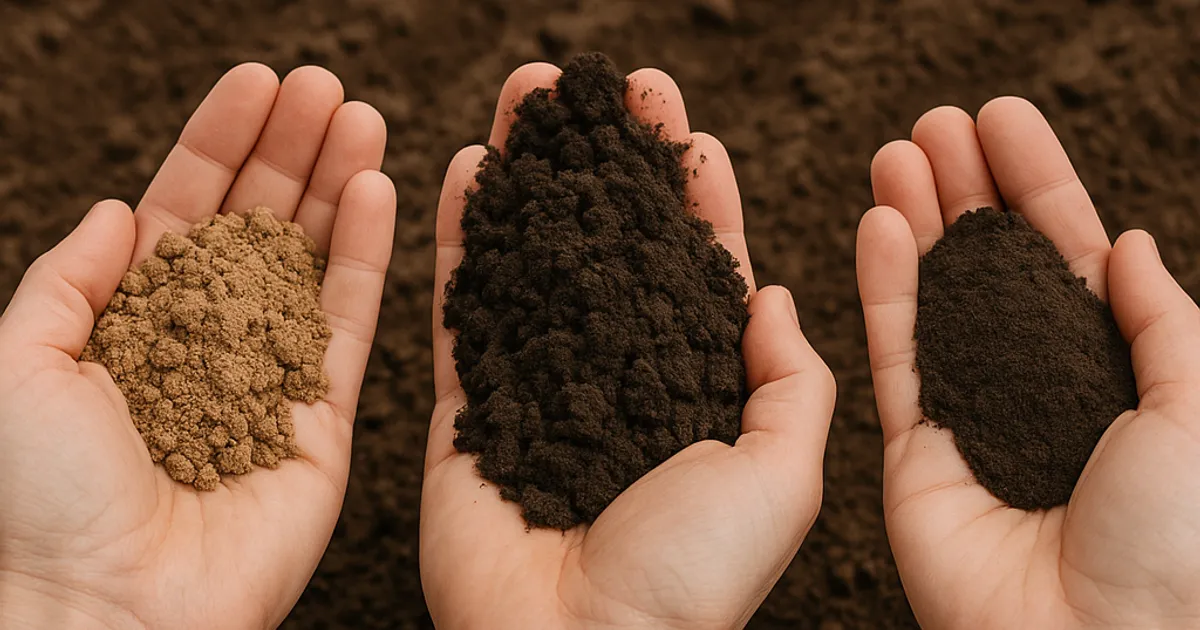
Soil Classification Basics
ASTM International standards, particularly ASTM D2487 (the Unified Soil Classification System), provide the industry framework for characterizing soils. Understanding where a material falls in this system—whether it's a well-graded gravel (GW), a lean clay (CL), or an organic soil (OH)—is foundational to sourcing decisions.
For most fill applications, contractors are looking for:
- Granular soils (GW, GP, SW, SP): Excellent drainage, high load-bearing capacity, easy compaction. Ideal for structural fills, road bases, and utility backfill.
- Sandy loams and silty soils (SM, SC, ML): Versatile, widely available, suitable for grading and landscaping fills where drainage is less critical.
- Clay-heavy soils (CL, CH): Low permeability useful for pond liners and embankment cores, but problematic for structural fills due to expansion/contraction and difficult compaction behavior.
- Organic or highly plastic soils (OL, OH, PT): Generally unsuitable for fill without treatment. Avoid as structural fill.
Compaction Standards
Before sourcing material, confirm what compaction specification your project requires. ASTM D698 (Standard Proctor) and ASTM D1557 (Modified Proctor) define maximum dry density and optimum moisture content benchmarks. Most highway and commercial projects specify 95–100% of Modified Proctor density. Residential grading might accept 90–95% Standard Proctor. The material you source must be capable of achieving those targets—which means moisture content, particle size distribution, and plasticity all matter.
Testing Before Purchasing
For large fills (over 1,000 cubic yards), always request—or perform—a basic geotechnical characterization of the source material before committing to purchase. A standard soil test battery including gradation, Atterberg limits, and standard Proctor typically runs $400–$900 and can save tens of thousands in rework costs.
Regional Pricing Benchmarks: What Dirt Actually Costs in 2026
Pricing for fill dirt varies significantly by region, material type, and market conditions. The following benchmarks reflect 2025–2026 industry averages and should be used as starting points for bid preparation—not as fixed prices.
| Material Type | National Avg (at source) | Delivered (0–15 miles) | Delivered (15–35 miles) |
|---|---|---|---|
| Common fill dirt | $3–$10/CY | $18–$45/CY | $35–$75/CY |
| Clean sandy loam | $8–$18/CY | $25–$55/CY | $45–$90/CY |
| Topsoil (screened) | $15–$35/CY | $40–$85/CY | $65–$120/CY |
| Crushed rock/gravel base | $12–$28/CY | $30–$65/CY | $55–$100/CY |
| Rip rap / armor rock | $25–$60/CY | $55–$110/CY | $85–$150/CY |
| Recycled concrete agg. | $8–$20/CY | $22–$50/CY | $40–$80/CY |
Note: These ranges reflect open-market pricing. Surplus excavated material listed on exchange platforms is frequently available at $0–$5/CY (buyer hauls) or at significantly reduced rates, which is where the real margin opportunity lives for savvy contractors.
Market conditions in high-growth metros can push prices well above these ranges. In urban markets like dirt exchange in San Francisco or dirt exchange in Los Angeles, landfill tip fees alone for surplus cut material can run $50–$120 per load, making exchange-based diversion dramatically cost-effective.
The True Cost of Hauling: A Math Problem Most Contractors Get Wrong
Of all the hidden costs in earthwork, hauling is the most consistently underestimated. Contractors often anchor to material cost per yard and treat transport as a secondary variable—but in many projects, transport is the dominant cost driver.
Breaking Down Haul Costs
A standard 10-wheel dump truck carries roughly 10–14 cubic yards per load (approximately 15–20 tons). Loaded at full capacity, it burns 5–7 gallons of diesel per hour. At current diesel pricing ($3.80–$4.50/gallon nationally in 2026), every hour of haul time costs $20–$32 in fuel alone—before driver wages, truck depreciation, insurance, and overhead.
Driver wages for CDL holders currently average $28–$42/hour depending on region, per BLS construction occupations data. Add in FMCSA hours-of-service compliance requirements and ELD mandate compliance costs, and a realistic all-in cost per truck-hour runs $65–$110.
A 20-mile haul (each direction) at typical speeds takes approximately 45–75 minutes per round trip, including load and dump time. That's 3–5 loads per truck per day. On a 10,000-yard project, that's 700–1,000 truck loads—and the arithmetic gets painful fast.
The Sourcing Proximity Premium
Reducing average haul distance from 30 miles to 12 miles on a 10,000-yard project can realistically save $80,000–$180,000 in transport costs alone—often more than the entire profit margin on a mid-size grading contract. This is why sourcing proximity is not a convenience factor; it's a financial imperative.
This is exactly the kind of problem that DirtMatch was built to solve—by showing contractors what materials are available within a defined radius of their project, so they're not defaulting to distant suppliers when closer options exist.
Regulatory and Environmental Considerations for Fill Dirt
Sourcing dirt in 2026 isn't just a logistics problem—it's increasingly a regulatory one. Environmental standards around fill material quality, stormwater management, and wetlands have tightened considerably at the state and federal levels, and contractors who ignore them face real liability exposure.
Clean Fill Requirements
Most states now have formal definitions of "clean fill" and regulate what can be used as structural or grading fill without additional environmental review. Generally, clean fill must be:
- Free of hazardous materials, petroleum products, and construction debris
- Below regulatory thresholds for metals, organics, and other contaminants
- Accompanied by documentation of source and characterization (in many states)
Accepting or placing fill material that later tests contaminated can expose contractors to liability under CERCLA (the federal Superfund law), state cleanup programs, and civil suits from property owners. Always obtain written documentation of material origin when accepting fill from excavation sites, particularly from urban or industrial areas.
Stormwater and SWPPP Compliance
Any construction site disturbing one or more acres must obtain a Construction General Permit under the EPA's NPDES stormwater program and implement a Stormwater Pollution Prevention Plan (SWPPP). Fill placement and grading activities are specifically covered under these requirements. Improperly placed fill that creates erosion or turbid runoff can trigger permit violations with penalties ranging from $5,000 to $25,000 per day.
Wetlands and Waters of the U.S.
Fill material placed in or near wetlands, streams, or other waters of the U.S. requires a Section 404 permit from the U.S. Army Corps of Engineers. Post-Sackett v. EPA (2023), jurisdictional determinations have become more complex, but the regulatory risk of placing fill in jurisdictional waters without a permit remains severe—stop-work orders, removal orders, and civil penalties are all possible outcomes.
Find or Post Dirt, Rock & Aggregate
Join thousands of contractors using DirtMatch to buy, sell, and exchange earthwork materials.
Try DirtMatch FreeSmart Sourcing Strategies by Project Type
Different project types have different material needs, timelines, and risk profiles. Here's how top contractors approach sourcing for the most common earthwork scenarios.
Residential Subdivision Development
Residential grading typically requires large volumes of common fill, often with flexible specifications (90–95% Standard Proctor, limited plasticity). The best sourcing strategy:
- Identify nearby commercial excavation projects generating clean surplus cut. These are your best sources for zero-cost or low-cost material—they pay to haul it away, you receive it for free or cheap.
- Negotiate phased delivery to align with grading schedule and avoid stockpiling problems.
- Secure topsoil separately from common fill. Don't let common fill contaminate topsoil stockpiles.
Commercial and Industrial Site Work
Commercial projects often have tighter specs—structural fills under buildings and paving require rigorous compaction testing and documented material quality. Sourcing strategy:
- Pre-qualify material sources geotechnically. Get Proctor curves and gradation data before committing to purchase.
- Use local aggregate suppliers for certified materials under structures.
- Explore recycled aggregate (crushed concrete, RAP) for sub-base applications—often substantially cheaper and increasingly accepted by municipal specs.
Infrastructure and DOT Projects
State DOT projects carry the strictest material specifications, often referencing AASHTO standards and state-specific material classifications. Sourcing strategy:
- Source only from DOT-approved pits and quarries for specified materials.
- Maintain chain of custody documentation from source to placement.
- Plan haul routes early and obtain necessary oversize/overweight permits for heavy aggregate loads.
Landscaping and Final Grade
For topsoil and finish grade material, quality consistency matters more than raw quantity. Sourcing strategy:
- Specify organic matter content (minimum 3–5% for healthy turf establishment).
- Request screened topsoil free of debris, rocks over 1 inch, and weed seed contamination.
- Source from local suppliers who can provide consistent material over multiple deliveries.
For contractors operating in fast-growing markets like dirt exchange in Denver or dirt exchange in Seattle, having pre-established relationships with material exchange networks dramatically compresses the time between project award and material mobilization—a real competitive edge when schedules are tight.
Technology Tools Reshaping Dirt Sourcing in 2026
Beyond material exchange platforms, a suite of technology tools is changing how contractors evaluate, procure, and manage earthwork materials.
GPS and Machine Control Integration
Modern grade control systems from manufacturers like Trimble Construction and Komatsu's intelligent machine control systems generate highly accurate cut/fill calculations before a blade hits dirt. This means contractors can quantify material needs with ±5% accuracy before procurement begins—eliminating the chronic overbuy problem that leads to surplus stockpiles and waste hauling costs.
Drone Volumetric Surveys
UAV-based photogrammetry has made stockpile measurement and earthwork quantity verification dramatically faster and cheaper. A drone survey that would have cost $3,000–$8,000 from a traditional survey crew can now be completed for $300–$800 with commercial drone services—and the data integrates directly with estimating software. Contractors using drone surveys before material procurement consistently reduce over-ordering by 10–20%.
Material Tracking and Documentation Software
With increasing regulatory pressure around fill material documentation, software tools that track material origin, test results, and chain of custody from source to placement are becoming standard practice on commercial and public projects. These systems also streamline SWPPP documentation and compaction testing record-keeping.
Online Soil Survey Tools
The USDA Web Soil Survey remains one of the most underutilized free tools in the earthwork contractor's arsenal. Before mobilizing on a new site, smart contractors use WSS to understand the existing soil profile—identifying areas of organic soil, high-plasticity clay, or shallow bedrock that will affect both excavation production rates and the suitability of on-site material for reuse as fill.
Building a Supplier Network That Pays Off Year After Year
The contractors who consistently win on material costs don't rely on one-off sourcing—they build durable supplier networks that give them preferential access, early availability notifications, and negotiating leverage.
Establishing Quarry and Pit Relationships
Local aggregate quarries and sand/gravel pits are the backbone of structural fill supply in most regions. Key relationship-building tactics:
- Visit in the off-season. Quarry managers appreciate contractors who show up in January, not May. You'll get better pricing and scheduling priority.
- Commit volume. Even if you can't guarantee exact quantities, giving suppliers a rough annual volume estimate helps them plan production and rewards you with preferred pricing.
- Pay promptly. In an industry where 30–60 day payment terms are common, contractors who pay on receipt build enormous goodwill.
Developing Excavation Contractor Relationships
Perhaps the highest-value sourcing relationship for fill dirt is with excavation contractors on commercial and civil projects in your region. These contractors regularly generate thousands of yards of surplus clean cut—and they're paying to haul it away. If you can reliably accept and use that material, you both win.
Establishing these relationships used to require years of networking. Today, material exchange platforms make it structurally easier to find and connect with contractors who have surplus material right now. Getting started with DirtMatch is one of the fastest ways to plug into these exchange relationships without years of cold-call networking.
Maintaining a Source Library
Top earthwork contractors maintain an internal database of qualified material sources—categorized by material type, location, volume capacity, typical pricing, and contact information. This "source library" becomes a proprietary competitive asset that gets more valuable with every project.
The Environmental and Business Case for Dirt Exchange
Beyond direct cost savings, there's a compelling environmental and reputational case for sourcing through material exchange networks rather than defaulting to quarry extraction and landfill disposal.
Every cubic yard of fill dirt sourced from a nearby excavation project—rather than mined from a quarry—saves:
- Mining energy and land disturbance at the extraction site
- Landfill airspace that would be consumed by the surplus cut
- Diesel fuel and emissions from longer haul routes
- Tip fees that would otherwise flow to landfill operators
For contractors pursuing LEED certification on commercial projects, recycled and locally sourced fill materials can contribute to Materials & Resources credits. More broadly, contractors who can demonstrate sustainable material practices are increasingly preferred by municipal clients, developers with ESG commitments, and states that have begun incorporating environmental criteria into public bid evaluations.
The AGC of America has increasingly emphasized sustainable construction practices in its contractor development programs, reflecting growing client and regulatory pressure for more responsible material management across the industry.
This convergence of cost efficiency and environmental responsibility is exactly why the material exchange model isn't just a niche trend—it's becoming the default for sophisticated earthwork operations.
Common Sourcing Mistakes That Kill Margins
Even experienced contractors fall into sourcing traps that erode profitability. Here are the most common—and how to avoid them.
Mistake 1: Sourcing Material Too Late
Material availability is not infinite. Waiting until two weeks before mobilization to source 8,000 yards of fill in a competitive market means you'll accept whatever's available at whatever price. Smart contractors source material during the estimating phase—locking in availability and price before the contract is even signed.
Mistake 2: Ignoring Moisture Conditions
Purchasing material that's too wet to compact in your scheduled window is an expensive mistake. Always ask about current moisture conditions and recent weather history at the source. Many surplus cut materials—particularly clay-heavy soils from deep excavations—are delivered at or above optimum moisture content and require drying time before compaction.
Mistake 3: Not Accounting for Swell and Shrinkage
Excavated soil occupies more volume than undisturbed soil (swell), and compacted fill occupies less volume than loose material (shrinkage). Failing to apply appropriate swell/shrink factors to volume calculations leads to systematic under-ordering or over-ordering. For granular soils, typical swell factors run 10–15%; for clay soils, 25–40%. Compaction shrinkage factors typically range from 10–25% depending on material and target density.
Mistake 4: Accepting Material Without Documentation
In 2026's regulatory environment, accepting fill material without origin documentation is a liability risk. If the material later tests contaminated, the receiving contractor can face cleanup liability even if they acted in good faith. Always get written documentation of material source, any available test data, and the identity of the party generating the material.
Mistake 5: Underutilizing Exchange Networks
Relying exclusively on traditional supplier relationships means leaving exchange-sourced material savings—often 20–40%—on the table for every project. Even contractors with strong quarry relationships should routinely check exchange platforms for nearby surplus material that can supplement or replace quarry-sourced fill at lower cost.
Putting It All Together: A Sourcing Checklist for 2026
The following checklist captures the key steps in an optimized dirt sourcing workflow for modern earthwork contractors.
Pre-Bid Phase:
- Generate accurate cut/fill quantities using machine control data or drone survey
- Apply swell/shrink factors to raw volume calculations
- Specify material requirements (soil classification, compaction standard, contamination limits)
- Research local material exchange platforms for nearby surplus sources
- Contact 2–3 quarry or pit suppliers for preliminary pricing
- Estimate haul costs at accurate truck-hour rates (not rule-of-thumb)
- Check USDA Web Soil Survey for on-site soil conditions
Pre-Mobilization Phase:
- Execute material purchase agreements with pricing and delivery schedule
- Obtain material source documentation (origin, test data)
- Arrange geotechnical testing for large fills
- Confirm haul route permits for overweight loads
- Coordinate surplus cut disposal through exchange platform if applicable
- Verify SWPPP is in place and covers material staging areas
During Construction:
- Track delivery volumes against quantity plan
- Conduct compaction testing per specification
- Maintain material documentation for regulatory compliance
- Adjust sourcing as needed based on field conditions
Project Closeout:
- Reconcile actual material volumes against plan
- Document sourcing performance data for future bid calibration
- Update internal source library with supplier performance notes
- List any significant surplus material on exchange platform before paying to haul to landfill
The Competitive Advantage Is Available—If You Take It
Dirt sourcing in 2026 isn't complicated—but it does require intentionality. The contractors padding their margins and winning work at competitive prices aren't doing anything mysterious. They're sourcing material earlier, choosing proximity over habit, leveraging exchange networks to find zero-cost and low-cost material, and treating haul cost as the primary variable it actually is.
The tools are available. The exchange networks are active. The regulatory framework is clear enough to navigate with basic due diligence. What separates high-performers from average contractors isn't access to better materials—it's better sourcing habits, executed consistently across every project.
Whether you're a grading contractor in a fast-growing Sun Belt market or an excavation contractor in the urban Northeast, the opportunity to cut $50,000–$200,000 in material and transport costs annually is sitting in your sourcing process. You just have to go get it.
For contractors ready to upgrade their sourcing approach, exploring how DirtMatch works is a natural first step—the platform's matching system was built specifically to close the information gap between contractors who need material and those who have it, creating the kind of efficient local exchange that benefits everyone in the earthwork ecosystem.