
Fill dirt estimation sounds straightforward until you're staring at a shortfall mid-project or paying to haul away three truckloads of surplus material you didn't need. According to the U.S. Army Corps of Engineers, inaccurate earthwork quantity estimates account for some of the most common and costly overruns in civil construction — and the same holds true for residential and commercial landscaping projects alike.
Whether you're grading a backyard, preparing a foundation pad, filling a pond, or leveling a commercial site, the ability to accurately estimate fill dirt is a fundamental skill that directly impacts your budget, schedule, and material sourcing strategy. This guide breaks down the science and the practical math behind fill dirt estimation, project type by project type, so you can approach every job with confidence.
Why Accurate Fill Dirt Estimation Matters More Than You Think
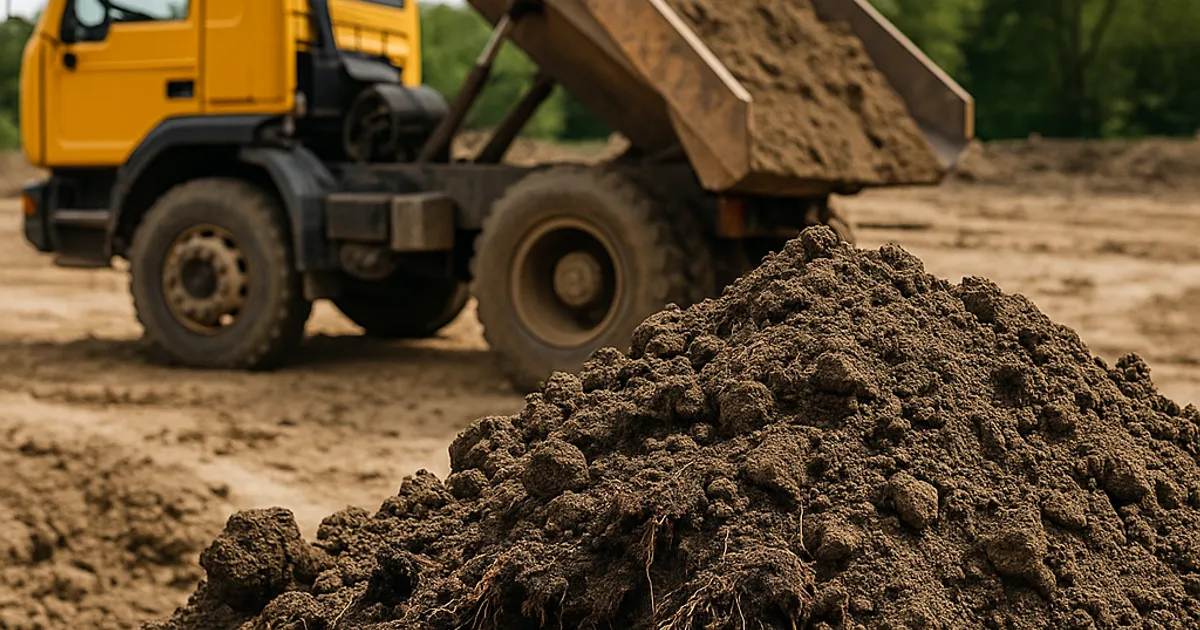
The financial stakes of a bad fill estimate are significant. Fill dirt typically costs between $5 and $25 per cubic yard for the material itself, with delivery fees ranging from $150 to $450 per truckload depending on haul distance and region. A standard dump truck carries roughly 10 to 14 cubic yards of compacted fill. On a mid-sized residential grading project requiring 200 cubic yards, being off by even 15% means you could be ordering 30 extra cubic yards — translating to two or three unnecessary truck deliveries and potentially $600–$1,200 in wasted costs.
Beyond the budget, inaccurate estimates create scheduling problems. Waiting on additional fill deliveries can stall foundation pours, delay landscaping, and push project timelines into weather windows that weren't planned for. On commercial projects, schedule delays carry contractual penalties.
Then there's the environmental dimension. Excess fill that ends up dumped improperly can create erosion, drainage issues, and even regulatory violations under the EPA's Clean Water Act Section 404, which governs the discharge of dredged or fill material into waters of the United States. Getting your estimate right from the start isn't just good business — it's good environmental practice.
For contractors who regularly move large volumes of material, connecting with a network of verified dirt sources through a platform like DirtMatch can dramatically reduce the cost and complexity of sourcing fill, especially when project volumes are uncertain and you need flexibility in scheduling deliveries.
Understanding Fill Dirt: Types, Compaction, and the Swell/Shrinkage Factor
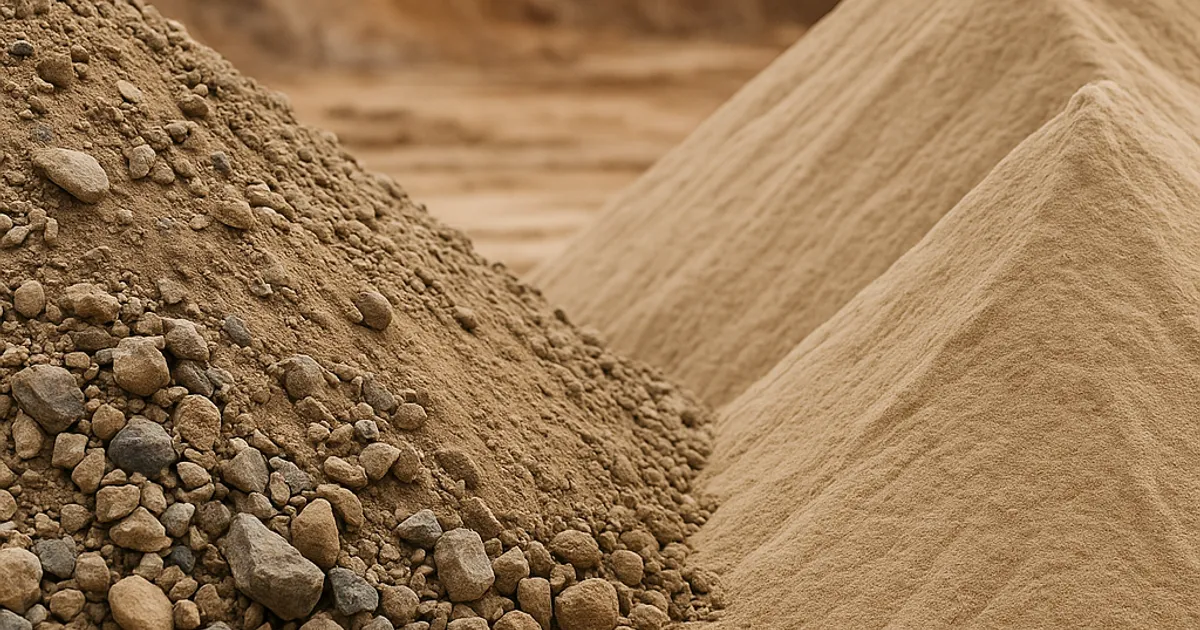
Before you can estimate accurately, you need to understand what you're working with. Not all fill dirt behaves the same way, and the difference between bank measure, loose measure, and compacted measure is where most estimation errors originate.
The Three States of Soil Volume
- Bank Measure (BCY – Bank Cubic Yards): Soil in its natural, undisturbed state in the ground. This is the baseline from which all conversions start.
- Loose Measure (LCY – Loose Cubic Yards): Soil that has been excavated and loaded into a truck. It expands due to air voids — this is called swell.
- Compacted Measure (CCY – Compacted Cubic Yards): Soil that has been placed and mechanically compacted. It shrinks from its bank state — this is called shrinkage.
Swell and Shrinkage Factors by Soil Type
| Soil Type | Swell Factor (Bank → Loose) | Shrinkage Factor (Bank → Compacted) |
|---|---|---|
| Sandy Loam | 10–15% | 10–12% |
| Common Earth (mixed) | 15–20% | 10–15% |
| Clay | 20–30% | 15–25% |
| Gravel | 10–12% | 5–8% |
| Rock (blasted) | 30–45% | 30–35% |
| Topsoil | 15–25% | 10–20% |
These factors are critical. If you order fill in loose cubic yards (as delivered by truck) but need a specific compacted volume, you must account for the shrinkage that occurs after compaction. A project requiring 100 compacted cubic yards of common earth might need 115–120 loose cubic yards delivered, depending on soil type and compaction method.
ASTM Standards for Soil Compaction
The industry standard for soil compaction testing is ASTM D698 (Standard Proctor Test) for standard compaction and ASTM D1557 for modified Proctor compaction. These tests determine the maximum dry density and optimum moisture content for a given soil, which informs how tightly the material will pack. Specifications on most civil projects require fill to be compacted to 90–95% of maximum dry density as determined by ASTM D698 or D1557.
Knowing the compaction specification before you order is essential. A higher compaction requirement means more shrinkage, which means you'll need more loose material delivered to achieve your target compacted volume.
Step-by-Step: The Core Fill Dirt Calculation Formula
Regardless of project type, the fundamental calculation follows a consistent process. Here's the universal framework:
Step 1: Determine the Volume Needed in Cubic Feet
For simple rectangular or square areas:
Volume (cubic feet) = Length (ft) × Width (ft) × Depth (ft)
For example: A 50 ft × 30 ft area needing 6 inches (0.5 ft) of fill: 50 × 30 × 0.5 = 750 cubic feet
Step 2: Convert Cubic Feet to Cubic Yards
Divide by 27 (since 1 cubic yard = 27 cubic feet): 750 ÷ 27 = 27.78 cubic yards (compacted)
Step 3: Apply the Swell/Shrinkage Adjustment
If the fill is common earth with a 15% shrinkage factor: 27.78 ÷ (1 – 0.15) = 27.78 ÷ 0.85 = 32.68 loose cubic yards to order
Step 4: Add a Waste/Overage Buffer
Most experienced estimators add 5–10% overage for irregular surfaces, spillage, and measurement uncertainty: 32.68 × 1.08 = ~35.3 cubic yards to order
Step 5: Convert to Truckloads
With a standard 10-ton dump truck carrying approximately 10–14 cubic yards: 35.3 ÷ 12 = ~3 truckloads
This five-step process forms the backbone of every fill estimate. The complexity comes in applying it correctly to different project geometries and conditions — which we'll cover in the sections below.
Estimating Fill Dirt for Landscaping and Yard Grading Projects
Residential landscaping is the most common application for fill dirt purchases, yet it's also where estimates most frequently go wrong. Yards are rarely flat, rarely rectangular, and rarely have uniform fill depth requirements across the entire area.
Dealing with Irregular Shapes
For L-shaped, curved, or irregularly shaped yards, break the area into smaller geometric sections (rectangles, triangles, or circles), calculate each separately, and sum the results.
Triangle formula: (Base × Height ÷ 2) × Depth Circle formula: π × Radius² × Depth (for circular garden beds, ponds, etc.)
For complex irregular shapes, many contractors use the average end area method or cross-section method, where the site is divided into a grid of cells (typically 10 ft × 10 ft), the existing and proposed grade elevations are recorded at each grid intersection, and the cut/fill volumes are calculated cell by cell.
Grading for Drainage: The Critical Slope Requirement
The International Residential Code (IRC) Section R401.3 requires the finish grade to slope away from foundation walls at a minimum of 6 inches in the first 10 feet (a 5% slope) to prevent water intrusion. This means your fill depth is not uniform — it tapers from deeper near the foundation to shallower at the perimeter, requiring a more sophisticated calculation.
For a house with 100 linear feet of perimeter grading, establishing this 6-inch-over-10-foot slope across a 10-foot-wide band requires:
- Average fill depth: 3 inches (0.25 ft)
- Area: 100 ft × 10 ft = 1,000 sq ft
- Volume: 1,000 × 0.25 = 250 cubic feet = 9.26 cubic yards (before compaction adjustment)
Topsoil vs. Fill Dirt: Know the Distinction
Many homeowners confuse fill dirt with topsoil. Fill dirt is subsoil — it contains little to no organic matter, which makes it structurally stable for grading, but poor for growing plants. Topsoil contains organic matter and supports vegetation but can settle and decompose over time, making it unsuitable as a base fill layer.
Best practice: Use clean fill dirt (or engineered fill) for the base layer, then cap with 4–6 inches of quality topsoil for planting areas. This layered approach affects your estimate — you'll need calculations for both materials.
Estimating Fill for Foundation and Building Pad Projects
Foundation pad preparation is where fill dirt estimation intersects most directly with structural engineering requirements. Getting the volume wrong here doesn't just cost money — it can compromise the structural integrity of the building.
Understanding Subgrade Requirements
For slab-on-grade foundations, the subgrade (compacted fill layer beneath the slab) must meet specific load-bearing capacity requirements, typically expressed as a California Bearing Ratio (CBR) or a minimum bearing pressure (usually 1,500–2,000 pounds per square foot for residential construction). The type of fill used and the degree of compaction directly determine whether these thresholds are met.
State DOTs and local building departments often specify fill materials by classification. The USCS (Unified Soil Classification System) and AASHTO soil classification system are the most widely used. GW (well-graded gravel) and SW (well-graded sand) soils are generally preferred for structural fill due to their drainage characteristics and compactibility.
Calculating Pad Fill Volume
For a building pad on a sloped site, the calculation becomes a mass haul problem:
- Survey the existing grade (either with a total station, GPS rover, or drone photogrammetry)
- Establish the proposed pad elevation
- Calculate cut volumes where existing grade is above proposed grade
- Calculate fill volumes where existing grade is below proposed grade
- Net fill required = Total fill volume – Total cut volume (adjusted for shrinkage and swell)
If cut volume (after swell adjustment) exceeds fill volume needed, you may have surplus to haul off — potentially a material that another contractor can use. This is precisely where platforms that facilitate dirt exchange create real economic value. Contractors in high-construction-density cities like those served by the dirt exchange in Denver or dirt exchange in Los Angeles regularly use matching platforms to offset hauling costs by finding nearby projects that need what they're removing.
Over-Excavation and Recompaction
Many specifications require over-excavating native soil by 12–24 inches below the final subgrade elevation, then backfilling with engineered fill in compacted lifts (typically 6–8 inch loose lifts compacted to 95% Proctor). This means the fill volume required is significantly larger than the simple geometric volume of the pad itself — a detail often missed by estimators unfamiliar with geotechnical requirements.
For a 2,000 sq ft building pad requiring 18 inches of over-excavation and recompaction:
- Over-excavation volume: 2,000 × 1.5 ft = 3,000 cubic feet = 111 cubic yards (in addition to any fill needed to raise grade)
Estimating Fill Dirt for Trenches and Utility Work
Trench backfill is often underestimated because the pipe or conduit running through the trench displaces volume, and the compaction requirements for trench fill are typically more stringent than for general grading.
Trench Fill Volume Formula
Trench Volume = Length × Width × Depth – Pipe Volume
Pipe volume (for a circular pipe): π × (Pipe Radius)² × Length
For a 200-foot trench, 2 feet wide and 4 feet deep, with a 6-inch diameter pipe:
- Trench volume: 200 × 2 × 4 = 1,600 cubic feet
- Pipe volume: π × (0.25)² × 200 = 39.27 cubic feet
- Net fill volume: 1,560.73 cubic feet = 57.8 cubic yards (before compaction adjustment)
Bedding Material vs. Structural Backfill
Trench fill is typically done in zones:
- Bedding layer (beneath and surrounding the pipe): Usually crushed stone or clean sand — approximately 4–6 inches below and to the spring line of the pipe
- Haunch zone (pipe spring line to top of pipe): Requires carefully placed material to prevent pipe deflection
- Initial backfill (top of pipe to 12 inches above): Material must be compacted without damaging the pipe
- Final backfill (12 inches above pipe to surface): General fill, compacted per specification
Each zone may require a different material, meaning your fill dirt estimate must account for separate volumes of different material types.
Estimating Fill for Retaining Walls and Raised Beds
Retaining walls require fill both behind the wall (backfill for drainage and structural purposes) and in front of or on top of the wall (the finished grade fill). These are often calculated separately.
Retaining Wall Backfill
A well-drained granular backfill is essential for retaining wall performance. NCMA (National Concrete Masonry Association) specifications recommend using clean crushed stone or well-graded gravel for the drainage zone directly behind retaining walls, typically extending from the base of the wall to within 1 foot of the top.
For a retaining wall 40 feet long, 4 feet high, with a 3-foot-wide drainage aggregate zone:
- Volume: 40 × 4 × 3 = 480 cubic feet = 17.8 cubic yards of drainage aggregate
Behind the drainage zone, you'll backfill with general fill dirt — calculate that separately based on the geometry of the slope being retained.
Raised Garden Beds and Planters
For raised beds, the calculation is simple — Length × Width × Height — but material selection matters. A 50/50 blend of fill dirt and compost is commonly recommended for productive growing beds. Calculate the total volume, then split the order accordingly.
Estimating Fill for Pond and Depression Filling
Filling an existing pond, retention basin, or low-lying depression is one of the most material-intensive fill scenarios homeowners and contractors encounter. It's also where underestimation is most costly.
Surveying the Void
Unlike adding fill to a flat surface, filling a depression requires understanding the existing contours of the void. The most accurate approach is a bathymetric-style survey — recording depth measurements across a grid of points and using the prismoidal formula or average end area method to calculate total void volume.
For a roughly bowl-shaped pond: Volume ≈ (Surface Area × Average Depth × 0.4) — the 0.4 factor accounts for the bowl shape rather than a perfect cylinder
For a pond with a 100 ft × 80 ft surface area and average 6-foot depth:
- Volume: (100 × 80) × 6 × 0.4 = 19,200 cubic feet = 711 cubic yards
At $15/yard for fill plus $300/truckload delivery, this could represent $15,000–$25,000 in material and delivery costs — making accurate estimation critically important.
Water Table Considerations
If the pond or depression is at or near the water table, fill placement below the water line creates different compaction dynamics. Saturated fill settles more than dry fill, and in some cases, geotechnical fabric (geotextile) must be placed at the base before filling to prevent material migration. These factors add to the total fill volume needed and should be accounted for with a higher overage buffer (15–20% rather than the standard 5–10%).
Find or Post Dirt, Rock & Aggregate
Join thousands of contractors using DirtMatch to buy, sell, and exchange earthwork materials.
Try DirtMatch FreeTools, Technology, and Software for Fill Estimation
Modern estimators have moved well beyond the tape measure and legal pad. A range of tools now makes fill dirt estimation faster and more accurate than ever.
Traditional Survey Methods
- Total Station Surveys: High-precision angle and distance measurements; standard on civil projects
- Differential Leveling: Grid-based elevation measurements using an optical or digital level
- GPS Rovers: RTK GPS provides sub-inch accuracy for grade measurement across large sites
Drone-Based Topographic Surveys
Drone photogrammetry has become one of the most efficient methods for earthwork quantity estimation. A drone equipped with a camera and GPS can survey a 50-acre site in under an hour, generating a point cloud and digital elevation model (DEM) accurate to within 2–5 centimeters. Software like DroneDeploy, Pix4D, or Trimble Business Center then calculates cut/fill volumes automatically.
Studies from Purdue University's Construction Engineering and Management program have shown drone-based quantity surveys to be accurate within 2–3% of traditional survey methods, at a fraction of the cost for large sites.
Earthwork Calculation Software
- AutoCAD Civil 3D: Industry-standard for civil earthwork design and quantity takeoff
- Agtek Earthwork: Purpose-built for earthwork quantity estimation and haul analysis
- HCSS HeavyBid: Estimating software widely used by heavy construction contractors
- Planswift / Bluebeam: PDF-based takeoff tools useful for smaller projects working from 2D plans
Online Fill Dirt Calculators
For simple rectangular projects, free online calculators can produce quick estimates. However, they typically don't account for swell/shrinkage factors, irregular terrain, or multi-zone fill specifications — making them best suited for rough ballpark estimates only.
Regional Factors That Affect Fill Dirt Estimates and Costs
Fill dirt isn't a commodity with uniform pricing across the country. Regional geology, local regulations, and market demand all influence both the material itself and how you estimate for it.
Soil Type Variability by Region
- Pacific Northwest (Seattle area): Predominantly glacial till soils with high clay content; swell factors of 25–30% are common. Projects requiring fill in the dirt exchange in Seattle area frequently deal with expansive soils that require careful attention to compaction specifications.
- Colorado Front Range (Denver/Boulder): Expansive bentonite clay soils are a major concern; fill material often needs to be imported from non-expansive sources. The dirt exchange in Denver market reflects this with premium pricing on quality, non-expansive fill.
- California (Los Angeles/San Diego): Seismic zone considerations affect compaction specs; fill must often meet higher Proctor densities. Contractors working with the dirt exchange in Los Angeles frequently encounter CalTrans-specification fill requirements.
- Northeast (Boston): Rocky glacial terrain means rock fragments are common in native fill, affecting swell calculations significantly.
Regulatory Constraints on Fill Material
Many jurisdictions restrict what materials can be used as fill, particularly near wetlands, floodplains, or water supply areas. The EPA and Army Corps of Engineers regulate fill in jurisdictional wetlands under Section 404 of the Clean Water Act. Some states have additional requirements — California's Department of Toxic Substances Control (DTSC), for example, requires testing of imported fill material on certain project types to screen for contamination.
Always verify local fill material acceptance criteria before ordering. Using non-compliant fill can result in costly removal orders and regulatory fines.
Common Fill Dirt Estimation Mistakes and How to Avoid Them
Even experienced contractors fall into predictable estimation traps. Here's what to watch for:
Mistake 1: Forgetting to Account for Compaction
As covered earlier, this is the single most common and costly error. Always convert your target compacted volume back to loose measure before ordering.
Mistake 2: Ignoring Settlement Over Time
Fill dirt — especially clay-heavy or organics-containing fill — continues to settle long after placement. For projects where long-term settlement is a concern (foundations, retaining walls, road subgrades), specify low-plasticity, granular fill and require proper compaction documentation. For landscapes, plan for 5–10% additional settlement and top-dress accordingly.
Mistake 3: Not Accounting for Existing Vegetation and Debris
If you're filling over an area with existing grass, roots, or organic debris, that material compresses and decomposes over time, adding to effective settlement. Strip and remove organic material before filling, and account for the additional depth this creates.
Mistake 4: Using the Wrong Swell/Shrinkage Factor
Applying a generic 15% factor to clay-heavy soil (which can swell 25–30%) will result in a significant under-order. Always identify your soil type and apply the appropriate factor from a soil reference table or geotechnical report.
Mistake 5: Not Surveying the Existing Grade
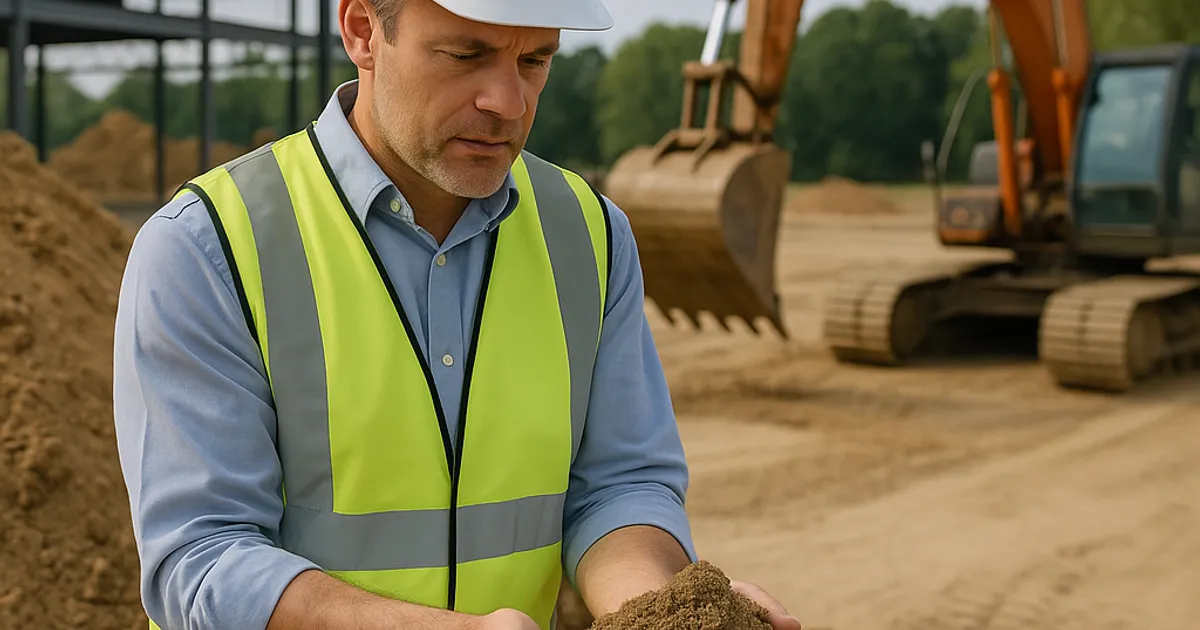
Estimating fill depth by eye or rough measurement without an actual grade survey is a recipe for surprises. Even a 2-inch error in average depth across a 10,000 square foot area translates to 61 cubic yards of unanticipated fill — potentially thousands of dollars.
Mistake 6: Forgetting Access and Placement Logistics
If the fill area is accessible only from one direction, or if trucks can't get within 50 feet of the target area, the spreading and placement costs increase — and spillage/waste factors should be adjusted upward accordingly.
Fill Dirt Cost Estimation: A Comprehensive Price Guide
Understanding how to estimate volume is only half the equation. You also need to estimate cost accurately.
Material Costs by Fill Type
| Fill Material | Cost Per Cubic Yard (Material Only) | Best Use Cases |
|---|---|---|
| Clean Fill Dirt (imported) | $8–$20 | General grading, low areas |
| Free Fill Dirt (from excavation) | $0 (may pay for hauling) | Any where available |
| Sandy Fill / Clean Sand | $15–$30 | Drainage, pipe bedding |
| Clay Fill | $5–$15 | Pond lining, impermeable barriers |
| Engineered Fill (tested/certified) | $20–$45 | Structural foundations, DOT work |
| Topsoil (screened) | $25–$55 | Lawn establishment, planting |
| Crushed Stone / Aggregate | $30–$65 | Drainage, road base, retaining walls |
Delivery and Placement Costs
| Cost Component | Typical Range |
|---|---|
| Dump truck delivery (10–14 CY) | $150–$450 per load |
| Spreading/grading (contractor) | $50–$150 per hour |
| Compaction (plate compactor) | $75–$200 per hour |
| Geotechnical testing (Proctor/density) | $150–$400 per test |
| Drone topographic survey | $500–$2,500 per site |
How Sourcing Strategy Affects Total Cost
The single biggest lever in fill dirt cost is sourcing proximity. Fill dirt hauled 5 miles costs dramatically less than fill hauled 50 miles. Connecting with excavation contractors who are actively removing material from nearby sites — and need someone to take it — can reduce or even eliminate material costs entirely.
This is the core value proposition of how DirtMatch works: the platform matches contractors who have excess dirt from excavation projects with contractors who need fill, reducing hauling distances, cutting material costs, and keeping clean fill material out of landfills. For high-volume commercial projects, this approach can represent savings of $5–$15 per cubic yard — significant on a project requiring 1,000+ cubic yards.
Building a Fill Dirt Estimate: A Project-by-Project Quick Reference
Residential Lot Grading (Typical 1/4 Acre Lot)
- Survey existing grade: 4–6 hours with GPS rover
- Calculate cut/fill balance using grid method
- Apply 15–20% swell/shrinkage adjustment for common earth
- Add 8% overage buffer
- Budget: $3,000–$15,000 depending on depth and site access
Commercial Building Pad (1–5 Acres)
- Require a registered civil engineer to prepare a grading plan
- Use drone photogrammetry for quantity verification
- Specify fill material by USCS classification in project specifications
- Budget for geotechnical testing at minimum 1 test per 500 compacted cubic yards
- Budget: $25,000–$250,000+ depending on site conditions
Highway / Road Subgrade Fill
- Reference state DOT Standard Specifications for fill material quality
- Use mass haul diagram to optimize cut/fill balance across the project length
- Account for swell factors in haul distance calculations
- Budget: Varies widely; earthwork is typically 15–25% of total road construction cost
Pond or Depression Filling
- Conduct bathymetric survey for accurate void volume
- Add 15–20% settlement buffer
- Verify regulatory compliance (wetlands, stormwater)
- Budget: $10,000–$100,000+ depending on pond size and depth
How to Source Fill Dirt After You've Done Your Estimate
Once you know how much fill you need, sourcing becomes the next challenge. The traditional approach — calling multiple suppliers, getting quotes, scheduling deliveries — is time-consuming and often results in paying retail rates for material that could be sourced cheaply from a nearby excavation project.
The most cost-effective fill sourcing strategies combine:
- Checking with local excavation contractors who are currently working on foundation or utility projects
- Contacting municipal projects — road construction and utility work often generates large volumes of clean fill
- Using a dirt exchange platform to match your fill needs with available sources in real time
For contractors and project owners in major markets, get started with DirtMatch to access a network of verified material sources and receivers across the country. Whether you're sourcing 50 yards for a backyard project or 5,000 yards for a commercial pad, the platform connects you with nearby options that reduce haul distances and overall project costs — often substantially.
Projects in densely developed urban markets, where fill disposal is a constant challenge for excavation contractors, offer the best opportunities for free or low-cost fill sourcing. Markets like San Francisco, Boston, and Denver regularly see excavation surplus that contractors are motivated to move quickly and cheaply. The dirt exchange in San Francisco and dirt exchange in Boston markets are particularly active, given the volume of urban infill construction in those cities.
Final Checklist: What to Verify Before Placing Your Fill Dirt Order
Before you call in a material order, run through this verification checklist:
- Have you surveyed the existing grade (not just estimated by eye)?
- Have you identified the soil type and applied the correct swell/shrinkage factor?
- Have you converted your compacted volume to loose measure for ordering?
- Have you added a 5–10% overage buffer for waste and measurement error?
- Have you verified the fill material specification (USCS classification, compaction requirement)?
- Have you confirmed the regulatory status of the fill area (wetlands, floodplain, setbacks)?
- Have you verified site access for delivery trucks (width, weight limits, turning radius)?
- Have you compared material costs from multiple sources, including nearby excavation projects?
- Do you have a plan for placement and compaction, including equipment and lift thickness?
- Have you accounted for geotechnical testing requirements if specified?
Working through this checklist before ordering significantly reduces the risk of costly surprises — and positions you to execute the fill phase of your project cleanly and professionally.
Conclusion
Accurate fill dirt estimation is part science, part experience, and part discipline. The formulas aren't complicated, but applying them correctly requires attention to soil types, compaction factors, project geometry, regulatory constraints, and regional conditions. Whether you're grading a backyard, preparing a commercial building pad, or filling a pond, the fundamental process — measure accurately, apply the right conversion factors, add a reasonable buffer, and source strategically — remains constant.
The contractors who consistently nail their fill estimates are the ones who invest time in proper site surveys, understand the behavior of soil in its various states, and have reliable sourcing networks that let them adjust material quantities without disrupting project schedules. Building those competencies, and leveraging modern tools and platforms to support them, is what separates top-performing earthwork contractors from the rest.