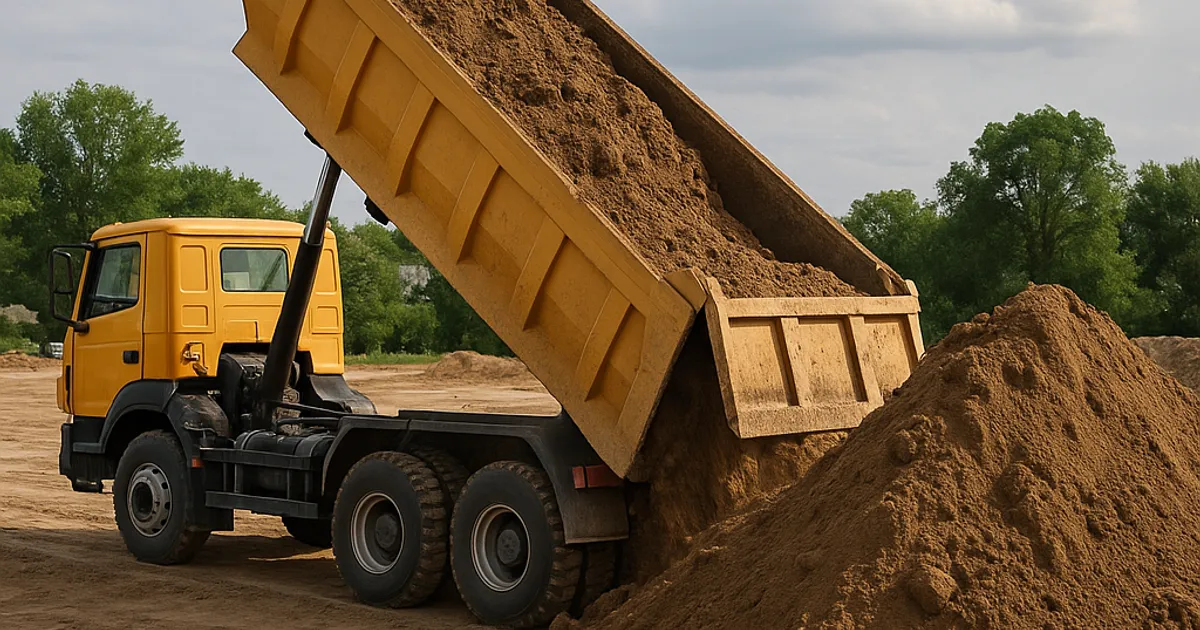
Dirt doesn't sound glamorous. But if you've spent any time around construction sites, land development, or infrastructure projects, you already know that moving earth is one of the most essential — and lucrative — services in the entire built environment. Billions of cubic yards of soil, rock, and aggregate change hands every year across the United States, and the contractors, haulers, and material suppliers who understand how to navigate that market are quietly building generational wealth.
According to IBISWorld, the excavation and earthmoving industry in the U.S. generates over $70 billion in annual revenue, with consistent year-over-year growth driven by infrastructure investment, residential construction booms, and commercial development. That figure doesn't even account for the massive aggregate materials market — sand, gravel, and crushed stone — which the U.S. Geological Survey values at an additional $30+ billion per year.
So how much can you actually make in the dirt industry? The answer depends on your role, your equipment, your region, and your ability to find and fill material needs efficiently. This guide breaks down every layer of the market — from entry-level hauling operators to full-scale earthwork firms — and shows you exactly where the money is and how to capture it.
The Scale of the U.S. Dirt and Earthwork Market
Before diving into individual earnings, it's worth understanding the sheer size of the opportunity. The earthwork and excavation market encompasses a wide range of activities: site preparation, grading, trenching, foundation excavation, land clearing, road construction, dam building, and the movement of fill materials between project sites.
The Associated General Contractors of America (AGC) reports that site preparation contractors — a category that includes most earthwork and excavation firms — collectively employ over 300,000 workers and operate hundreds of thousands of pieces of heavy equipment nationwide. The sector has proven remarkably resilient through economic cycles because infrastructure and housing needs don't disappear during downturns — they often accelerate when government stimulus funding flows into construction.
The Infrastructure Investment and Jobs Act, signed into law in 2021, allocated $1.2 trillion toward roads, bridges, water systems, and broadband — much of which requires significant earthmoving work. State DOTs from California to Massachusetts are actively letting contracts for highway expansion, drainage improvements, and bridge abutment work. All of that dirt has to go somewhere, and getting it there efficiently is where the real profit lives.
The materials side is equally compelling. Crushed stone production alone exceeds 1.5 billion metric tons annually in the U.S., according to USGS data. Sand and gravel production adds another 900 million metric tons. These materials underpin everything from concrete production to road base to drainage systems — and demand remains structurally high regardless of what's happening in financial markets.
The key insight for anyone looking to enter or grow in this industry: the dirt industry isn't a niche. It's a foundational pillar of the entire construction economy.
How Much Do Earthwork Contractors Make?
Earthwork contracting is the broadest entry point into the dirt industry, and earnings vary dramatically based on business size, specialization, and geographic market.
Small to Mid-Sized Excavation Contractors
A solo operator or small firm running one to three excavators and a few dump trucks can expect to generate $500,000 to $2 million in annual gross revenue. Net profit margins in earthwork typically range from 8% to 15% for well-run operations, meaning a $1 million revenue firm might clear $80,000 to $150,000 in net profit annually.
However, many small operators do better than that by specializing. Contractors who focus on residential site preparation in high-growth markets — think the suburbs of Denver, Austin, or Charlotte — often command premium rates and maintain higher margins because they're competing for smaller, less bid-intensive jobs that large firms ignore.
Mid-Sized Regional Contractors
Firms generating $5 million to $20 million in annual revenue represent the backbone of the earthwork industry. At this scale, contractors typically employ 20 to 75 people, own significant equipment fleets, and bid on municipal, commercial, and transportation projects alongside residential work.
Net margins at this level can compress to 6% to 10% due to overhead, bonding requirements, and competitive bidding. But the absolute dollar amounts are substantial — a $10 million revenue firm running at 8% net margin generates $800,000 in annual profit.
Large Earthwork and Grading Firms
At the top end, major earthwork contractors — companies like Granite Construction, Kiewit, or large regional players — generate hundreds of millions to billions in revenue. These firms take on mega-projects: highway interchanges, airport expansions, reservoir construction, and large-scale land development.
For the average entrepreneur, the path to this level is long and capital-intensive. But it's worth knowing the ceiling exists — and that the path from a $500,000 startup to a $50 million regional firm is well-traveled in this industry.
Dump Truck and Hauling Revenue: What Drivers and Owner-Operators Earn
If you want to enter the dirt industry with lower upfront capital than buying an excavator, dump truck hauling is often the first step. And the numbers are better than most people expect.
CDL Driver Wages
A commercial driver operating a dump truck for an earthwork company earns $22 to $35 per hour depending on region and experience, according to Bureau of Labor Statistics data. In high-cost markets like the San Francisco Bay Area or Seattle, experienced dump truck drivers can earn $40 to $50 per hour with overtime during active construction seasons.
Annual salaries for full-time dump truck drivers typically range from $50,000 to $85,000 — solid middle-class income with benefits when working for established firms.
Owner-Operator Earnings
Owner-operators who own their own dump trucks and lease their services to contractors or haul independently are where the real earning potential opens up. An owner-operator running a single dump truck can generate $150,000 to $300,000 in gross revenue annually, depending on how many loads they can move per day and what hauling rates they negotiate.
Hauling rates vary by material, distance, and region:
| Material Type | Typical Hauling Rate (per load) | Notes |
|---|---|---|
| Clean fill dirt | $75 – $200 | Short haul, easy placement |
| Clay/contaminated soil | $150 – $350 | Disposal costs add up |
| Crushed rock/base | $100 – $250 | Higher weight per load |
| Topsoil | $150 – $300 | Premium material, premium rates |
| Demolition debris | $200 – $450 | Tipping fees apply |
| Sand and gravel | $90 – $220 | Varies by grade and demand |
After fuel, insurance, maintenance, and truck payments, a well-run single-truck owner-operator might net $60,000 to $120,000 per year. Add a second truck (with a hired driver), and that math scales considerably.
Platforms like DirtMatch are changing how owner-operators find work by connecting haulers directly with projects that need materials moved — eliminating the feast-or-famine cycle that plagues many independent operators and helping them keep trucks loaded more consistently throughout the year.
Material Sales: Selling Dirt, Topsoil, and Aggregate for Profit
Beyond moving dirt, selling dirt is its own substantial business. Whether you're a landowner with excess fill, a contractor with surplus excavation material, or a quarry operator producing aggregate, the material sales side of the industry offers compelling margins.
Fill Dirt Pricing
Fill dirt is one of the most traded materials in construction, yet pricing is highly regional and situational. In many markets, fill dirt that would otherwise cost a contractor money to dispose of can be sold or given to nearby projects that need it.
Typical fill dirt pricing:
- Free to $5 per cubic yard: Low-quality fill, contractor-to-contractor exchange
- $5 to $15 per cubic yard: Screened fill, delivered short distances
- $15 to $30 per cubic yard: Engineered fill meeting specific compaction specs
For a contractor excavating 10,000 cubic yards on a commercial project, converting disposal costs into material sales — even at $5 per yard — represents $50,000 in value swing. That's the difference between a profitable job and a break-even one.
Topsoil: Premium Margins
Topsoil commands significantly higher prices than subsoil fill. Quality screened topsoil sells for $20 to $60 per cubic yard delivered, with organic-rich products reaching $80+ per yard in premium landscaping markets.
Contractors who develop land and strip topsoil before grading can sell that material rather than haul it to a landfill. A 5-acre site with 12 inches of strippable topsoil contains roughly 8,000 cubic yards of material. At even $25 per yard, that's $200,000 in topsoil revenue from what would otherwise be a disposal cost.
Aggregate Production and Sales
For operations with access to rock deposits or gravel pits, the aggregate business offers some of the best margins in the entire industry. Crushed stone production costs vary by site, but well-run quarries often achieve 30% to 50% EBITDA margins on aggregate sales.
Aggregate pricing by material:
- Road base (3/4" crush): $12–$25 per ton
- Washed gravel: $18–$35 per ton
- Manufactured sand: $15–$30 per ton
- Rip rap: $25–$60 per ton
- Decorative stone: $50–$150+ per ton
A small quarry producing 100,000 tons per year at a $15 average margin generates $1.5 million in annual profit — from rock.
Regional Market Variations: Where the Money Is Largest
Geography matters enormously in the dirt industry. Markets with high construction activity, constrained land availability, or strong infrastructure investment tend to command significantly higher rates for both services and materials.
High-Value Markets
California consistently ranks as the highest-value earthwork market in the country. Projects in Los Angeles and San Diego routinely involve complex geotechnical conditions, strict regulatory requirements, and premium labor rates — all of which drive up contract values. A mid-sized grading contractor in Southern California can bill $150 to $250 per hour for machine time, compared to $80 to $120 in less competitive markets.
The Pacific Northwest, including Seattle and surrounding areas, has seen explosive construction growth driven by tech sector expansion. Earthwork rates reflect this demand, with strong margins available for contractors willing to navigate the region's complex permitting environment.
Colorado's Front Range, including Denver and Boulder, represents one of the fastest-growing construction markets in the Mountain West. Infrastructure spending on I-25 corridor improvements, water infrastructure, and residential development has kept earthwork contractors fully booked for years.
The Northeast — including Boston and surrounding New England — features some of the highest labor rates in the country paired with complex geology that makes every excavation project more technically demanding (and more billable).
Cost-of-Entry vs. Return Comparison
| Market | Avg. Excavator Rate/Hour | Equipment Cost Index | Net Margin Potential |
|---|---|---|---|
| Los Angeles, CA | $180–$250 | High | 10–16% |
| Seattle, WA | $150–$220 | High | 9–15% |
| Denver, CO | $120–$180 | Medium | 10–15% |
| Boston, MA | $140–$200 | High | 8–13% |
| Dallas, TX | $100–$150 | Medium | 11–16% |
| Phoenix, AZ | $95–$140 | Medium | 10–15% |
| Rural Midwest | $70–$110 | Low | 12–18% |
Interestingly, rural and secondary markets often offer higher net margins despite lower gross rates, because competition is less intense and overhead costs are lower. Many successful earthwork entrepreneurs have built highly profitable businesses in markets that larger contractors overlook.
The Hidden Profit Center: Dirt Brokering and Material Matching
One of the most underappreciated revenue opportunities in the dirt industry doesn't require owning a single piece of equipment. Dirt brokering — connecting surplus material sources with projects that need fill — is a legitimate and growing business model.
Here's how it works: A developer excavating a basement or grading a commercial pad generates thousands of cubic yards of excess material. Another project five miles away needs that exact material for site fill. The developer would otherwise pay disposal fees; the receiving site would pay delivery costs. A broker who connects them captures value from both sides of the transaction.
Dirt brokers typically earn 5% to 15% of the material transaction value or charge a flat fee per load brokered. On a project involving 5,000 cubic yards of fill at $10 per yard, a broker capturing 10% earns $5,000 for making an introduction. Scale that across dozens of active projects and the numbers become very significant.
This is precisely the model that digital platforms are formalizing and optimizing. By understanding how DirtMatch works, contractors and project owners can see how technology is making material matching faster and more efficient — reducing waste, cutting transportation costs, and creating profit opportunities that previously required extensive local networks to access.
The brokering opportunity is particularly strong in urban markets where disposal costs are high, available dump sites are scarce, and the density of active construction projects creates constant material supply and demand. In cities like San Francisco, disposal of clean fill dirt can cost $20 to $40 per cubic yard — money that flows directly to anyone who can offer a legal alternative placement.
Find or Post Dirt, Rock & Aggregate
Join thousands of contractors using DirtMatch to buy, sell, and exchange earthwork materials.
Try DirtMatch FreeEquipment Economics: Understanding Your Cost Basis and Profit Potential
No discussion of earthwork earnings is complete without understanding the equipment economics that underpin every job. Equipment is both the biggest opportunity and the biggest risk in this industry.
Key Equipment Categories and Acquisition Costs
| Equipment Type | New Purchase Price | Used (Good Condition) | Daily Rental Rate |
|---|---|---|---|
| Mini excavator (1–6 ton) | $30,000–$80,000 | $15,000–$45,000 | $300–$600 |
| Mid excavator (20–35 ton) | $200,000–$350,000 | $80,000–$180,000 | $1,500–$2,500 |
| Bulldozer (D6 class) | $300,000–$450,000 | $100,000–$200,000 | $1,200–$2,200 |
| Motor grader | $250,000–$400,000 | $80,000–$160,000 | $1,000–$1,800 |
| Articulated dump truck | $350,000–$600,000 | $120,000–$280,000 | $1,500–$2,800 |
| Tri-axle dump truck | $120,000–$180,000 | $40,000–$90,000 | $600–$1,200 |
Billing Rates vs. Operating Costs
The critical metric for equipment profitability is the ratio between your billing rate and your total owning-and-operating (O&O) cost. The Associated Equipment Distributors (AED) publishes annual cost data showing that a mid-size excavator typically costs $85 to $140 per hour in total O&O costs (including depreciation, fuel, maintenance, insurance, and financing).
If you're billing that same machine at $150 to $200 per hour, your equipment margin is $15 to $115 per hour — before labor and overhead. Keep your equipment busy (targeting 70%+ utilization) and the profits accumulate quickly. Let machines sit idle and the fixed costs eat your margins alive.
This is why material matching and project connectivity are so financially important. Every idle hour is money lost. Earthwork businesses that can maintain consistent project pipelines dramatically outperform those that scramble job to job.
Regulatory Environment and Its Impact on Profitability
Understanding the regulatory environment isn't just about compliance — it's about identifying profit opportunities and avoiding the cost landmines that destroy margins.
Environmental Regulations and Soil Classification
The EPA's Resource Conservation and Recovery Act (RCRA) governs the handling and disposal of solid and hazardous waste, including contaminated soils. Contractors who understand soil classification — distinguishing between clean fill, petroleum-impacted material, and regulated hazardous waste — can price their work appropriately and avoid catastrophic disposal cost surprises.
Stormwater permits under the Clean Water Act (specifically NPDES Construction General Permits) require erosion and sediment controls on virtually all construction sites disturbing more than one acre. Contractors who are proficient in SWPPP (Stormwater Pollution Prevention Plan) preparation and implementation can offer this as a premium service, often charging $2,000 to $8,000 per site for plan preparation and installation oversight.
OSHA Requirements and Their Cost Implications
OSHA's excavation and trenching standards (29 CFR 1926 Subpart P) mandate specific sloping, shoring, and protective system requirements for excavations deeper than five feet. Compliance requires either engineering analysis or use of OSHA's tabulated data for soil type classification.
Contractors who invest in competent person training and proper protective systems avoid not only regulatory penalties (up to $15,625 per serious violation) but also the catastrophic human and financial cost of cave-in incidents. From a business perspective, a strong safety record also reduces insurance premiums — which can represent 3% to 8% of annual payroll for earthwork firms.
State DOT Material Specifications
For contractors working on public road projects, understanding your state DOT's material specifications is essential to pricing accurately. Most states reference ASTM standards for aggregate quality — ASTM D698 and D1557 for compaction testing, ASTM C136 for sieve analysis, ASTM D2487 for soil classification under the Unified Soil Classification System (USCS).
Contractors who maintain materials testing relationships and understand spec requirements can pursue DOT work confidently — and DOT projects often offer more predictable payment terms than private work, with retainage typically capped at 5% to 10%.
Building a Profitable Dirt Business: Key Strategies
Understanding the market is one thing. Building a consistently profitable operation requires disciplined execution across several dimensions.
Accurate Job Costing and Estimating
The single biggest driver of profitability in earthwork is estimating accuracy. Contractors who consistently under-bid — failing to account for rock excavation, unexpected groundwater, or material quality issues — lose money on individual jobs even when they're busy.
Best-practice estimating for earthwork includes:
- Soil borings or test pits on jobs over $50,000 to characterize subsurface conditions
- Grade checking with survey data to verify cut/fill quantities before bidding
- Contingency allowances of 10% to 20% for subsurface unknowns
- Material disposal pricing based on current tipping fees, not assumptions
- Equipment productivity rates based on actual historical data from your fleet
Diversifying Revenue Streams
The most resilient earthwork businesses don't rely on a single revenue stream. Successful firms typically combine:
- Contract excavation (hourly or lump sum)
- Material sales (topsoil, fill, aggregate)
- Hauling services (trucking for others when own equipment is slower)
- Equipment rental (off-peak utilization)
- Land clearing and demolition (complementary services)
Leveraging Technology for Competitive Advantage
GPS machine control — where excavators and dozers operate with centimeter-level accuracy using GPS grade control systems — has become nearly standard on competitive jobsites. Contractors using machine control report 15% to 25% reductions in rework and significantly faster grading cycles. The upfront cost ($30,000 to $80,000 per machine for aftermarket systems) pays back quickly on larger projects.
Similarly, platforms that help contractors find and place materials more efficiently represent a real competitive edge. Savvy earthwork businesses that have gotten started with DirtMatch report finding material sources and placement opportunities that reduce both hauling costs and disposal fees — directly improving job margins without adding overhead.
Scaling Up: From Solo Operator to Multi-Million Dollar Firm
The path from a single dump truck or excavator to a substantial earthwork business is well-documented — and well-traveled. Understanding the growth stages helps you plan your capital allocation and risk management accordingly.
Stage 1: Owner-Operator ($0–$500K Revenue)
At this stage, the owner is typically running equipment themselves. Key priorities: pay down equipment debt aggressively, build a reputation for reliability and quality, and establish relationships with general contractors and developers who will become repeat clients.
Cash flow is the primary risk — many operators at this stage are profitable on paper but struggle with the timing gap between when work is performed and when invoices are paid. Factoring receivables or negotiating favorable payment terms with clients is critical.
Stage 2: Small Firm ($500K–$3M Revenue)
Growth requires hiring operators and drivers — which means navigating payroll, workers' comp, and HR requirements for the first time. Many entrepreneurs find this transition the most challenging, as the business shifts from "me doing the work" to "me managing people who do the work."
Key hires at this stage: an experienced equipment operator you can trust to represent your quality standards, and a part-time bookkeeper or office manager to handle invoicing and compliance paperwork.
Stage 3: Established Regional Contractor ($3M–$15M Revenue)
At this level, bonding capacity becomes critical for public work. Most state DOTs require payment and performance bonds on projects over certain thresholds (commonly $150,000 to $500,000). Building surety relationships requires a track record of completed projects, solid financial statements, and adequate working capital.
Firms at this scale also benefit most from formal estimating software (HCSS HeavyBid, B2W Estimate), equipment management systems, and project scheduling tools. The administrative overhead is real, but the ability to pursue larger, more complex projects more than compensates.
Stage 4: Large Regional or Specialty Contractor ($15M+)
Firms at this scale often develop niche expertise — dam construction, mine reclamation, highway grading — that allows them to command premium pricing and pursue work with less direct competition. Strategic acquisitions of smaller firms or quarry properties become part of the growth strategy.
Maximizing Profit Per Job: Practical Tips for Earthwork Contractors
Regardless of your current scale, these practices consistently separate the most profitable earthwork operations from average performers:
1. Know Your Break-Even Rate Calculate your fully-loaded cost per hour for each piece of equipment — including all fixed and variable costs. Never bid below this floor.
2. Minimize Empty Miles Empty truck miles are pure cost with zero revenue. Use every tool available — including material matching platforms — to keep trucks loaded in both directions. A truck hauling in material and hauling out spoil is twice as productive as one that only moves in one direction.
3. Front-Load Profit on Jobs Schedule your most productive work phases first on lump-sum jobs. If conditions are different than expected, you want to know early — not after you've spent 80% of your budget.
4. Negotiate Material Disposal in Advance Don't assume disposal costs. Get written commitments from receiving sites or landfills before you commit to a project price. Tipping fees can vary by 50% to 100% between facilities in the same region.
5. Build Long-Term Client Relationships Repeat clients are the most profitable. They trust your pricing, communicate better about site conditions, and don't require the marketing spend of new client acquisition. Invest in relationships with developers, GCs, and municipalities who have ongoing project pipelines.
6. Understand Seasonal Cash Flow Earthwork is seasonal in many markets. Build cash reserves during peak season to cover fixed costs during slower months. Many successful operators use slower periods for equipment maintenance and training — investments that pay dividends when the busy season returns.
The Future of the Dirt Industry: Trends Shaping Earnings Potential
Several macro trends are shaping the earthwork and dirt industry's earnings potential over the coming decade.
Infrastructure Investment Tailwinds
The federal infrastructure bill, combined with state-level transportation funding, creates a multi-year pipeline of earthwork opportunity that will sustain demand well into the 2030s. Bridge replacements, highway expansions, and water system upgrades all require significant earthmoving — and the contracting community is already stretched thin trying to meet the demand.
Data and Connectivity as Competitive Differentiators
The contractors who thrive in the next decade will be those who embrace digital tools for project management, estimating, and materials logistics. The ability to find surplus fill materials quickly, match dump sites with material sources, and optimize truck routing will separate profitable operations from those grinding on thin margins.
Sustainability and Material Reuse Pressures
Regulatory and market pressure toward reducing landfill disposal of excavated materials is increasing. California, Washington, and Massachusetts have all strengthened requirements around construction waste diversion. This creates both compliance costs and business opportunities for contractors who can efficiently reuse and redistribute clean fill materials.
Workforce Shortage and Its Implications
The earthwork industry faces a significant skilled labor shortage, particularly for experienced equipment operators. This is simultaneously a problem (higher labor costs, project delays) and an opportunity (operators who can attract and retain good people command premium rates that competitors can't match). Investment in training, competitive wages, and modern equipment pays back in workforce retention.
Conclusion: The Dirt Industry Is One of America's Most Underrated Wealth Builders
From dump truck owner-operators clearing $100,000 per year to regional grading firms generating $5 million in annual profit, the dirt industry offers genuine, substantial wealth-building opportunity for people willing to do the work, understand the numbers, and invest in building their business systematically.
The market is large — over $100 billion annually when you combine earthwork services and aggregate materials. The demand is structural and tied to infrastructure that must be built and maintained regardless of economic cycles. And the barriers to entry, while real, are manageable for determined entrepreneurs.
The most exciting development in the industry right now is how digital platforms are making material logistics more efficient, helping contractors find profitable load opportunities, reduce disposal costs, and connect with projects they would never have known about through traditional word-of-mouth networks. For contractors ready to compete at a higher level, exploring DirtMatch Pro is worth a serious look — it's the kind of competitive tool that separates the operations that grow from those that stay stuck.
The dirt is there. The projects are there. The money is there. The question is whether you're positioned to capture it.