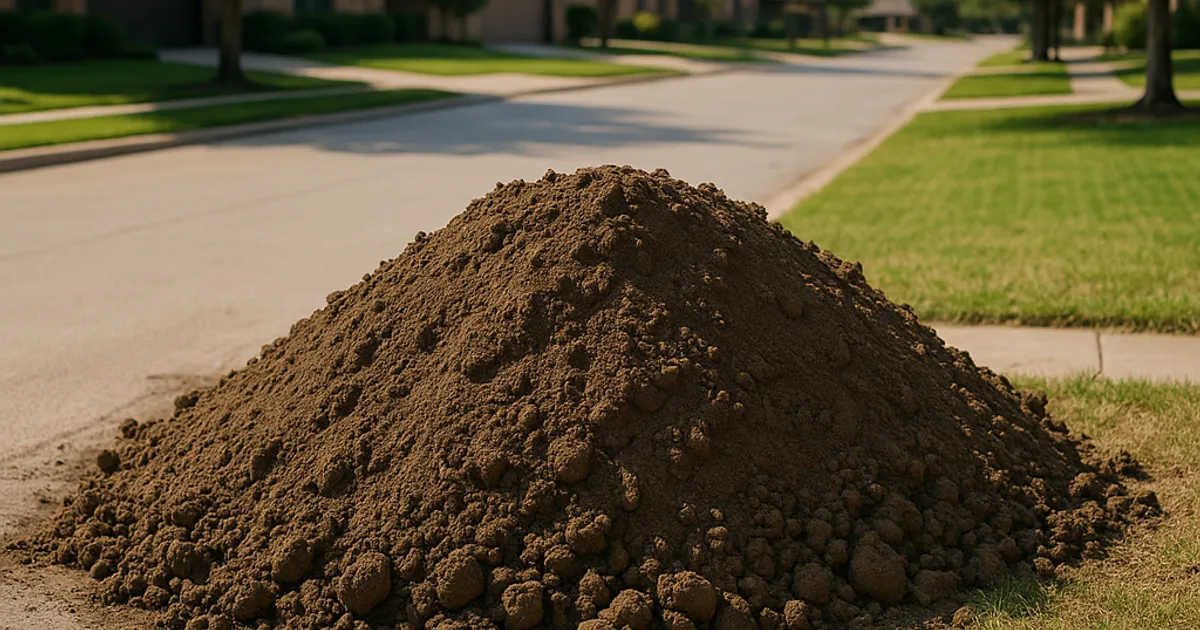
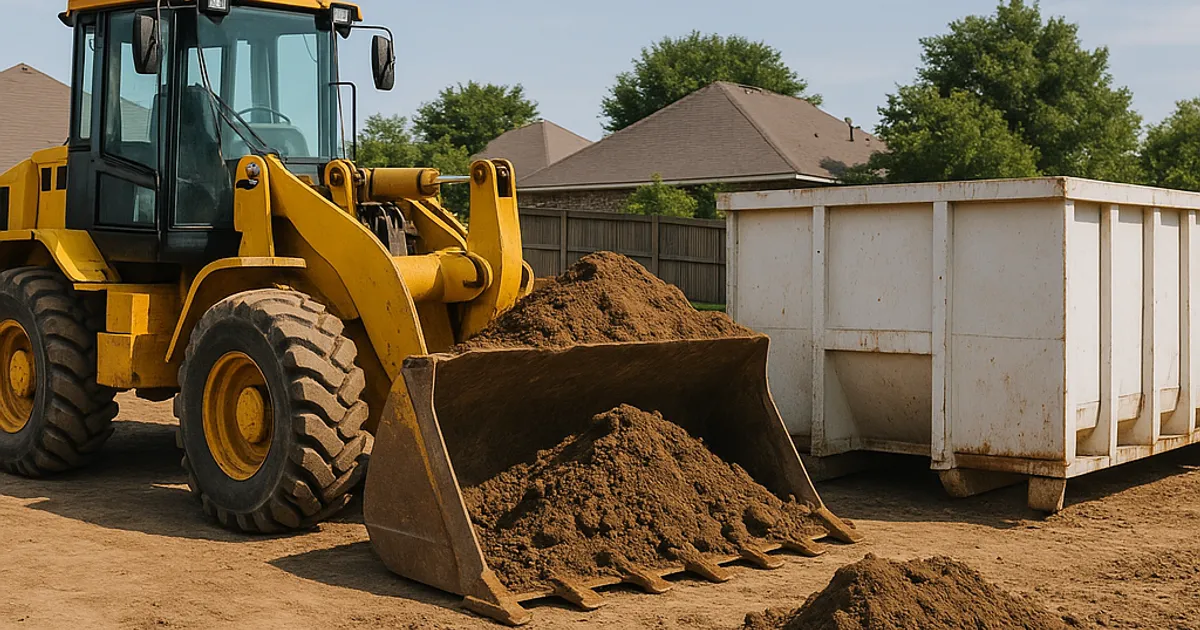
If you've recently finished a landscaping project, dug a pool, or broken ground on a new structure, there's a good chance you're staring at a growing mountain of excess soil you have no idea what to do with. In the Dallas-Fort Worth Metroplex — one of the fastest-growing construction markets in the entire country — this is an incredibly common problem. Thousands of homeowners, landscapers, and earthwork contractors generate surplus dirt every single week.
The good news? That dirt you're paying to haul away could cost you nothing — or even generate value — if you connect with the right people at the right time. Across DFW, there are dozens of legitimate ways to arrange free dirt pickup in Dallas, from community platforms and soil exchanges to contractor networks and municipal programs. You just need to know where to look and how to package the offer so someone actually shows up with a truck.
This guide breaks down every realistic strategy for arranging excess soil removal in the Dallas area, what kind of dirt actually qualifies as "free," what to watch out for, and how digital marketplaces have changed the game entirely for anyone trying to move large volumes of soil quickly.
Why Excess Dirt Is Such a Big Deal in Dallas-Fort Worth
Dallas-Fort Worth is not a static market. It's one of the most active construction regions in the United States, consistently ranking among the top metros for new housing permits, commercial development, and infrastructure expansion. With that level of activity comes an enormous and ongoing cycle of soil displacement.
When a new neighborhood breaks ground in Frisco, Allen, or Celina, excavators pull thousands of yards of native Texas clay out of the ground to set foundations. When a homeowner in Plano adds a pool, they generate 30 to 80 cubic yards of displaced earth overnight. When a commercial developer in Irving clears a site for a warehouse pad, the excess cut material can run into tens of thousands of yards.
All of that material has to go somewhere. Traditionally, contractors paid dump fees ranging from $10 to $30 per cubic yard to offload soil at licensed disposal facilities — costs that add up fast on mid-size excavation projects. A modest 500-yard job at $20 per yard is $10,000 just in disposal fees, before a single wheel turns on the actual build.
At the same time, other Dallas-area contractors desperately need fill dirt to raise grades, stabilize building pads, or fill low spots on residential lots. The fill dirt market in North Texas typically runs $15 to $35 per yard delivered, depending on material quality, haul distance, and market conditions. This creates a natural inefficiency: people paying to get rid of something that others are paying to acquire.
That mismatch is exactly what makes free dirt removal in Dallas not just possible — but, in many cases, mutually beneficial.
What Type of Dirt Qualifies for Free Pickup?
Before you start posting listings or making calls, it's important to understand that not all soil is equal — and not all soil is desirable to someone hauling it away for free. The "free" in free dirt removal is contingent on the material being useful to whoever picks it up.
Clean Fill Dirt
This is the gold standard for free pickup. Clean fill dirt — also called uncontaminated structural fill — is native soil free of organic matter, construction debris, trash, and chemical contamination. In Dallas, this typically means reddish-brown clay loam, sandy clay, or expansive black clay (the famous "DFW black gumbo"), depending on your specific location within the Metroplex.
Contractors use clean fill to raise lot grades, build berms, backfill utility trenches, and create stable base layers beneath structures. If your soil is visually clean and hasn't been near any chemical storage, treatment areas, or industrial activity, it will likely qualify.
Topsoil
Topsoil — the darker, organically rich upper layer — is actually in high demand from landscapers, gardeners, and homeowners. If your excavation pulled up quality topsoil, you may find it disappears even faster than subsoil fill.
Sandy or Gravelly Soils
Sandy fill and decomposed granite are desirable for drainage applications, leveling low spots, and base preparation. If your site in North Dallas or parts of East Texas produced sandy material, it can move quickly.
What Won't Move for Free
Soil contaminated with petroleum products, heavy metals, or industrial chemicals is not just difficult to move for free — it's regulated. Under EPA Superfund and CERCLA frameworks, improperly transferring contaminated soil can expose property owners to significant liability. Expansive black clay in large volumes can also be hard to place freely because of its engineering limitations. Rock and concrete rubble, unless crushed, typically has its own separate market.
Option 1: Use a Dirt Exchange Marketplace
The single most effective way to arrange free dirt pickup in Dallas in 2026 is through a dedicated dirt exchange marketplace. These platforms work like a classifieds board specifically for soil, fill dirt, and aggregate — connecting people who have excess material with contractors and project owners who need it.
DirtMatch is the leading platform in this space, operating a live two-sided marketplace where excavators post available loads and project owners post fill needs. The platform currently shows 599,791 yards of fill dirt available in the Dallas area, against 1,615,008 yards needed — meaning demand actually outpaces supply in many parts of DFW. That's a strong signal for anyone sitting on a pile of clean soil: there are motivated contractors ready to haul it away.
As a real-world example, there's currently a listing on the platform showing 100,000 yards of clean fill dirt available in Haltom City, TX — the kind of volume that would cost tens of thousands of dollars to dispose of through traditional means. On the same platform, a project in McKinney is searching for 30,000 yards of clean fill dirt. Matching these two parties means zero disposal cost for one and significantly reduced material cost for the other.
The platform generated 1,327 matches in the last 30 days in the Dallas region alone — a pace that demonstrates genuine, active market liquidity rather than a stagnant listing board.
To use a dirt exchange platform effectively:
- Post a detailed listing — specify cubic yards, material type, accessibility, moisture content, and presence of any rocks or debris
- Include photos — contractors vet material quality visually before committing trucks
- Note equipment access — can a semi-truck and trailer access your site? Is there room to turn around?
- Be responsive — once a contractor expresses interest, respond quickly; free material gets claimed fast
- Confirm it's clean — be honest about what's in the soil; misrepresenting material creates liability
Understanding how DirtMatch works takes about five minutes, and listing excess soil is free for basic accounts.
Option 2: Craigslist and Facebook Marketplace
Old standbys like Craigslist and Facebook Marketplace still drive real transactions for free dirt in Dallas. The "Free" section on Craigslist and the "Free Stuff" category on Facebook Marketplace regularly feature soil and fill material, particularly from homeowners who just had landscaping work done.
Tips for Effective Posts on These Platforms
- Be specific about quantity — "some dirt" gets ignored; "approximately 40 cubic yards" gets calls
- Use photos — always include a clear photo of the pile and site access
- Post in the right section — use "Free" not "For Sale" and include terms like "fill dirt," "topsoil," "clean fill," and "must haul away"
- Mention accessibility clearly — street-accessible material goes faster than gated or difficult-to-reach piles
- Repost frequently — these platforms deprioritize older listings; refresh every 48 hours
The primary downside of Craigslist and Facebook is inconsistency. You'll get inquiries from people with a pickup truck who want three yards, which doesn't help if you have 200. You may also encounter no-shows. For smaller quantities — say, under 50 yards — these platforms work reasonably well. For larger volumes, a dedicated dirt exchange is significantly more reliable.
Option 3: Contact Local Landscaping and Excavation Contractors Directly
Dallas-Fort Worth has thousands of active landscaping, grading, and excavation contractors who regularly need fill material and are acutely aware of how expensive sourcing it can be. Reaching out to these businesses directly — before posting publicly — can be the fastest path to free removal, especially for contractors who operate in your immediate area.
How to Find Them
- Search Google Maps for "excavating contractors Dallas" or "grading contractor Fort Worth" and call down the list
- Check the AGC of America member directory for North Texas chapter members
- Ask your original excavator or general contractor if they know who needs fill in your area
- Contact local home builders active in nearby subdivisions; they burn through fill material constantly
When you call, lead with the most important details: cubic yardage, material type, location, and site accessibility. Ask if they have any current projects within 15–20 miles that could use clean fill. Many contractors will arrange free pickup within days if the math works for them — the cost of hauling from your site versus paying the going rate for fill material.
The Economics That Make It Work
If a contractor is paying $25 per yard for fill delivered, and your site is 8 miles from their project, they may be able to haul your material for $8–12 per yard in trucking costs — still saving $13–17 per yard. That incentive is powerful enough to motivate a lot of phone calls and quick pickups.
Option 4: Nextdoor and Neighborhood Community Groups
For smaller quantities of soil — typically under 30 cubic yards — neighborhood social networks are surprisingly effective. Nextdoor, neighborhood Facebook groups, and HOA forums are full of homeowners who want to raise a low spot in their yard, build a raised garden bed, or level out a drainage issue.
This option works best for:
- Homeowners with small to medium piles from landscaping projects
- Areas where the soil quality is good (North Dallas, Collin County, Denton County)
- Situations where you want the material to go to neighbors rather than contractors
The limitation is that these platforms attract people who want small amounts, often measured in pickup truck loads rather than cubic yards. If you have a large volume, you'll need to supplement with higher-capacity channels.
Option 5: Construction Sites and Active Development Zones
One of the most underutilized strategies for free dirt removal in Dallas is simply driving around active construction zones. DFW is so heavily developed that in virtually any suburban corridor — Prosper, Little Elm, Mansfield, Midlothian — you'll find residential and commercial projects under active construction.
Contractors on these sites are often:
- Actively importing fill to raise pads and grades
- Looking for local sources to avoid paying truck-and-dump rates from distant borrow sites
- Happy to negotiate a free haul if your material is within reasonable proximity
Approach the site superintendent or project manager directly. Bring a business card if you have one, and come with your information ready: quantity, material type, distance, and access conditions. Many successful free dirt removals in Dallas have been arranged through exactly this kind of informal, face-to-face approach.
Option 6: City of Dallas Composting and Soil Programs
The City of Dallas operates several programs that intersect with soil and organic material management, though direct free removal of bulk fill dirt through municipal channels is limited. However, several adjacent city and county resources are worth knowing:
Dallas County Disposal Events
Dallas County periodically holds free disposal events for residents that accept certain types of landscape and construction debris. While these events focus more on hazardous household waste, organics, and yard trimmings, they can be useful for mixed loads that include some soil.
North Texas Municipal Water District (NTMWD)
The NTMWD and other regional authorities occasionally have infrastructure projects that require fill. Contractors registered with these agencies can sometimes offload excess material to ongoing public works sites — though this typically requires material testing and documentation.
City of Dallas Stormwater Management
Dallas's stormwater and drainage infrastructure programs frequently involve grading and earthwork. Contractors working with the city on drainage improvement projects may be able to accept clean fill from nearby private sites. Contact the Dallas Water Utilities and Stormwater Management division for current project information.
Find or Post Dirt, Rock & Aggregate
Join thousands of contractors using DirtMatch to buy, sell, and exchange earthwork materials.
Try DirtMatch FreeOption 7: Farms and Rural Properties on the DFW Fringe
Just beyond the suburban ring of Dallas-Fort Worth lies a significant agricultural belt — Kaufman County, Ellis County, Parker County, and Johnson County all contain farmland where property owners are often happy to receive free fill dirt to address low spots, improve pasture drainage, or build up low areas near ponds.
This works particularly well if your site is near the urban fringe, or if you're willing to haul material a bit further in exchange for not paying dump fees. Listing on agricultural networks, local farming Facebook groups, or simply posting on Craigslist with "rural delivery considered" can open up this market.
Note that if you're moving material across county lines or onto agricultural property, it's worth confirming the soil is genuinely clean. While informal, placing contaminated material on farmland could create environmental and legal issues down the road.
Understanding Soil Quality and Liability in Texas
Any conversation about free dirt removal needs to include a frank discussion of liability. In Texas, as in every other state, you bear responsibility for the material you transfer — particularly if it turns out to be contaminated.
Before arranging free pickup of any kind, it's worth asking:
- Has this land ever had underground storage tanks? USTs are one of the most common sources of petroleum contamination in urban soils.
- Was there any previous industrial or commercial use? Former dry cleaners, auto shops, gas stations, or chemical storage can all leave legacy contamination.
- Did you notice any unusual odors, staining, or sheening during excavation? These are visual indicators of potential contamination.
If the answer to any of these is yes, consult an environmental professional before transferring soil. The EPA Brownfields Program provides resources on assessing potentially contaminated properties, and a Phase I Environmental Site Assessment can identify known or suspected contamination risks before any soil leaves your property.
For genuinely clean fill from straightforward residential or light commercial excavation — pool digging, foundation work, utility trenching — these concerns are typically minimal. Document the source of the material, note its location on your property, and keep that information available if a recipient ever asks.
How Much Does Free Dirt Removal Actually Save?
Let's put real numbers to the value of finding free dirt removal in Dallas rather than paying standard disposal rates.
| Volume (Cubic Yards) | Standard Disposal Cost ($18/yd avg) | Free Removal Savings |
|---|---|---|
| 50 yards | $900 | $900 |
| 200 yards | $3,600 | $3,600 |
| 500 yards | $9,000 | $9,000 |
| 2,000 yards | $36,000 | $36,000 |
| 10,000 yards | $180,000 | $180,000 |
These figures assume a blended average of $18 per cubic yard for soil disposal in the DFW market, which reflects a combination of dump fees, trucking, and fuel surcharges. On larger excavation projects, the savings from free removal can exceed the cost of the excavation work itself.
For homeowners dealing with smaller volumes, even the savings on a 50-yard pool dig — roughly $900 — more than justifies the hour or two spent listing and coordinating a free pickup.
Preparing Your Site for Free Dirt Pickup
One of the most overlooked aspects of arranging free soil removal is site preparation. Contractors who haul material for free are doing you a favor — they're running trucks and paying for fuel and labor in exchange for the value of the material. Making their job easy is how you ensure they actually show up and complete the haul.
Site Access Checklist
- Clear the approach — remove any fencing, equipment, or obstacles that would block a 40-foot dump truck
- Identify a staging area — contractors need somewhere to park a loader or excavator while loading trucks
- Note any overhead clearances — low tree branches, power lines, or roof overhangs can make loading impossible
- Mark the material clearly — especially if there's mixed material on site; be clear about what's available and what isn't
- Communicate loading hours — most contractors prefer to load during daylight; confirm your availability windows
What to Have Ready
- Approximate cubic yardage (use a rough calculation: length × width × depth in feet ÷ 27 = cubic yards)
- Photos of the pile from multiple angles
- Photos of the access route from the street
- Your contact information and best times to reach you
- Any relevant soil information (recent excavation, no prior commercial use, etc.)
The Role of Digital Platforms in Modern Dirt Exchange
The way excess soil gets moved in Dallas has changed dramatically over the past several years. What used to be a purely relationship-driven business — contractors calling contractors they knew, word-of-mouth referrals, job-site conversations — now has a functioning digital infrastructure behind it.
Platforms designed specifically for dirt and aggregate exchange have brought transparency and reach to a market that previously operated almost entirely on informal networks. For someone new to the industry, or a homeowner with no contractor relationships, this is enormously valuable. Instead of knowing the right person, you just need to post the right information.
If you want to understand the full scope of the Dallas fill dirt market — supply volumes, demand patterns, and what's moving right now — reviewing the fill dirt activity in Dallas on DirtMatch gives you a real-time snapshot of market conditions. With nearly 600,000 yards of available material listed against over 1.6 million yards needed, anyone trying to place excess soil in DFW is operating in a favorable environment.
For contractors managing multiple projects across DFW simultaneously, DirtMatch Pro offers advanced features including priority listing placement, match alerts, and volume-specific tools that reduce the time spent coordinating material logistics — time that has real dollar value on active job sites.
What to Expect During the Pickup Process
Once you've matched with a contractor who wants your material, here's a realistic picture of how the process typically unfolds:
Initial Contact and Verification
The contractor will likely request additional photos, confirm the volume, and ask about soil composition and any visible rock, roots, or debris. Some will do a quick site visit before committing trucks. This is standard — they're vetting the material before running expensive equipment.
Scheduling
Expect 2–5 business days from initial contact to first truck arrival in most cases, though urgent needs can move faster. Contractors coordinate with their own project schedules, so flexibility on your end is helpful.
The Actual Haul
Depending on volume, the haul could be a single day with two or three trucks, or it could span multiple days with rotating loads. Standard belly-dump and end-dump semi-trailers carry 14–18 cubic yards per load. A 200-yard pile might require 12–15 truck cycles.
Post-Removal
Once hauling is complete, confirm you're satisfied with site conditions. Some contractors will rough-grade the area where the pile was, others won't — clarify expectations in advance. Get a confirmation from the contractor of approximate yardage hauled if you need documentation for permits or records.
Common Mistakes to Avoid When Seeking Free Dirt Removal
A few missteps can turn a straightforward free removal into a frustrating experience:
Overestimating volume — Contractors plan trucks and scheduling around your stated volume. If you say 300 yards and it's actually 80, you've wasted their logistics planning. Underestimate slightly if unsure.
Misrepresenting material quality — Don't describe rocky, root-filled, or mixed debris soil as "clean fill." When the contractor arrives and finds otherwise, the deal falls apart and you've burned a relationship.
Being inflexible on access hours — Free pickups compete with paid jobs. If you're only available for a two-hour window on Saturdays, you'll struggle to find takers. Maximize your available hours.
Not following up promptly — In a market as active as Dallas, good material gets multiple inquiries. If you're slow to respond, contractors move on to the next option.
Ignoring small-volume offers — If you have 500 yards and someone wants 30, consider saying yes to get the ball rolling. Sometimes partial hauls lead to referrals that handle the rest.
Getting Started: A Step-by-Step Action Plan
If you're ready to arrange free dirt pickup in Dallas, here's a practical sequence to follow:
- Assess and document your material — photograph the pile, estimate volume, note soil type and any visible contaminants
- Evaluate site access — confirm truck access, identify any obstacles, determine available loading hours
- Post on DirtMatch — get started with DirtMatch to list your available material and reach active contractors in the DFW network within minutes
- Post simultaneously on Craigslist and Facebook — use both platforms to maximize reach for smaller-volume inquiries
- Call three to five local excavating contractors — direct outreach often moves fastest for large volumes
- Post in neighborhood groups — if some of your material is topsoil, neighborhood platforms can move small amounts quickly
- Follow up actively — check messages daily and respond within a few hours to all inquiries
- Confirm and coordinate — once a contractor commits, nail down the schedule, confirm site access, and be available on the first day of hauling
Most Dallas homeowners and contractors who follow this approach arrange free removal within 5–10 business days. In active market conditions — like the current DFW construction environment — it can happen in 48 hours or less for desirable material with good site access.
Final Thoughts: Free Dirt Removal Is a Real Option in Dallas
The Dallas-Fort Worth construction market's relentless pace creates both the problem and the solution: there's always too much dirt somewhere and not enough somewhere else. Connecting those two realities is how free dirt removal happens, and it's happening at scale every single day across DFW.
Whether you're a homeowner with a modest pile of pool excavation spoils, a landscaping contractor wrapping up a residential job, or a commercial excavator sitting on tens of thousands of yards of cut material, the pathway to free removal exists. You just need to reach the right audience with the right information.
Platforms like DirtMatch have made that connection faster and more reliable than ever, with a live marketplace that reflects real supply and demand in your specific area. With over 1,300 matches made in the Dallas region in the past 30 days alone, the infrastructure for free soil exchange in DFW is not theoretical — it's active, liquid, and accessible to anyone willing to list their material and follow up on inquiries.
The pile in your yard isn't a problem. With the right approach, it's someone else's solution.