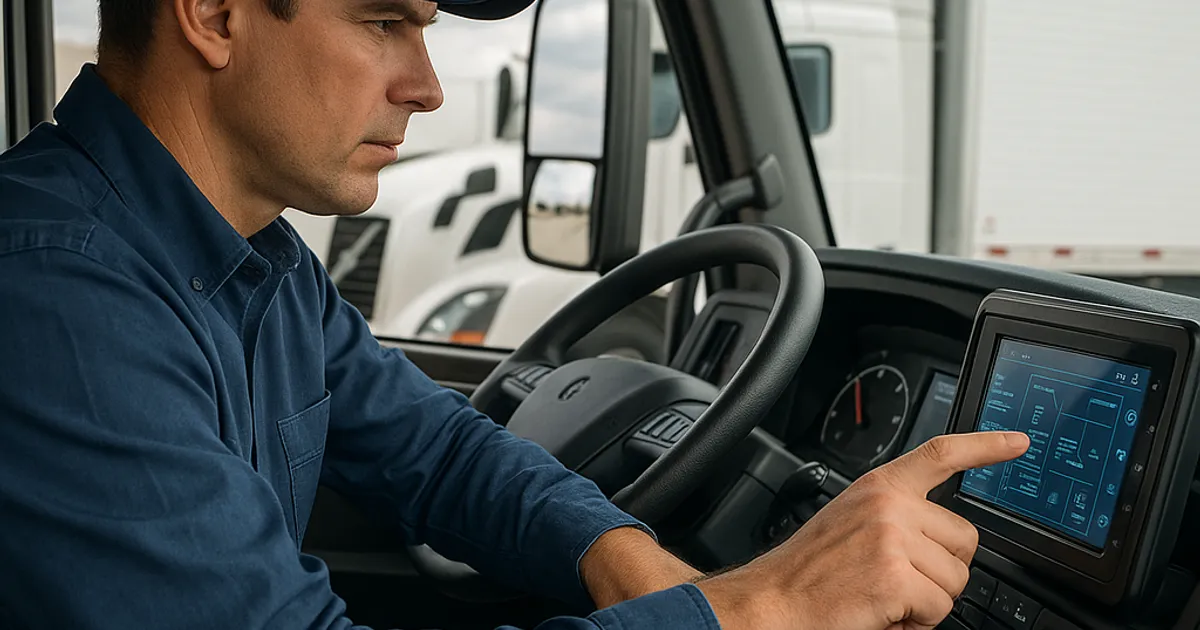
The rumble of a dump truck engine has always been the heartbeat of construction. But in 2024, what's powering the industry forward isn't just diesel — it's data. From GPS-enabled fleet management to AI-driven dispatch platforms and digital material matching, the earthwork trucking sector is experiencing a technological revolution that's rewriting the economics of hauling dirt, rock, and aggregate.
According to the American Trucking Associations (ATA), the trucking industry moves approximately 72.5% of all freight tonnage in the United States, generating over $940 billion in annual revenue. Within that massive ecosystem, earthmoving and construction material hauling represents one of the most logistically complex and cost-sensitive segments. Fuel costs, driver availability, regulatory compliance, and the sheer unpredictability of construction timelines have long made this sector a tough nut to crack.
But technology is changing all of that. Contractors who are adopting modern tools — from telematics and electronic logging devices (ELDs) to load-matching platforms and predictive route optimization — are reporting measurable, significant gains in operational efficiency. The question isn't whether to adopt these technologies; it's how fast you can get up to speed before your competitors leave you in the dust.
This article explores the most impactful technologies reshaping trucking efficiency in the earthwork space, the hard numbers behind their ROI, and how savvy contractors are integrating digital tools to maximize profit on every haul.
The State of Trucking Efficiency in Earthwork: Why the Old Ways Are Costing You Money
Before we look at solutions, it's worth understanding the scale of the inefficiency problem in traditional earthwork trucking operations. The numbers are sobering.
Industry research consistently shows that construction haul trucks run empty between 20% and 45% of the time, depending on the region and project type. That means for every two fully loaded trips, there's nearly one trip that burns fuel, generates wear and tear, and pays driver wages — for nothing. The Federal Highway Administration (FHWA) estimates that inefficient freight movements cost the U.S. economy over $74 billion annually in wasted fuel and productivity.
For the earthwork niche specifically, the challenges are layered:
- Material mismatches: Excavation projects generate surplus dirt that needs to go somewhere, while fill projects need material brought in. Without a centralized system to match these needs, contractors haul long distances or pay unnecessary tipping fees.
- Manual dispatch inefficiencies: Traditional phone-and-whiteboard dispatching leads to miscommunication, missed loads, and idle trucks.
- Fuel cost volatility: Diesel prices fluctuated between $3.50 and $5.80 per gallon over the last three years, and fuel typically represents 35–40% of total operating costs for dump truck fleets.
- Driver shortages: The ATA reports a current shortfall of over 60,000 truck drivers in the U.S., with the gap potentially growing to 160,000 by 2030.
- Regulatory complexity: ELD mandates, hours-of-service (HOS) rules under 49 CFR Part 395, and weight restrictions add compliance layers that slow operations when managed manually.
These aren't small problems. They compound daily across thousands of hauls, and for contractors running thin margins, they can be the difference between a profitable season and a losing one.
The good news? Each of these pain points has a technology-driven solution that's available right now — and many are more affordable than contractors expect.
Telematics and Fleet Tracking: The Foundation of Modern Efficiency
If there's a single technology that has become table stakes for competitive trucking operations, it's telematics. Telematics systems combine GPS hardware with onboard diagnostics (OBD) data to give fleet managers a real-time, comprehensive view of every vehicle in their fleet.
Modern telematics platforms from providers like Samsara, Verizon Connect, and Geotab track:
- Vehicle location in real time, updated every few seconds
- Engine diagnostics including fault codes, idle time, and maintenance alerts
- Driver behavior metrics: hard braking, rapid acceleration, speeding, and cornering
- Fuel consumption per trip, per route, and per driver
- Hours of service compliance tied directly to ELD requirements
- Payload monitoring through axle weight sensors on equipped trucks
The ROI on telematics is well-documented. A 2023 study by Automotive Fleet found that fleets using advanced telematics systems reduced fuel costs by an average of 15–20%, reduced accident rates by 20–30%, and cut vehicle downtime by up to 25% through predictive maintenance alerts.
Idle Time: The Silent Profit Killer
For dump truck fleets, idle time is a particularly significant drain. Industry data suggests that a typical haul truck idles between 1.5 and 2.5 hours per day — time spent waiting at job sites, queuing at dumps, or between dispatch instructions. At roughly one gallon of diesel per hour of idle time for a Class 8 truck, and with diesel averaging $3.80 per gallon in 2024, a 10-truck fleet burning 2 idle hours per truck per day wastes approximately $27,740 annually on idle fuel alone.
Telematics systems with idle alerts and automatic engine shutoff policies can reduce idle time by 30–50%, converting that wasted cost directly into profit.
Predictive Maintenance Saves More Than You Think
Beyond fuel, telematics-driven predictive maintenance is reshaping how fleets manage their biggest capital assets. The average cost to replace a Class 8 dump truck engine runs between $15,000 and $30,000. Telematics systems that monitor coolant temperature, oil pressure, and engine load can flag issues weeks before they become catastrophic failures, dramatically extending engine life and reducing unplanned downtime.
AI-Powered Dispatch and Route Optimization
Manual dispatching — the clipboard-and-phone system that still runs many small and mid-size trucking operations — is increasingly a competitive liability. AI-powered dispatch and route optimization software has moved from enterprise-only tools to affordable solutions accessible to fleets of all sizes.
Route optimization algorithms go far beyond basic GPS navigation. They factor in:
- Real-time traffic and road conditions
- Truck-specific routing (bridge weight limits, low clearances, restricted roads)
- Multiple pickup and delivery stops with time windows
- Driver HOS remaining availability
- Fuel station locations along routes
- Historical travel time data by time of day and day of week
For earthwork haulers specifically, the challenge of route optimization is compounded by the fact that job sites change constantly, loads vary in weight and type, and dump sites may have specific operating hours. AI systems that integrate with construction project management software can automatically update routing based on project schedules, adjusting dispatch plans in real time as conditions change.
The Numbers Behind Route Optimization
A landmark study by MIT's Center for Transportation and Logistics found that AI-driven route optimization reduces total miles driven by 10–20% on average, with fuel savings following proportionally. For a fleet of 15 dump trucks each running 150 miles per day at 6 miles per gallon and diesel at $3.80/gallon, a 15% mileage reduction translates to roughly $108,000 in annual fuel savings.
Beyond fuel, reduced mileage means less tire wear (a significant cost for heavy trucks running on abrasive construction site surfaces), lower maintenance frequency, and extended vehicle lifespan.
Dynamic Dispatch in Real Time
The newest generation of AI dispatch tools doesn't just plan routes ahead of time — it adjusts dynamically. If a dump site closes unexpectedly, traffic backs up on a key corridor, or a driver calls in sick, the system recalculates and reassigns in seconds rather than requiring a dispatcher to manually sort through options. This agility has proven particularly valuable in earthwork hauling, where job site conditions can shift hour by hour.
Electronic Logging Devices and Regulatory Compliance: Tech That Keeps You Legal
The Federal Motor Carrier Safety Administration (FMCSA) ELD mandate under 49 CFR Part 395 has been in full effect since 2019, requiring most commercial motor vehicles to use certified electronic logging devices to record hours of service. While many contractors initially viewed ELDs as a compliance burden, forward-thinking operators have leveraged them as efficiency tools.
ELDs automatically record:
- Driving time and duty status
- Engine on/off cycles
- Location at each duty status change
- Miles driven per trip
When integrated with dispatch and payroll systems, ELD data eliminates paper log reconciliation, automates IFTA fuel tax reporting, and provides an automatic audit trail for DOT compliance reviews. Contractors using integrated ELD-dispatch-payroll systems report saving 3–5 hours per week per vehicle in administrative time — time that translates directly to cost savings as operations scale.
The Short-Haul Exemption: What Earthwork Contractors Need to Know
Many earthwork trucking operations qualify for the short-haul exemption under FMCSA rules, which allows drivers who operate within a 150 air-mile radius of their normal work reporting location and return to that location each day to use paper logs instead of ELDs. However, even contractors who qualify for this exemption are increasingly choosing ELDs voluntarily because the efficiency and record-keeping benefits outweigh the cost of the hardware.
ELD units typically cost between $150 and $600 per truck, with monthly subscription fees ranging from $25 to $75. Given the administrative savings and compliance risk reduction, the ROI is generally achieved within the first year of deployment.
Load Matching Platforms: Eliminating Empty Miles Through Digital Marketplaces
Perhaps no technology has more transformative potential for earthwork trucking specifically than digital load matching platforms. The concept is straightforward but powerful: instead of trucks running empty between jobs, a digital marketplace connects available truck capacity with loads that need moving — reducing empty miles, increasing revenue per shift, and optimizing the flow of materials across a region.
This is precisely where platforms like DirtMatch are changing the game for earthwork contractors. Rather than relying on personal networks, cold calls, or brokers to find the next load, contractors can access a real-time marketplace of dirt, rock, fill material, and aggregate hauls matched to their location and capacity.
The economic logic is compelling. Consider a dump truck operation that currently runs 35% empty miles. If that truck hauls 20 loads per week at an average of 15 miles per haul, roughly 7 of those trips are empty. At a loaded hauling rate of $85–$120 per hour and assuming each empty return trip takes 30 minutes, that's $297–$420 per week in driver time spent generating zero revenue — before accounting for fuel. Across a 10-truck fleet operating 48 weeks per year, eliminating even half of those empty miles represents $71,280–$100,800 in recovered revenue annually.
For contractors operating in high-growth markets like the dirt exchange in Denver or the dirt exchange in Los Angeles, where construction activity creates constant material movement in multiple directions, load matching platforms enable contractors to dramatically increase truck utilization rates without adding vehicles or drivers.
How Material Matching Works in Practice
Digital dirt and material matching works on a simple but highly effective principle: excavation projects produce surplus material that needs disposal, while grading and fill projects need material brought in. Historically, these two needs were matched informally or not at all — excavators paid tipping fees to dump sites while fill contractors paid to import material from quarries, even when a nearby project had exactly what was needed.
Modern matching platforms use location data, material specifications, quantity requirements, and project timelines to automatically identify and facilitate these matches. This reduces disposal costs for excavators, cuts material acquisition costs for fill contractors, and creates haul work for truckers — a genuine win-win-win that wasn't possible without the data infrastructure that digital platforms provide.
To understand how DirtMatch works and how it connects contractors with nearby material sources and haul opportunities, the platform's approach represents exactly the kind of technology integration that's driving efficiency gains across the industry.
Fuel Management Technology: Squeezing Every Mile From Every Gallon
Fuel represents 35–40% of total operating costs for a typical dump truck fleet, making fuel management one of the highest-leverage areas for technology investment. Modern fuel management technology has evolved well beyond fleet fuel cards to encompass a suite of integrated tools.
Fuel Card Programs With Analytics
Enterprise fuel card programs from providers like WEX, Comdata, and Fleetcor now offer real-time purchase monitoring, driver-specific spending controls, and integration with telematics platforms. Contractors can set purchase limits by vehicle, flag unusual transactions, and generate detailed fuel consumption reports segmented by driver, route, and job site.
Aerodynamic Retrofits and Spec'ing for Efficiency
For fleets purchasing new trucks, proper vehicle specification has a significant impact on fuel economy. Modern Class 8 dump trucks from manufacturers like Kenworth, Peterbilt, and Mack offer:
- Aerodynamic cab designs with up to 7% improved fuel efficiency versus previous generations
- Automated manual transmissions (AMTs) that optimize shift points for fuel economy, typically improving MPG by 3–5% versus traditional automatics
- Predictive cruise control systems that use GPS topography data to anticipate hills and coast or accelerate proactively
- Idle reduction technology including engine start-stop systems and auxiliary power units (APUs)
| Technology | Average Fuel Savings | Typical Payback Period |
|---|---|---|
| Advanced Telematics | 15–20% | 6–12 months |
| Route Optimization Software | 10–15% | 3–6 months |
| Driver Behavior Coaching | 5–10% | Immediate |
| Predictive Cruise Control | 3–7% | 12–24 months |
| Aerodynamic Retrofit Kit | 2–5% | 18–30 months |
| Idle Reduction System | 3–8% | 12–18 months |
| EV/Hybrid Drivetrain (Class 6–7) | 20–40% | 36–60 months |
The Emerging Role of Alternative Fuels
While battery-electric Class 8 trucks remain limited in range and charging infrastructure for heavy-haul applications, compressed natural gas (CNG) and renewable natural gas (RNG) vehicles are gaining traction in fleet operations with predictable routes and centralized fueling. CNG typically costs 20–30% less per diesel gallon equivalent (DGE), and RNG can reduce lifecycle carbon emissions by up to 90% compared to diesel — an increasingly important factor as state and local emissions regulations tighten, particularly in California under CARB regulations.
Driver Performance Technology: Your Human Asset Is Also a Data Source
In an industry facing a chronic driver shortage, retaining qualified operators and maximizing their productivity is as important as optimizing the machines they drive. Driver performance technology addresses both goals simultaneously.
In-Cab Coaching Systems
Real-time driver coaching systems use a combination of telematics data, forward-facing cameras, and in-cab audio feedback to coach drivers on fuel-efficient behaviors as they happen. Instead of reviewing a weekly report and coaching after the fact, drivers receive immediate, non-intrusive alerts when they're speeding, idling excessively, or braking hard — allowing them to self-correct in real time.
Research from the National Renewable Energy Laboratory (NREL) found that driver behavior alone accounts for a 30–35% variance in fuel economy across drivers operating identical vehicles on identical routes. In-cab coaching consistently reduces this variance, bringing lower-performing drivers toward fleet average — with typical fuel savings of 5–10% achievable through behavior change alone.
Driver Scorecards and Incentive Programs
Gamification of driver performance — using leaderboards, monthly scorecards, and incentive bonuses tied to efficiency metrics — has become a proven retention and productivity tool. Fleets that implement driver incentive programs tied to fuel economy and safety scores report:
- 15–25% reduction in accident frequency
- 8–12% improvement in average fuel economy
- Measurable improvement in driver retention rates
For smaller earthwork contractors, even simple scorecard systems using free telematics app features can provide meaningful performance data without enterprise-level investment.
Find or Post Dirt, Rock & Aggregate
Join thousands of contractors using DirtMatch to buy, sell, and exchange earthwork materials.
Try DirtMatch FreeConstruction Technology Integration: Connecting Trucks to the Broader Job Site Ecosystem
The most sophisticated efficiency gains in earthwork trucking come when truck technology integrates seamlessly with broader construction project management systems. This integrated approach is increasingly referred to as "connected construction" and represents the frontier of efficiency optimization.
Machine Control and Grade Data Integration
Grade control systems on excavators and bulldozers — from Trimble, Topcon, and Leica — generate real-time data on material quantities moved, compaction achieved, and work remaining. When this data feeds into a fleet management system, dispatchers can anticipate material availability and schedule truck arrivals precisely, eliminating the queuing that causes dump trucks to idle for 20–45 minutes waiting at an excavator.
Project Management Platform Integration
Construction project management platforms like Procore, PlanGrid, and HCSS integrate with fleet and dispatch systems to give project managers and trucking coordinators a shared operational picture. Truck haul counts, material volumes delivered, and weight tickets can be automatically logged against project records, eliminating manual data entry and reducing billing disputes.
Real-Time Weight and Load Monitoring
Onboard weight systems — increasingly standard or available as aftermarket additions on construction dump trucks — provide real-time payload data to drivers and dispatchers. This serves multiple purposes:
- Legal compliance: Preventing overloads that violate state weight limits (typically 80,000 lbs gross vehicle weight for interstate operations under 23 CFR Part 658, with state-specific variations)
- Payload optimization: Ensuring trucks are consistently loaded near legal maximums rather than underloaded
- Billing accuracy: Providing verified load data for ton-based billing without relying on estimated loads or paper tickets
Studies show that trucks operating without payload monitoring are typically loaded to only 85–92% of legal capacity on average, meaning consistent underloading. Optimizing to 97–98% of legal payload increases effective capacity by 5–12% with no additional truck trips — a direct revenue increase.
The Digital Marketplace Advantage: Matching Material, Trucks, and Projects
Beyond individual fleet technologies, the emergence of digital marketplaces specifically designed for earthwork material and hauling is creating efficiency gains at the ecosystem level — changes that benefit entire regional construction markets, not just individual contractors.
In markets like the dirt exchange in Seattle or the dirt exchange in San Francisco, where urban construction density creates complex material logistics challenges, digital matching platforms are reducing the total vehicle miles traveled for material movement across entire metro areas. This has cascading benefits: less congestion, lower emissions, faster project completion, and reduced total construction costs.
For individual contractors, the business case is about more than just finding the next load. Digital platforms create:
- Price transparency: Access to market-rate information for hauling and materials, reducing the information asymmetry that has historically disadvantaged smaller operators
- Network effects: As more contractors and project owners join a platform, the quality of matches improves for everyone
- Documentation trails: Digital records of every transaction simplify billing, dispute resolution, and regulatory compliance
- Business development: Platform visibility can generate new client relationships that extend beyond individual transactions
Contractors looking to expand their operation and leverage these marketplace advantages can get started with DirtMatch to access a growing network of earthwork projects, material sources, and hauling opportunities across major U.S. markets.
Regulatory Landscape and Compliance Technology: Staying Ahead of the Rules
The regulatory environment for commercial trucking continues to evolve, and technology is increasingly the most practical way to maintain compliance across a complex web of federal, state, and local requirements.
Key Federal Regulations Affecting Earthwork Haulers
FMCSA Hours of Service (49 CFR Part 395): Governs driving time limits — 11 hours driving in a 14-hour window after 10 consecutive hours off duty for property-carrying drivers. ELD integration automates HOS tracking and alerts drivers before violations.
DOT Drug and Alcohol Testing (49 CFR Part 382): Requires pre-employment, random, post-accident, and reasonable suspicion testing for CDL holders. Third-party consortium management platforms streamline compliance and record-keeping.
Vehicle Weight Regulations (23 CFR Part 658): Federal bridge law limits gross vehicle weight to 80,000 lbs on Interstate Highway System routes, with state-specific rules on other roads. Route optimization software with bridge and weight restriction data helps drivers avoid violations.
CARB Advanced Clean Fleets Rule (California-specific): California's Advanced Clean Fleets regulation requires large fleets to transition to zero-emission vehicles on an accelerating timeline beginning in 2024. Fleets operating in California need technology strategies that account for this transition.
State and Local Compliance Considerations
Beyond federal regulations, earthwork truckers must navigate a patchwork of state-specific rules:
- Oversize/overweight permits: Required for loads exceeding standard limits, with state-specific routes, fees, and escort requirements. Digital permit management platforms automate permit applications and route planning.
- Stormwater and tracking regulations: Many municipalities regulate the tracking of mud and debris from construction sites onto public roads, with potential fines for violations. Technology solutions include automatic truck wash tracking and photo documentation of vehicle cleanliness.
- Air quality regulations: Diesel particulate emission standards under EPA regulations (40 CFR Part 86) and more stringent state standards affect equipment age limits in some regions.
Implementing a Technology Upgrade Plan: A Practical Roadmap for Contractors
Knowing that technology can improve efficiency is one thing — knowing where to start and how to sequence investments is another. Here's a practical implementation roadmap for earthwork trucking contractors at different scales.
Phase 1: Foundation (Months 1–3) — $150–$800 per truck
- Deploy basic telematics/ELD systems — Establish baseline data on fuel consumption, idle time, routes, and driver behavior before making further investments
- Audit your empty miles — Use telematics trip data to quantify how many miles you're running without a load; this becomes your efficiency benchmark
- Join a digital load matching platform — Register with an earthwork-specific marketplace to access fill hauls and material connections in your area
- Establish driver scorecards — Set up basic performance tracking using your telematics data and communicate metrics to your drivers
Phase 2: Optimization (Months 4–9) — $200–$500 per truck/month
- Implement route optimization software — Layer routing intelligence on top of your telematics foundation
- Integrate dispatch and ELD data — Connect your dispatch system to ELD records to automate HOS management and administrative tasks
- Launch driver incentive program — Design a monthly bonus structure tied to fuel economy and safety scores
- Deploy onboard payload monitoring — If not standard on your trucks, add aftermarket load sensors to optimize payload and support ton-based billing
Phase 3: Integration (Months 10–18) — Variable by project
- Connect to project management platforms — Build data integrations with your key construction clients' project systems
- Implement advanced analytics — Use fleet data to model profitability by route, driver, client, and material type
- Plan equipment replacement around efficiency specs — As trucks age out, replace with models spec'd for maximum fuel efficiency and technology compatibility
- Evaluate alternative fuel options — Based on your route patterns and fueling access, assess whether CNG, RNG, or electric options make economic sense for your fleet
Technology Investment vs. Return: A Comparison
| Investment Category | Avg. Annual Cost (10 trucks) | Avg. Annual Savings | Net Annual Benefit |
|---|---|---|---|
| Telematics + ELD | $9,000–$18,000 | $25,000–$45,000 | $16,000–$36,000 |
| Route Optimization | $6,000–$15,000 | $20,000–$35,000 | $14,000–$29,000 |
| Load Matching Platform | $2,400–$6,000 | $30,000–$80,000 | $27,600–$74,000 |
| Driver Performance Coaching | $3,600–$9,000 | $12,000–$20,000 | $8,400–$17,000 |
| Fuel Card Analytics | $1,200–$3,600 | $5,000–$10,000 | $3,800–$8,800 |
Estimates based on fleet of 10 Class 8 dump trucks averaging 200 operating days/year. Individual results vary.
The Future of Trucking Efficiency: What's Coming in the Next Five Years
The technology transformation underway in earthwork trucking is accelerating, not stabilizing. Here's a preview of the innovations moving from prototype to practical adoption in the next five years.
Autonomous and Semi-Autonomous Hauling
Fully autonomous long-haul trucks are still years from widespread deployment, but limited autonomous hauling in controlled environments — mining sites, quarries, and large construction sites — is already operational. Companies like Caterpillar's autonomous solutions division and Komatsu's AHS (Autonomous Haulage System) have logged billions of miles with autonomous haul trucks in mining applications. As the technology matures and regulatory frameworks develop, expect to see semi-autonomous features like platooning (truck convoys with electronically linked braking and steering) expand to public roads.
Advanced Predictive Analytics
Next-generation fleet management platforms will use machine learning to predict equipment failures weeks in advance with greater accuracy, forecast material demand and plan haul capacity proactively, and optimize entire supply chains of material — not just individual truck routes.
Blockchain for Load Verification and Payment
Blockchain-based systems for verifying load weights, material specifications, and chain-of-custody documentation are in development across the construction materials supply chain. These systems would automate payment release upon verified delivery, eliminate billing disputes, and create immutable compliance records for regulated materials.
Hydrogen Fuel Cell Heavy Trucks
Hydrogen fuel cell trucks from manufacturers including Hyzon, Nikola, and major OEMs offer zero-emission operation with ranges and refueling times more comparable to diesel than battery-electric options. As hydrogen infrastructure develops, this technology could become viable for regional hauling applications within 5–7 years, particularly in states with aggressive emissions mandates.
Building a Technology-First Culture in Your Trucking Operation
All the technology in the world delivers limited results if it isn't adopted and used effectively by the people operating it. Building a technology-first culture in a trucking operation — where data is trusted, technology is embraced, and continuous improvement is the norm — requires intentional leadership.
Start with the why: Before introducing new tools, explain to your team what problem each technology solves and how it benefits them. Drivers who understand that telematics data is being used to protect them legally and improve their earnings through incentive programs are far more receptive than drivers who feel surveilled.
Train thoroughly: Technology ROI is heavily dependent on proper use. Budget for training time, and designate a tech-savvy lead driver or supervisor who can support their colleagues.
Review data regularly: Establish weekly or biweekly data review routines. Examine fuel consumption, idle time, empty miles, and load counts as a team. Make the numbers visible and actionable.
Celebrate wins: When technology-driven improvements show up in the numbers, acknowledge and reward the team members who made it happen. Positive reinforcement accelerates adoption.
Stay current: The technology landscape evolves rapidly. Designate someone in your organization to monitor industry publications, attend trade shows like ConExpo-Con/Agg, and evaluate new tools annually.
For earthwork contractors ready to take their operation to the next level, DirtMatch Pro offers enhanced platform features designed for high-volume operators, including priority matching, advanced analytics, and dedicated support — giving tech-forward contractors the tools they need to dominate their local market.
Actionable Takeaways: Your Efficiency Upgrade Checklist
Implementing the full spectrum of trucking efficiency technology is a journey, not a single decision. Use this checklist to assess where you stand and identify your next steps:
Immediate Actions (This Week)
- Calculate your current empty miles percentage using dispatch records
- Audit your fleet's average idle time and estimate its annual fuel cost
- Research telematics providers and request demos from at least two
- Register on a digital earthwork marketplace to access load-matching opportunities
- Review your current HOS compliance process for efficiency gaps
Short-Term Actions (Next 90 Days)
- Deploy telematics across your fleet and establish baseline KPIs
- Launch a driver scorecard program with your top three efficiency metrics
- Implement route optimization for your highest-volume routes
- Evaluate fuel card programs for analytics and controls features
- Connect with your state DOT for information on weight restriction routes relevant to your operations
Strategic Actions (Next 12 Months)
- Integrate your dispatch, ELD, and payroll systems into a unified platform
- Develop a technology roadmap aligned with your fleet replacement schedule
- Assess alternative fuel options based on your route patterns and regional infrastructure
- Build data integration relationships with your three largest construction clients
- Establish an annual technology review process
The earthwork trucking industry has always rewarded operators who work smarter. In today's technology-rich environment, working smarter means embracing the tools that turn data into decisions, empty miles into revenue, and operational complexity into competitive advantage. The contractors who shift gears now will be the ones setting the pace when the next generation of earthwork projects breaks ground.