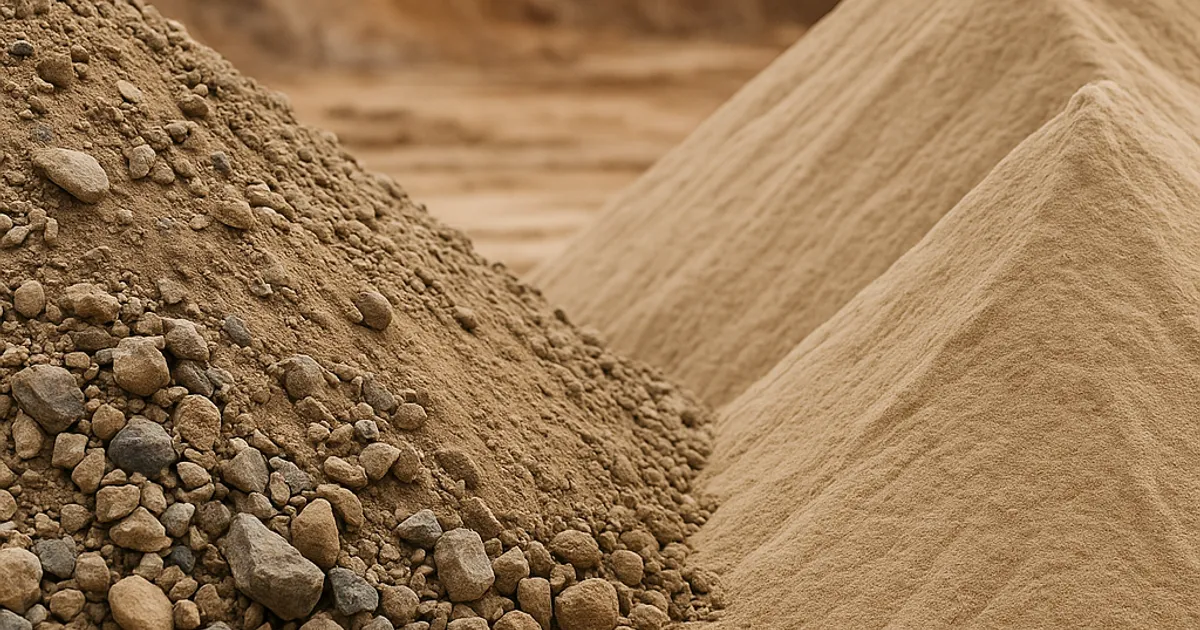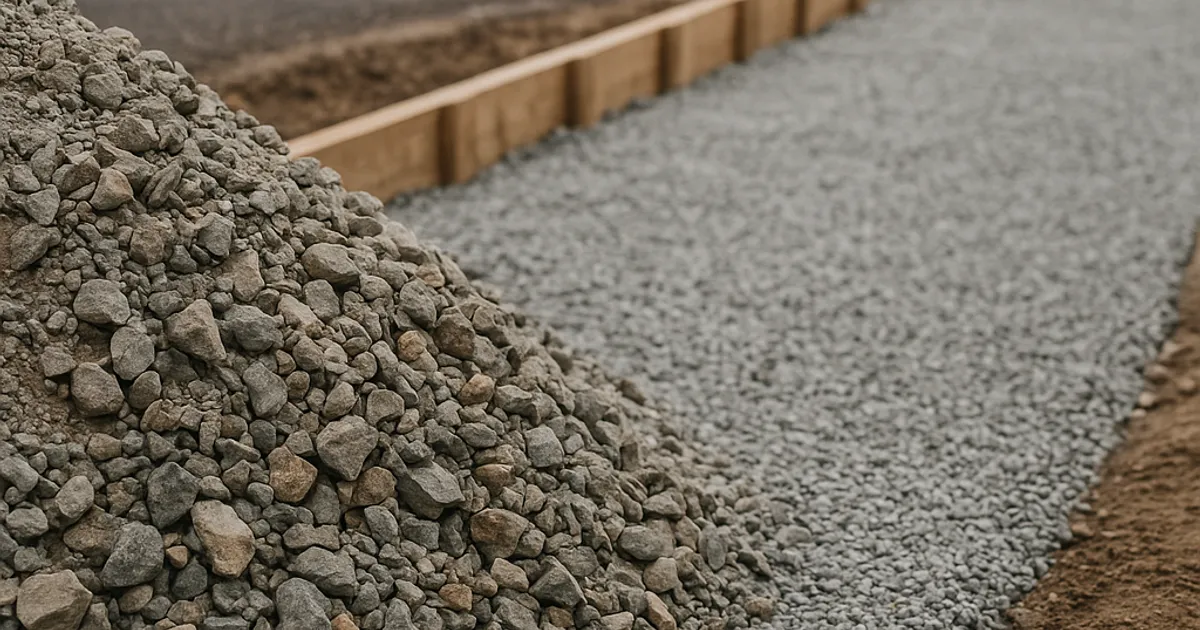
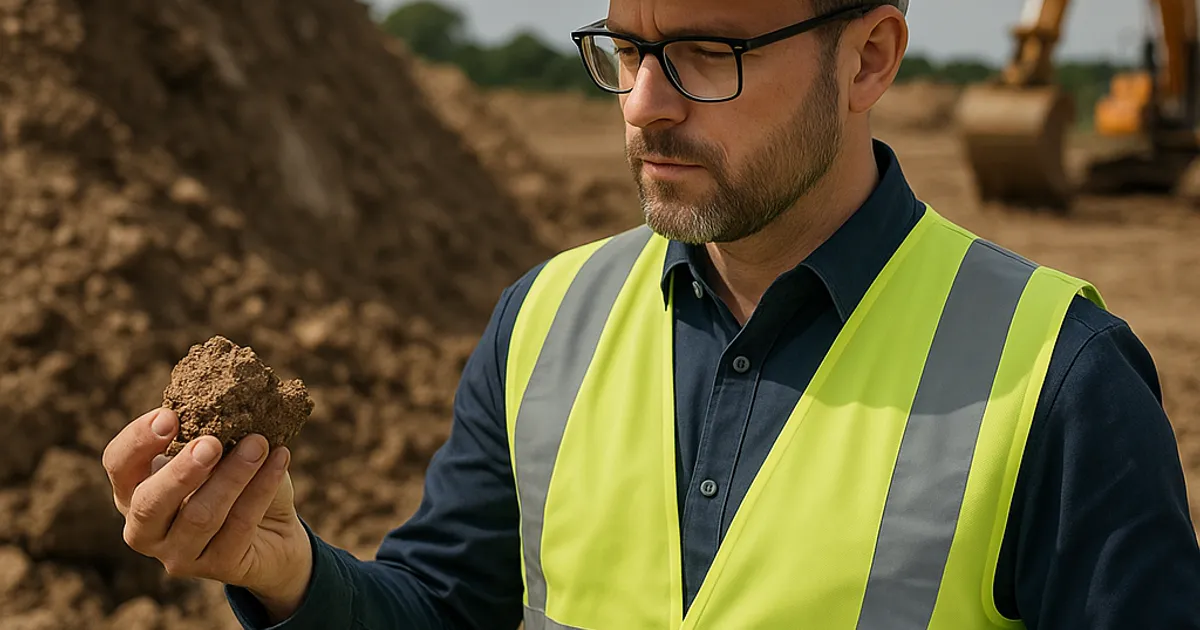
When most people think about civil engineering, they picture gleaming steel bridges, glass skyscrapers, or massive concrete highways. What rarely comes to mind is the humble material sitting directly beneath all of those structures: dirt. Yet soil—in its dozens of classified types, compositions, and behavioral states—is arguably the most critical raw material in any civil engineering project. Get it wrong, and a road subsides, a retaining wall fails, or a foundation cracks. Get it right, and you've built infrastructure that lasts generations.
This article dives deep into the science, practice, regulatory landscape, and logistics of dirt in civil engineering. Whether you're a project manager overseeing a highway expansion, a contractor bidding on a residential subdivision, or an engineer specifying fill material for a dam embankment, understanding dirt at a fundamental level is the difference between a project that performs and one that becomes a liability.
Why Dirt Is the Foundation of Civil Engineering
The word "dirt" is deceptively simple. In engineering practice, it refers to a complex, variable mixture of minerals, organic matter, water, and air whose behavior under load, over time, and across environmental conditions determines the structural integrity of virtually every built environment. The American Society of Civil Engineers (ASCE) estimates that infrastructure failures related to poor soil management cost the U.S. economy tens of billions of dollars annually—a figure that underscores just how critical proper soil engineering really is.
Civil engineers rely on geotechnical investigation to characterize soil before a single shovel breaks ground. A typical geotechnical report for a mid-sized commercial project costs between $5,000 and $25,000, depending on site complexity, and includes boring logs, laboratory test results, and design recommendations. Skipping this step—or underestimating its scope—is one of the most common and costly mistakes in the industry.
The role of dirt in civil engineering spans the entire project lifecycle:
- Site preparation: Clearing, grubbing, and grading to establish a stable working platform
- Foundation support: Providing load-bearing capacity for structures
- Embankment construction: Building up grade for roads, railways, and flood control levees
- Backfill operations: Stabilizing excavations around utilities, retaining walls, and basements
- Erosion control: Protecting disturbed surfaces during and after construction
- Landfill liner systems: Containing waste through engineered clay barriers
Each of these applications demands a different type of dirt with specific properties—and sourcing the right material efficiently can make or break a project's budget and timeline.
Soil Classification: The Language of Civil Engineering Dirt
Before a single specification can be written, engineers must speak a common language about soil. Two primary classification systems govern this communication in the United States.
The Unified Soil Classification System (USCS)
Developed by the U.S. Army Corps of Engineers and standardized through ASTM D2487, the Unified Soil Classification System (USCS) categorizes soils into groups based on grain size, plasticity, and organic content. The major groupings are:
| Symbol | Soil Type | Engineering Use |
|---|---|---|
| GW | Well-graded gravel | Excellent base course, fill |
| GP | Poorly graded gravel | Drainage applications |
| GM | Silty gravel | Good fill with compaction |
| GC | Clayey gravel | Moderate fill |
| SW | Well-graded sand | Foundation subgrade, fill |
| SP | Poorly graded sand | Limited structural use |
| SM | Silty sand | Moderate fill material |
| SC | Clayey sand | Compactible fill |
| ML | Low-plasticity silt | Poor foundation, frost-susceptible |
| CL | Low-plasticity clay | Liner systems, embankments |
| CH | High-plasticity clay | Expansive, problematic fill |
| OL/OH | Organic soils | Generally unsuitable for fill |
| PT | Peat | Unsuitable, must be removed |
The AASHTO Soil Classification System
For highway and transportation projects, the AASHTO system (ASTM D3282) is the standard. It classifies soils from A-1 (best for subgrade) through A-7 (worst), with A-1-a and A-1-b being well-graded gravels and sands that make excellent subgrade material, and A-6 and A-7 clays that expand and contract with moisture and are the bane of pavement engineers everywhere.
Why Classification Matters for Procurement
Knowing your soil classification isn't just academic—it directly affects what you can accept as fill, what you must export as waste, and what you'll pay for imported material. In a state like California, for example, importing A-1 granular fill from a distant source might cost $18–$35 per ton delivered, while nearby excavation spoils classified as A-4 silty material might be available for the cost of transportation alone. Matching supply to demand locally—what platforms like DirtMatch facilitate—can cut material costs dramatically without compromising engineering specifications.
Geotechnical Investigation: Testing Dirt Before You Build
No responsible civil engineer specifies soil use without testing. The geotechnical investigation process is both science and art, combining field exploration with laboratory analysis to build a picture of subsurface conditions.
Standard Penetration Testing (SPT)
The Standard Penetration Test (ASTM D1586) is the workhorse of field exploration. A split-spoon sampler is driven into the ground by a 140-pound hammer falling 30 inches, and the number of blows to advance 12 inches (the N-value) characterizes soil density. An N-value below 4 indicates very loose or very soft material—generally problematic for foundation support. N-values above 50 indicate dense gravel or rock.
Laboratory Testing Essentials
Field samples go to the lab for a battery of tests that inform design:
- Grain size analysis (ASTM D6913): Sieve analysis for coarse-grained soils; hydrometer for fines
- Atterberg limits (ASTM D4318): Liquid limit and plastic limit define clay behavior
- Proctor compaction (ASTM D698/D1557): Establishes maximum dry density and optimum moisture content for compaction specifications
- Unconfined compressive strength (ASTM D2166): Measures cohesive soil strength
- Consolidation testing (ASTM D2435): Predicts settlement under load for clays
- Hydraulic conductivity (ASTM D5084): Critical for drainage and liner design
A comprehensive lab suite for a single boring might cost $800–$2,500. For a large project requiring 20 borings and full testing, geotechnical investigation can run $50,000–$200,000—a small fraction of total project cost, but a fraction that pays for itself many times over in avoided surprises.
Compaction Science: Turning Loose Dirt Into Structural Material
Raw, excavated soil is rarely suitable for use as-is. Compaction—the mechanical densification of soil to reduce void space and increase load-bearing capacity—is the process that transforms dirt from a variable natural material into a predictable engineered fill.
The Proctor Test and Moisture-Density Relationships
Every fill specification begins with the Proctor test (ASTM D698 for standard, D1557 for modified). This test determines the maximum dry density (MDD) a soil can achieve at its optimum moisture content (OMC). Field compaction is then specified as a percentage of MDD—typically 90–98% depending on the application.
Common compaction specifications by application:
| Application | Required Compaction | Test Method |
|---|---|---|
| Pavement subgrade (top 12") | 95% MDD | ASTM D698 |
| Embankment fill | 90–95% MDD | ASTM D698 |
| Foundation subgrade | 95–98% MDD | ASTM D1557 |
| Utility trench backfill | 90–95% MDD | ASTM D698 |
| Structural fill under slabs | 95–98% MDD | ASTM D1557 |
| Parking lot subbase | 95% MDD | ASTM D698 |
Equipment Selection and Lift Thickness
Compaction equipment selection depends on soil type:
- Sheepsfoot/padfoot rollers: Best for cohesive soils (clays, silty clays); the feet penetrate and knead the soil, working from the bottom of the lift upward
- Smooth drum vibratory rollers: Ideal for granular soils (sands, gravels, crushed aggregate)
- Rubber-tired rollers: Versatile for mixed soils; the kneading action improves compaction uniformity
- Plate compactors and jumping jacks: Used in confined areas like utility trenches
Lift thickness—the depth of each uncompacted layer—is typically specified at 8–12 inches for large rollers and 4–6 inches for hand equipment. Thicker lifts save time but risk inadequate compaction at depth, a common source of post-construction settlement.
Field Verification: Nuclear Density Gauges and Sand Cone Tests
Compaction is verified in the field using nuclear density gauges (ASTM D6938) or sand cone tests (ASTM D1556). Nuclear gauges provide near-instant results but require licensed operators under U.S. Nuclear Regulatory Commission guidelines. Sand cone tests are more labor-intensive but serve as the reference standard when disputes arise. A project might require one density test per 500–2,000 square feet of fill, depending on specification requirements.
Types of Fill Dirt and Their Engineering Applications
Not all fill dirt is created equal. The civil engineering industry recognizes several categories of fill, each suited to different applications.
Common Fill (General Fill)
Common fill refers to any excavated material used to raise grades or fill voids. It may include native soil, construction debris, or imported material. Quality varies widely, and common fill is typically used in non-structural applications such as landscaping berms or rough grading where precise engineering properties aren't critical.
Structural Fill
Structural fill is engineered material placed and compacted to specific density and gradation requirements. It must meet material specifications—often excluding organic material, trash, debris, or soil with a plasticity index exceeding 15–20. Structural fill typically costs $8–$22 per ton delivered, with prices varying significantly by region. In high-demand urban markets like dirt exchange in San Francisco or dirt exchange in Los Angeles, both supply and disposal of engineered fill are constrained by geography and regulation, driving costs higher.
Select Fill and Select Granular Fill
Select fill (sometimes called "select material") is a higher-quality granular fill used beneath pavements, around structures, and in areas requiring rapid drainage or low compressibility. State DOTs typically define select fill in their Standard Specifications—for example, TxDOT specifies "Select Fill" as material with a maximum plasticity index of 15 and a CBR (California Bearing Ratio) of at least 20.
Flowable Fill (Controlled Low-Strength Material)
Flowable fill, or CLSM (Controlled Low-Strength Material), is a mixture of fly ash, cement, water, and sometimes fine aggregate that flows into place and sets to a low-strength solid. It's used to backfill utility trenches in roadways, abandoned pipes, and areas where conventional compaction is impractical. CLSM typically achieves 50–200 psi unconfined compressive strength—strong enough to support loads but weak enough to be excavated if needed.
Recycled Fill Materials
Sustainability pressures and tipping fees are driving increased use of recycled materials as fill:
- Recycled concrete aggregate (RCA): Crushed concrete from demolition; often meets select fill specifications at lower cost
- Reclaimed asphalt pavement (RAP): Used as base course material
- Fly ash and bottom ash: Byproducts of coal combustion, used as lightweight fill or stabilization agents
- Steel slag: High-density aggregate for embankments, though expansion potential requires careful evaluation
Soil Stabilization: When Native Dirt Isn't Good Enough
In many projects, the native soil is unsuitable as-is and must be stabilized rather than replaced. Stabilization improves soil strength, reduces plasticity, and increases resistance to moisture and freeze-thaw cycling.
Lime Stabilization
Quicklime or hydrated lime is mixed into expansive clay soils to reduce plasticity and increase strength. The calcium ions in lime react with clay minerals (a pozzolanic reaction), permanently altering the soil's engineering properties. Lime-stabilized clay can see CBR values increase from 3–5 to 20–30 after treatment. Lime stabilization typically costs $3–$8 per square yard of treated area depending on depth and lime content.
Portland Cement Stabilization
Portland cement binds granular soils into a rigid, cement-treated base (CTB) that resists deformation under load. CTB is widely used beneath concrete and asphalt pavements. A 6-inch CTB layer with 5% cement content can achieve unconfined compressive strengths of 300–500 psi, dramatically reducing pavement thickness requirements.
Fly Ash Stabilization
Class C fly ash (from lignite/sub-bituminous coal) is self-cementitious and can stabilize soils when mixed at 10–20% by weight. It's particularly effective on silty and clayey soils. The U.S. EPA regulates fly ash use under the Coal Combustion Residuals (CCR) rule, and project teams must verify that ash sources meet leachate standards before use.
Chemical Grouting and Deep Soil Mixing
For deeper stabilization needs—particularly beneath existing structures or in saturated conditions—chemical grouting (pressure-injecting cement grout or polyurethane foam) and deep soil mixing (DSM) provide solutions without full excavation. DSM uses large-diameter augers to blend cement slurry with in-situ soil to depths of 60–80 feet, creating columns or panels of improved material.
Earthwork Quantities and Mass Haul: The Economics of Moving Dirt
One of the most consequential decisions on any civil project is how to manage earthwork quantities—how much dirt to cut, where to fill, and how to minimize costly haul distances.
Cut and Fill Analysis
Civil engineers use mass haul diagrams to balance cut (excavated material) against fill (required material) across a project corridor. A balanced earthwork design minimizes the import and export of material, reducing cost and environmental impact. Modern software like Autodesk Civil 3D and Bentley OpenRoads Designer automates this process, but the underlying principle is simple: every yard of dirt moved costs money, and proximity is everything.
Typical earthwork cost ranges (2024 estimates):
| Operation | Unit Cost Range |
|---|---|
| Clearing and grubbing | $1,500–$8,000/acre |
| Unclassified excavation | $4–$18/CY |
| Rock excavation (blasting) | $25–$75/CY |
| Common embankment (on-site haul) | $3–$10/CY |
| Borrow fill (off-site import) | $12–$35/CY delivered |
| Compaction testing | $15–$50/test |
| Disposal (off-site haul) | $10–$40/CY |
Note: CY = cubic yard. All costs are highly regional and project-specific.
Swell and Shrinkage Factors
Dirt expands when excavated (swell) and compresses when compacted (shrinkage). These factors must be accounted for when calculating quantities:
- Sand: ~10–15% swell when excavated; ~5–10% shrinkage when compacted
- Clay: ~20–35% swell when excavated; ~10–20% shrinkage when compacted
- Rock: ~40–60% swell when blasted; minimal shrinkage
Failing to account for these factors can result in significant quantity and cost overruns. A project estimating 10,000 bank cubic yards (BCY) of clay fill may require 12,000–13,500 loose cubic yards (LCY) of material for delivery, and only 8,000–9,000 compacted cubic yards (CCY) in place.
Finding and Connecting Fill Sources: The DirtMatch Advantage
For many contractors, the hardest part of earthwork management isn't the engineering—it's finding the right dirt at the right time in the right location. Excess excavation from one job site is often desperately needed fill at another site just miles away, yet without a reliable way to connect supply and demand, perfectly usable material gets hauled to landfills while projects import expensive borrow material.
That's precisely the problem DirtMatch was built to solve. By connecting contractors, developers, and municipalities who have excess dirt with those who need fill material, DirtMatch creates a local marketplace that reduces hauling costs, minimizes waste, and keeps projects on schedule. Understanding how DirtMatch works is straightforward: contractors post available or needed material, specify type and quantity, and get matched with compatible partners in their region—turning earthwork logistics from a headache into a competitive advantage.
Find or Post Dirt, Rock & Aggregate
Join thousands of contractors using DirtMatch to buy, sell, and exchange earthwork materials.
Try DirtMatch FreeRegulatory Framework: What Governs Dirt in Civil Projects
Dirt is regulated at multiple levels of government, and navigating this framework is essential for compliance and project success.
Federal Regulations
Clean Water Act Section 404: The U.S. Army Corps of Engineers regulates the discharge of dredged or fill material into waters of the United States, including wetlands. Any project that places fill in regulated waters requires a Section 404 permit. Nationwide Permit 39 covers residential, commercial, and institutional developments that discharge up to 1/2 acre of fill into non-tidal waters. Projects exceeding these thresholds require individual permits, which can take 12–18 months or more.
OSHA Excavation Standards (29 CFR 1926 Subpart P): OSHA's excavation and trenching standards are among the most critical worker safety regulations in construction. They classify soil into four types based on stability:
- Type A: Cohesive soils with unconfined compressive strength ≥ 1.5 tsf; steepest allowed cut slope 3/4H:1V
- Type B: Cohesive soils ≥ 0.5 tsf but < 1.5 tsf; cut slope 1H:1V
- Type C: Granular or fissured soils; shallowest allowed cut slope 1.5H:1V
- Type D: Submerged or unstable soils; shoring or full benching required
Failing to comply with these standards is one of the leading causes of construction fatalities. OSHA citations for excavation violations average $15,000–$156,000 per willful violation.
EPA Contaminated Soil Regulations: Under RCRA and CERCLA, soils contaminated with hazardous substances require characterization before reuse or disposal. Contaminated soil may be classified as a hazardous waste, triggering manifest requirements, approved treatment and disposal facilities, and potentially six-figure remediation costs.
State and Local Regulations
State DOT standard specifications govern fill material quality on highway projects. California's Caltrans Standard Specifications, Texas DOT Standard Specifications, and NYSDOT Standard Specifications each define material requirements, testing frequencies, and documentation requirements that must be met.
Local jurisdictions layer additional requirements through grading ordinances, stormwater permits, and erosion control plans. In the Pacific Northwest, for example, dirt exchange in Seattle involves navigating King County's strict stormwater management requirements and Washington State's Model Toxics Control Act (MTCA) for any soil with potential contamination.
Environmental Documentation
Large projects may require an Environmental Impact Statement (EIS) or Environmental Assessment (EA) under NEPA that specifically addresses earthwork impacts, including:
- Soil erosion and sedimentation
- Dust generation and air quality
- Wetland and habitat impacts from grading
- Noise from earthmoving equipment
- Contaminated soil management
Soil Erosion and Sediment Control: Protecting Disturbed Dirt
Construction sites are among the largest sources of sediment pollution in the United States. The EPA estimates that construction activities disturb approximately 1.7 million acres annually, generating runoff that carries soil particles into waterways at rates 10–20 times higher than agricultural land and 1,000–2,000 times higher than undisturbed forests.
Stormwater Pollution Prevention Plans (SWPPPs)
Any construction project disturbing one or more acres must obtain coverage under the EPA's Construction General Permit (CGP) and implement a Stormwater Pollution Prevention Plan. The SWPPP must identify:
- All potential pollutant sources (including stockpiled dirt)
- Best Management Practices (BMPs) to control erosion and sediment
- Inspection and maintenance schedules
- Responsible parties for SWPPP implementation
Erosion Control BMPs for Earthwork Projects
Temporary measures during construction:
- Silt fence: Geotextile fabric barriers that trap sediment; cost $1.50–$4.00 per linear foot installed
- Fiber wattles/compost socks: Rolled barriers placed on slopes and around inlets
- Hydraulic mulch: Spray-applied wood fiber or straw that protects bare soil
- Temporary seeding: Fast-germinating grasses that stabilize disturbed areas within days
- Check dams: Small rock or sandbag barriers in drainage channels
Permanent measures:
- Final grading and permanent seeding/sodding
- Riprap channel lining
- Bioswales and vegetated filter strips
- Outlet protection structures
Properly implemented erosion control can add $2,000–$10,000 per acre to project costs, but failing to control sediment can result in EPA fines of up to $37,500 per day per violation—to say nothing of the cost of cleaning up downstream impacts.
Expansive Soils: Civil Engineering's Most Persistent Challenge
Expansive soils—those that swell significantly when wetted and shrink when dried—cause more damage to structures annually than earthquakes, floods, and hurricanes combined. The Federal Highway Administration estimates that expansive soils cost the U.S. economy more than $15 billion per year in infrastructure damage.
Where Expansive Soils Are Most Common
Expansive soils are predominantly clay-rich soils containing montmorillonite (smectite) minerals. They're most prevalent in:
- Texas, Oklahoma, and the Southern Plains
- Colorado's Front Range (including dirt exchange in Denver and dirt exchange in Boulder, where Cretaceous-age shales produce highly expansive soils)
- California's Central Valley
- Arizona and New Mexico
Soils in Denver's suburbs can exhibit volumetric changes of 8–12% between wet and dry states—enough to heave a slab foundation by several inches over a single season.
Identifying Expansive Soils
The primary indicators of expansive potential:
- Plasticity Index (PI): Soils with PI > 20 are considered moderately to highly expansive; PI > 35 is severely expansive
- Free swell test: Measures volumetric change from dry to saturated state
- Expansion index (EI): Required by California Building Code (CBC) for foundation design
Mitigation Strategies
- Moisture barriers: Vertical cutoff barriers that limit moisture variation beneath structures
- Pre-wetting: Wetting expansive subgrade before construction to achieve equilibrium moisture content
- Lime treatment: Reduces plasticity and expansion potential
- Removal and replacement: Remove expansive soil to a depth of 3–5 feet and replace with non-expansive material
- Post-tensioned slabs: Foundation systems that resist differential movement
Contaminated Soil: Identification, Remediation, and Responsible Reuse
Not all dirt is clean. Construction projects—particularly in urban areas—frequently encounter soil contaminated by decades of industrial activity, underground storage tanks (USTs), or improper waste disposal.
Phase I and Phase II Environmental Site Assessments
Before any significant earthwork, a Phase I Environmental Site Assessment (ESA) under ASTM E1527-21 identifies recognized environmental conditions (RECs) through records review, site reconnaissance, and interviews. If RECs are identified, a Phase II ESA involves soil and groundwater sampling to characterize contamination.
Common Soil Contaminants and Their Implications
| Contaminant | Common Source | Remediation Approach |
|---|---|---|
| Petroleum hydrocarbons | USTs, spills | Bioremediation, soil vapor extraction |
| Heavy metals (Pb, As, Cd) | Industrial sites, paint | Stabilization/solidification, disposal |
| Chlorinated solvents (TCE, PCE) | Dry cleaners, manufacturing | SVE, air sparging, in-situ chemical oxidation |
| Polycyclic aromatic hydrocarbons (PAHs) | Manufactured gas plants, asphalt | Thermal treatment, disposal |
| Asbestos-containing material | Older buildings | Special handling and disposal per EPA regulations |
Beneficial Reuse of Impacted Soil
Not all impacted soil must go to a Subtitle D landfill. Many states have adopted risk-based cleanup standards that allow mildly contaminated soil to be reused in certain applications—for example, as daily cover at lined landfills, in industrial settings above a paved surface, or in deep embankment applications where exposure pathways are limited. Consulting state environmental agency guidance before assuming disposal is the only option can save significant cost.
Special Applications: Dirt in Dam Construction, Road Building, and Foundations
The versatility of engineered soil is on full display in three cornerstone civil engineering applications.
Earth Dam Construction
Earth-fill dams—the most common type of dam worldwide—are essentially massive engineered soil structures. The Oroville Dam in California, the tallest dam in the United States at 770 feet, is an earth-fill structure containing approximately 80 million cubic yards of material. Earth dam design requires careful selection and zoning of fill materials:
- Core: Low-permeability clay to prevent seepage
- Shell: Granular material for stability and drainage
- Filter/drain zones: Graded granular material to control internal erosion
- Riprap: Rock protection on upstream and downstream faces
The engineering of earth dams is governed by the U.S. Bureau of Reclamation's Design of Small Dams and the U.S. Army Corps of Engineers EM 1110-2-1911, Earth and Rock-Fill Dams.
Road and Highway Subgrade
The pavement structure is only as good as the subgrade beneath it. A weak or unstable subgrade forces pavement designers to add costly base course and pavement thickness. The California Bearing Ratio (CBR) is the primary measure of subgrade strength:
- CBR < 3: Very poor; typically requires full replacement or stabilization
- CBR 3–5: Poor; lime or cement stabilization recommended
- CBR 5–10: Moderate; standard pavement design applies
- CBR 10–20: Good; reduced pavement sections possible
- CBR > 20: Excellent; minimal pavement thickness required
Building Foundations
Residential and commercial foundations rely on soil's bearing capacity. Allowable bearing pressures range from 500–1,000 psf for soft clays to 8,000–12,000 psf or more for dense gravels and weathered rock. When native soils are inadequate, options include:
- Deep foundations (piles, drilled shafts) to transfer load to competent material
- Ground improvement (dynamic compaction, vibro-compaction, stone columns)
- Mat foundations that spread load over a larger area
- Soil replacement with compacted structural fill
Sustainable Earthwork: The Future of Dirt in Civil Engineering
The civil engineering industry is increasingly focused on sustainable earthwork practices that reduce waste, lower carbon emissions, and preserve natural resources.
Minimizing Haul Distances
Heavy equipment fuel consumption is one of the largest sources of greenhouse gas emissions on construction projects. A loaded 40-ton articulated truck gets roughly 5–7 miles per gallon of diesel. Moving 10,000 tons of fill 20 miles versus 5 miles burns an additional 25,000–30,000 gallons of diesel—emitting roughly 270 additional tons of CO₂. Optimizing haul routes and sourcing material locally has both economic and environmental benefits.
On-Site Material Reuse
The hierarchy of sustainable earthwork is: reuse on-site first, exchange locally second, dispose as a last resort. Best practices include:
- Segregating topsoil for later reuse in landscaping
- Stockpiling and protecting suitable native material for use as fill
- Testing native soil for stabilization potential before ordering import material
Digital Tools and Marketplace Platforms
The rise of digital platforms for earthwork material management represents one of the most significant sustainability advances in the industry. Rather than defaulting to landfill disposal for excess excavation, contractors can now find nearby projects that need exactly the material they have. Platforms like DirtMatch create real economic value by turning earthwork waste into a resource—and contractors in regions from dirt exchange in Boston to dirt exchange in San Diego are discovering that smarter sourcing doesn't just save money; it helps meet increasingly stringent project sustainability requirements and LEED credits for material management.
Carbon Sequestration in Soil
Emerging research from institutions including MIT's Department of Civil and Environmental Engineering suggests that engineered soil management—particularly the incorporation of biochar, compost, and other organic amendments—can turn construction sites into net carbon sinks. While still early-stage for most projects, carbon-aware earthwork is becoming a specification consideration in progressive public works contracts.
Best Practices for Earthwork Project Management
Synthesizing the technical and logistical considerations above, here are the essential best practices that separate successful earthwork projects from costly failures:
Pre-Construction
- Commission a thorough geotechnical investigation: Don't underscope your borings or laboratory testing program. The $10,000 you save on geotechnical work is routinely dwarfed by the cost of discovering surprises during construction.
- Conduct a Phase I ESA: Know your site history before your excavator opens the ground.
- Perform detailed mass haul analysis: Use software to optimize cut-fill balance and minimize haul distances before bidding.
- Source fill material early: Confirm material availability, quality, and delivery schedules before construction starts. Late material procurement is a primary driver of schedule overruns.
- Register on DirtMatch: For contractors entering a new region or project type, getting started with DirtMatch before mobilization means you'll have a network of potential material sources and outlets ready when earthwork begins.
During Construction
- Verify material quality on delivery: Don't accept fill that doesn't meet specifications—the cost of removing and replacing non-conforming fill is always higher than rejecting it at the gate.
- Monitor moisture content continuously: Dirt that's too wet or too dry won't compact properly regardless of roller passes. Have a moisture management plan.
- Test compaction systematically: Keep a complete record of density tests, including location, depth, and test results. This documentation is essential for quality assurance and claims defense.
- Protect stockpiles: Cover or seed stockpiles to prevent erosion and moisture contamination.
- Inspect erosion controls after every rain event: SWPPP inspection logs are a regulatory requirement and a risk management tool.
Post-Construction
- Document as-built conditions: Record actual fill depths, material sources, and compaction test results for the project record.
- Monitor settlement on critical fills: Instrumented settlement monitoring on large embankments can catch problems early, when interventions are still cost-effective.
- Establish a maintenance plan for erosion controls: Temporary measures need to stay in place until permanent vegetation is established.
Conclusion: Dirt Is Engineering
The material we casually call "dirt" is, in the hands of a skilled geotechnical engineer and experienced contractor, one of the most versatile and powerful construction materials on earth. It can bear the weight of skyscrapers, hold back rivers, and support millions of miles of roads—or it can fail catastrophically if selected, placed, and managed without proper engineering oversight.
For civil engineering professionals, the mastery of soil behavior—from classification and testing through compaction, stabilization, and sustainable reuse—is a career-long pursuit. And for the contractors who actually move the dirt, the logistics of getting the right material to the right place at the right time is equally demanding.
The good news is that better tools exist than ever before to support both sides of that equation. Engineering standards are more precise, testing methods are more accurate, and—critically—platforms designed specifically to connect material supply and demand are making the earthwork marketplace more efficient, more transparent, and more sustainable than at any point in the industry's history.
Whether you're managing a small residential subdivision or a major highway interchange, the knowledge in this guide provides a foundation for making better decisions about the dirt beneath your project. And when you need to find or place fill material in your region, platforms like DirtMatch are ready to connect you with the resources you need to get the job done right.