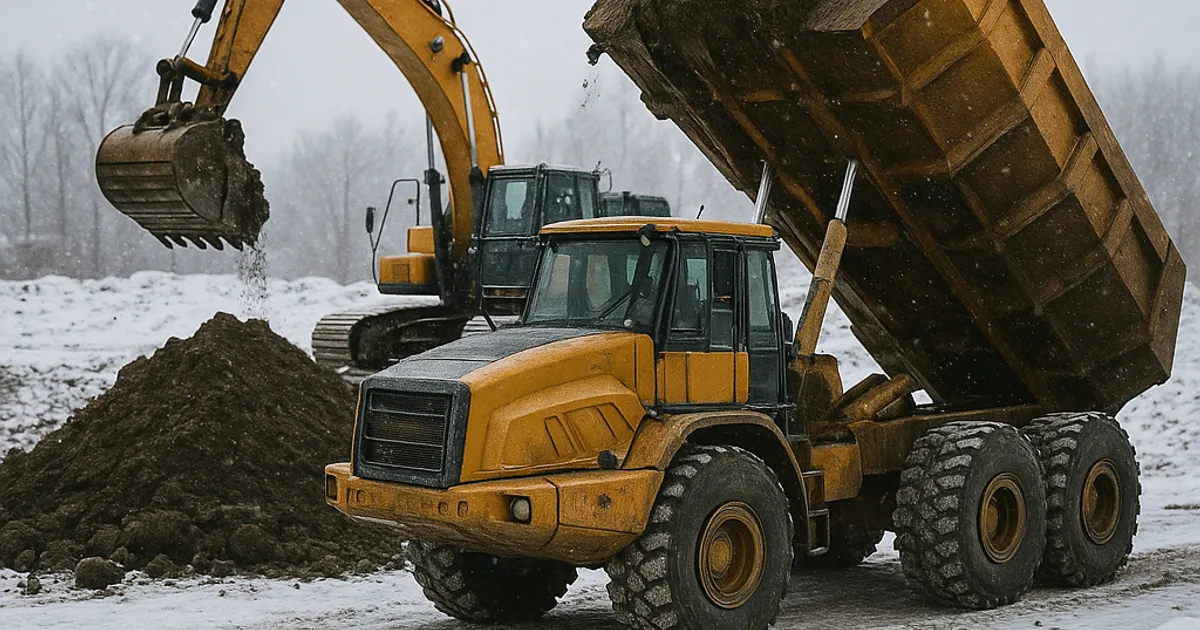
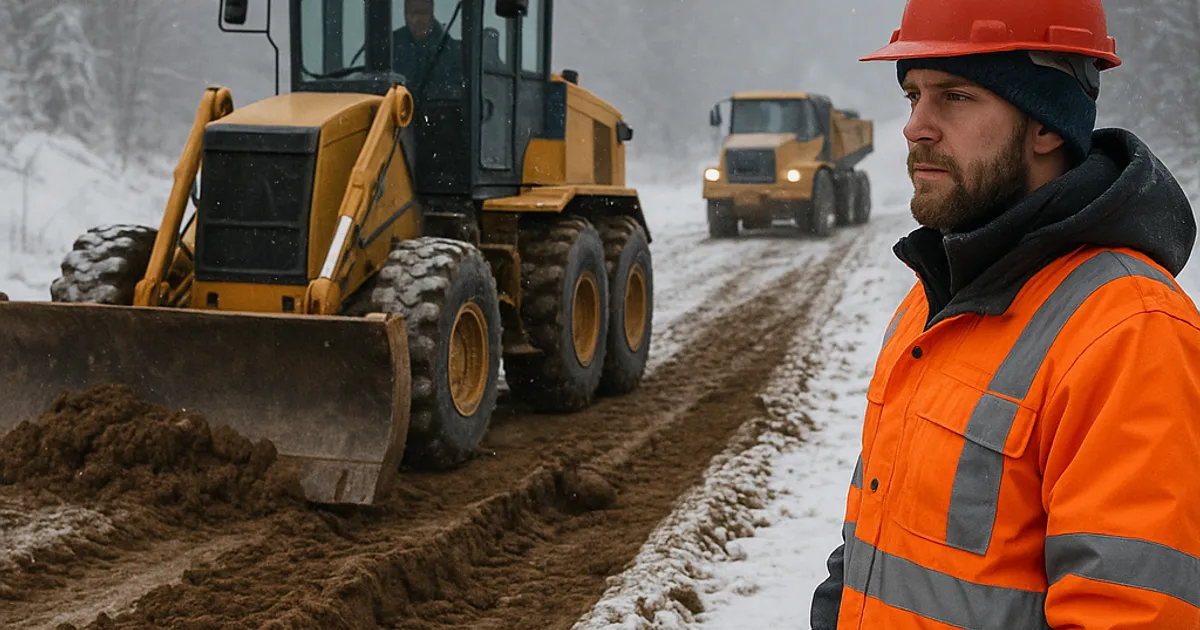
For earthwork contractors across North America, winter presents a uniquely demanding set of challenges. Frozen ground, unpredictable precipitation, reduced daylight hours, and volatile soil conditions can turn a routine grading project into a logistical nightmare. Yet the reality is that construction schedules rarely pause for the calendar, and owners, developers, and municipal agencies increasingly expect earthwork to continue through the cold months.
The good news is that experienced contractors who understand the science of cold-weather soil behavior, invest in the right equipment preparations, and adopt disciplined operational protocols can maintain strong productivity from November through March. This guide dives deep into the proven strategies, regulatory considerations, equipment requirements, and logistics best practices that define successful winter earthwork in 2026.
Why Winter Earthwork Is More Complex Than It Looks
Surface-level observations can be deceiving in winter. A job site might appear workable in the morning only to become treacherous by midday as freeze-thaw cycles shift soil stability. Understanding exactly what happens to soil during cold weather is the foundation of every good winter earthwork plan.
When ambient temperatures drop below 32 degrees Fahrenheit, the moisture within soil begins to freeze. This process is not uniform. Coarse-grained soils like gravels and sands drain relatively freely and experience less frost heave, while fine-grained soils such as silts and clays retain water and are highly susceptible to frost action. The USDA Natural Resources Conservation Service notes that frost depth can range from a few inches in mild climates to more than five feet in northern regions like Minnesota, Montana, and the Upper Peninsula of Michigan.
Frost heave occurs when ice lenses form within fine-grained soils, lifting the ground surface unevenly. This can compromise subgrade stability, distort finished grades, and undermine any compaction work completed prior to the freeze. After a thaw, those same soils can become saturated and lose bearing capacity dramatically, a condition sometimes called "spring breakup" but which can actually occur multiple times across a single winter season during variable weather.
Contractors who fail to account for these dynamics risk rework costs, schedule delays, and in some cases, structural failures in foundations and embankments. A proactive winter earthwork plan addresses soil behavior at every stage of the cold-weather season.
Pre-Season Planning: Setting Up for Winter Success
The most effective winter earthwork operations begin planning before the first frost. Pre-season preparation covers site assessment, scheduling strategy, equipment readiness, and material procurement.
Conduct a Winter-Specific Site Assessment
Before temperatures drop, visit each active site and evaluate the following:
- Soil classification and frost susceptibility. Reference USDA Web Soil Survey data to understand the dominant soil types on your site. Highly frost-susceptible soils (ASTM D2487 classifications ML, CL, and OL) require the most aggressive cold-weather management.
- Drainage patterns. Sites with poor drainage will experience more severe freeze-thaw impacts. Identify low spots where water collects and plan drainage improvements before freeze-up.
- Access routes. Evaluate haul roads and access points for their ability to withstand winter truck traffic. Gravel surfacing, geotextile reinforcement, or temporary matting may be necessary.
- Stockpile locations. Determine where materials will be stored and whether those piles need to be covered or protected from freezing.
Sequence Work to Minimize Frost Interference
Schedule the most frost-sensitive work, particularly subgrade preparation and structural fill placement, to occur before hard freeze events. Rough grading and bulk excavation can often continue through frozen conditions with appropriate equipment, but fine grading and compaction are far more difficult once the ground freezes deeply.
Coordinate with project owners early in the season to set realistic winter production expectations. Productivity rates for cold weather grading can drop 15 to 30 percent compared to summer conditions, depending on temperature, precipitation, and soil type. Build this reduction into your schedule and budget from the outset.
Understanding Frozen Ground Excavation
Excavating frozen ground is fundamentally different from working in temperate conditions. Ice-cemented soil can have compressive strengths exceeding 500 psi, making standard bucket penetration difficult and accelerating wear on cutting edges and teeth.
Equipment Selection for Frozen Ground Excavation
Larger, higher-horsepower machines are typically necessary for frozen ground excavation. A 20-ton excavator that performs efficiently in summer may struggle with heavily frozen clay, requiring you to step up to a 35-ton or larger machine. Hydraulic rock breakers and ripper attachments on dozers are highly effective for breaking up the frozen surface layer before excavation.
Key equipment considerations for frozen ground excavation include:
- Heavy-duty ground engaging tools (GET). Use hardened, abrasion-resistant bucket teeth and cutting edges designed for frozen or rocky conditions. Standard GET wears at roughly twice the rate in frozen ground.
- Ripping before excavation. A single- or multi-shank ripper mounted on a large dozer (D8 or D9 class) can fracture frozen soil to depths of 18 to 36 inches, dramatically improving excavator productivity.
- Hydraulic breakers. For sites where ripping is impractical, hydraulic hammers mounted on excavator arms can break through frozen crust layers efficiently.
- Track over tire. Track machines generally outperform wheeled equipment in winter conditions due to better flotation and traction on frozen, snow-covered, or muddy surfaces.
Manufacturers like Caterpillar and Komatsu offer cold-weather packages for their machines that include engine block heaters, battery warmers, and hydraulic oil cooler bypasses, all of which are essential for reliable operation when temperatures fall below 20 degrees Fahrenheit.
Managing Frozen Stockpiles
One of the most overlooked challenges in winter earthwork is managing frozen material stockpiles. Excavated soil that is stockpiled in freezing temperatures can freeze into a solid mass that becomes nearly impossible to reclaim with standard equipment. Strategies to prevent this include:
- Cover active stockpiles with insulating tarps or geotextile blankets to retain ground heat.
- Shape stockpiles with steep sides to reduce surface area exposed to freezing air.
- Blend frozen clumps back into the haul cycle quickly rather than allowing them to accumulate in large frozen masses.
- For critical material stockpiles, consider temporary enclosures or portable heating systems.
Finding nearby projects that can absorb excess material quickly is another effective strategy. DirtMatch connects earthwork contractors with buyers and receivers of fill dirt and aggregate, making it easier to move surplus stockpile material off-site before it freezes solid and becomes a disposal problem.
Cold Weather Grading: Maintaining Grade Accuracy in Winter
Precision grading in cold weather is one of the most technically demanding aspects of winter earthwork. Frost heave, thaw settlement, and the difficulty of compacting cold soils all threaten grade accuracy and long-term stability.
The Freeze-Thaw Compaction Problem
Compaction is the critical process that determines the long-term performance of any earthwork. In winter, compaction faces three main obstacles:
- Frozen lift temperatures. Most compaction specifications require soil to be placed at or above a minimum temperature (often 35 to 40 degrees Fahrenheit) to achieve adequate density. Frozen or near-frozen material simply will not compact to specified densities regardless of the number of roller passes.
- Frozen subgrade. Placing fill over a frozen subgrade creates a hidden problem. When the underlying frozen soil thaws, it may settle unevenly, causing the fill above it to crack or shift.
- Ice lens interference. Ice lenses within the compacted fill can create weak planes that reactivate during thaw cycles.
ASTM D698 and D1557 (Standard Proctor and Modified Proctor tests) are the most widely used standards for determining optimum moisture content and maximum dry density. These tests are typically performed at laboratory temperatures and do not account for field conditions in freezing weather. Contractors should request cold-weather compaction specifications from their geotechnical engineer before proceeding with winter fill placement.
GPS Machine Control in Winter Conditions
GPS-based machine control systems, offered by companies like Trimble Construction, have become essential tools for maintaining grade accuracy in poor visibility winter conditions. Snow, fog, and low-light conditions make conventional grade stakes and stringlines difficult or impossible to use effectively. Machine control allows operators to work accurately regardless of site visibility conditions.
Modern machine control systems can maintain grade tolerances of plus or minus 0.05 feet even in challenging winter environments. The investment in this technology pays dividends year-round but is particularly valuable in winter when every hour of productive work matters.
Protecting Finished Grades from Frost Heave
Once a grade has been established, protecting it from frost damage before construction continues is essential. Common methods include:
- Applying an insulating layer of straw or foam insulation board over sensitive subgrades.
- Using geotextile frost blankets on areas where precision grades must be maintained.
- Scheduling paving, foundation work, or other cover activities immediately after grading to protect the finished surface.
- Avoiding grading in late afternoon when temperatures drop rapidly after sunset, which can freeze freshly graded surfaces before they are protected.
Winter Dirt Hauling: Keeping Trucks Moving Safely
Hauling is the lifeblood of earthwork operations, and winter weather introduces a wide range of complications for fleet management, driver safety, and regulatory compliance. A disciplined approach to winter dirt hauling protects your drivers, your equipment, and your schedule.
Pre-Trip Inspection Requirements in Cold Weather
Federal Motor Carrier Safety Administration (FMCSA) regulations require commercial motor vehicle operators to complete a systematic pre-trip inspection before each shift. In winter, this inspection becomes more critical and more time-consuming. Cold-weather pre-trip checks should include:
- Brake system. Air brakes are particularly vulnerable to moisture freeze in cold weather. Drain air tanks daily and inspect for moisture accumulation.
- Tires. Cold temperatures reduce tire pressure at a rate of approximately 1 psi for every 10-degree Fahrenheit drop. Check pressures every morning and adjust accordingly.
- Lights and visibility. Ensure all lights are functional and clear of ice and snow. Clean mirrors and cameras before departure.
- Fuel. Use winter-blend diesel or add anti-gel additives to prevent fuel gelling below 15 degrees Fahrenheit.
- Fluids. Verify coolant concentration, windshield washer fluid rated for cold temperatures, and hydraulic fluid viscosity ratings appropriate for ambient temperatures.
Electronic logging devices, required under the FMCSA ELD mandate for most commercial operators, can help fleet managers monitor driver hours and identify opportunities to minimize cold-weather driving during the most hazardous periods of the day.
Load Management in Winter Hauling
Winter hauling introduces complications around load management and weight compliance. Several factors affect load decisions in cold weather:
- Frozen material density. Frozen soil is denser than thawed soil. A standard dirt load that weighs 22 tons in summer may weigh 24 to 26 tons when frozen, potentially creating overweight violations.
- Load coverage. Many states require tarping of loose loads during winter to prevent debris from falling onto roadways. Check your state DOT regulations before hauling uncovered loads.
- Spring load restrictions. Many states implement seasonal load restrictions on public roads during the spring thaw period, typically from February through April depending on latitude. These restrictions can reduce legal axle weights by 20 to 40 percent and significantly affect haul cycle economics. Check with your state DOT for current restriction schedules.
- Tire chain requirements. Some states and municipalities require tire chains on commercial vehicles during winter weather events. Know your local regulations and keep chains accessible.
Route Planning for Winter Haul Roads
Winter weather can make standard haul routes impassable. Proactive route planning should include:
- Identifying alternate routes before the season starts.
- Monitoring road condition reports through your state DOT.
- Coordinating with site supervisors on haul road maintenance, including grading, gravel applications, and ice control.
- Establishing clear communication protocols so drivers know immediately when routes change.
For contractors managing multiple active sites across a region, platforms like DirtMatch can simplify the logistics of matching available trucks with the right projects, helping you optimize haul cycles even when weather disruptions force last-minute schedule changes.
Equipment Winterization: Protecting Your Fleet Investment
Properly winterizing your earthwork equipment is not optional; it is a financial imperative. The cost of a single catastrophic cold-weather equipment failure can easily exceed $10,000 to $50,000 in repairs, lost productivity, and rental equipment costs. Systematic winterization protects your investment and keeps machines productive.
Fluid and Lubrication Management
Cold temperatures dramatically affect fluid viscosity, and using summer-grade lubricants in winter conditions can cause rapid wear or outright failure of hydraulic systems, transmissions, and final drives.
| Fluid Type | Summer Grade | Winter Recommendation |
|---|---|---|
| Engine Oil | 15W-40 | 5W-40 or 0W-40 |
| Hydraulic Oil | ISO VG 46 | ISO VG 32 or arctic-grade |
| Gear Oil | 80W-90 | 75W-90 synthetic |
| Coolant | 50/50 mix | 60/40 mix for below -20F |
| Diesel Fuel | Standard #2 | Winter blend or #1 diesel |
Consult your equipment manufacturer's cold-weather operation guide for specific fluid recommendations. Running machines through a warm-up cycle of 10 to 15 minutes before operating under load is essential when temperatures are below 20 degrees Fahrenheit.
Engine and Battery Systems
Cold-weather starting failures are one of the most common causes of winter productivity loss. Preventive measures include:
- Install engine block heaters on all machines and plug them in overnight when temperatures are expected to drop below 20 degrees Fahrenheit.
- Use battery warmers or heated battery boxes on critical machines.
- Test battery capacity before the season begins. A battery that tests at 80 percent capacity in summer may fail entirely at minus 10 degrees Fahrenheit.
- Consider upgrading to absorbed glass mat (AGM) batteries, which perform significantly better in extreme cold than conventional flooded lead-acid batteries.
Undercarriage and Track Systems
Track machines require special attention in winter. Mud and wet soil can pack into track links and rollers, then freeze overnight into solid masses that damage the undercarriage when the machine is started. Best practices include:
- Clean tracks thoroughly at the end of each shift, particularly in sloppy thaw conditions.
- Park tracked machines on gravel or timber mats to minimize ground freezing contact.
- Inspect track tension regularly, as temperature changes affect steel tension differently than rubber tension.
- Lubricate pins and bushings with low-temperature grease rated for your expected ambient temperatures.
Find or Post Dirt, Rock & Aggregate
Join thousands of contractors using DirtMatch to buy, sell, and exchange earthwork materials.
Try DirtMatch FreeSafety Protocols for Winter Earthwork Operations
Winter earthwork carries elevated safety risks compared to warm-weather operations. Cold stress, reduced visibility, slippery surfaces, and unstable soil conditions all contribute to a higher-risk work environment. A rigorous safety culture is the most important tool in your winter toolbox.
Cold Stress and Worker Health
The Occupational Safety and Health Administration identifies cold stress as a serious workplace hazard for outdoor construction workers. Conditions including hypothermia, frostbite, and trench foot can develop quickly when workers are exposed to low temperatures, wind, and moisture without adequate protection.
Practical cold stress prevention measures include:
- Provide heated break areas or warming trailers on every winter job site.
- Require workers to wear layered clothing systems appropriate for the ambient temperature and wind chill.
- Implement a buddy system so workers monitor each other for signs of cold stress.
- Adjust work schedules to avoid the coldest periods of the day when possible.
- Ensure adequate hydration; cold weather suppresses the sensation of thirst even as fluid losses continue.
Trench and Excavation Safety in Frozen Ground
Frozen ground can create a false sense of security in trench excavation. While frozen soil may appear to stand perfectly vertical without support, this stability is entirely dependent on the freeze remaining intact. A thaw event, a warm afternoon, or even vibration from nearby equipment can cause a frozen trench wall to collapse without warning.
OSHA's trenching and excavation standards require that all excavations be protected by sloping, shoring, or trench boxes regardless of soil conditions, including frozen soil. Never classify frozen soil as a stable, self-supporting material for the purpose of eliminating protective systems. Competent person inspections must occur daily and after any thaw event that could affect trench wall stability.
Visibility and Traffic Management
Shorter daylight hours in winter mean more work is performed in low-light or no-light conditions. Ensure that:
- All workers wear high-visibility clothing meeting ANSI/ISEA 107 Class 2 or Class 3 standards.
- Work zones are adequately illuminated with temporary lighting for evening operations.
- Haul truck routes and pedestrian paths are clearly separated and marked.
- Spotters are used for any equipment operation near workers or in restricted visibility areas.
Regional Considerations: Winter Earthwork Across North America
Winter earthwork challenges vary significantly by region, and strategies that work in one climate may be entirely inappropriate in another.
Northern Tier: Deep Freeze Conditions
In states like Minnesota, Wisconsin, Michigan, Maine, and Montana, frost depths can exceed four to five feet. Contractors in these regions often schedule bulk earthwork during the winter freeze specifically because frozen ground provides excellent bearing capacity for heavy equipment, reducing soil rutting and disturbance. The key is to plan for the thaw, staging stockpiles and scheduling haul activities to be completed before spring breakup.
Mid-Atlantic and Midwest: Freeze-Thaw Cycling
Regions with variable winter temperatures, including Ohio, Pennsylvania, Indiana, and Virginia, face the most difficult earthwork conditions because the freeze-thaw cycle may repeat dozens of times in a single season. Each cycle can disturb previously compacted fills, disrupt haul roads, and create unstable subgrades. Contractors in these regions benefit most from flexible scheduling and aggressive site drainage management.
Mountain West: Elevation-Driven Variability
In states like Colorado and Utah, winter conditions vary dramatically with elevation. A project in Denver at 5,280 feet may be workable while a highway project in the mountains above 9,000 feet is completely inaccessible. Contractors managing dirt exchange in Denver or other Front Range cities need to account for elevation-specific frost conditions on a project-by-project basis.
Pacific Northwest: Rain, Not Frost
For contractors in the Seattle region, winter earthwork challenges center less on frozen ground and more on saturated soil conditions caused by persistent rainfall. The primary concerns are maintaining haul road integrity, managing stormwater in compliance with EPA NPDES permit requirements, and avoiding soil disturbance that triggers erosion and sediment control violations. Contractors involved in dirt exchange in Seattle often find that winter demand for import fill increases significantly as saturated native soils become unusable for structural applications.
Stormwater and Environmental Compliance in Winter
Winter does not pause environmental compliance obligations. In fact, frozen ground and rapid snowmelt can create acute stormwater management challenges that exceed the capacity of standard erosion and sediment controls.
SWPPP Maintenance in Cold Weather
Construction sites covered under the EPA's NPDES Construction General Permit are required to maintain a Stormwater Pollution Prevention Plan (SWPPP) year-round. In winter, this means:
- Inspecting erosion and sediment controls after every significant weather event, including snowmelt events.
- Ensuring silt fences, inlet protection, and sediment basins remain functional and are not clogged with ice or frozen sediment.
- Stabilizing disturbed areas that will not receive additional work for 14 days or more, even if the stabilization method must be modified for cold weather (using erosion control blankets instead of seeding, for example).
- Documenting all inspections and corrective actions in the SWPPP log.
Violations of stormwater permit conditions can result in fines ranging from $10,000 to $25,000 per day per violation. Winter is not an excuse for non-compliance; regulators in many states increase inspection frequency during winter and spring thaw periods specifically because sediment discharges are more likely.
Logistics and Cost Management in Winter Earthwork
Winter earthwork is inherently more expensive than warm-weather work. Understanding and managing these cost premiums is essential to maintaining project profitability.
Typical Winter Cost Premiums
Based on industry data compiled by the AGC of America, winter earthwork operations typically carry cost premiums in the following ranges:
| Cost Category | Typical Winter Premium |
|---|---|
| Equipment operating costs | 10 to 20 percent |
| Fuel consumption | 15 to 25 percent |
| Labor productivity (grading) | 15 to 30 percent reduction |
| Equipment repair and maintenance | 20 to 35 percent |
| Haul road maintenance | 25 to 50 percent |
| Compaction rework risk | Highly variable |
These premiums should be built into winter bids and contract negotiations. Contractors who bid winter earthwork at summer production rates frequently find themselves absorbing significant losses by project completion.
Smart Material Sourcing in Winter
Finding quality fill material quickly becomes even more important in winter, when frozen stockpiles may be unavailable and hauling distances significantly affect cycle times and fuel costs. Reducing haul distances by even five miles can translate to thousands of dollars in savings on a large winter grading project.
This is where connecting with the right network makes a tangible difference. Get started with DirtMatch to find nearby sources of fill dirt, aggregate, and rock material that can reduce your winter haul distances and help you keep projects moving even when regional material sources are disrupted by weather.
Scheduling Strategies to Reduce Winter Costs
Beyond equipment and material management, smart scheduling is the most powerful tool for controlling winter earthwork costs:
- Schedule hauling during the warmest part of the day (typically 10 a.m. to 3 p.m.) when roads are most likely to be clear and soil temperatures are at their highest.
- Front-load earthwork schedules to complete the most weather-sensitive work before hard freeze.
- Identify and protect critical path activities that cannot be delayed without affecting project milestones.
- Maintain daily weather monitoring and establish clear decision thresholds (for example, suspending compaction operations when temperatures drop below 35 degrees Fahrenheit).
Building a Winter-Ready Earthwork Team
Technology and equipment matter, but the most important factor in successful winter earthwork is having a trained, experienced team that understands cold-weather conditions and responds to them appropriately.
Operator Training for Winter Conditions
Even experienced equipment operators benefit from winter-specific training. Key areas to address include:
- Recognizing signs of equipment hydraulic sluggishness from cold oil and appropriate warm-up procedures.
- Understanding how soil behavior changes in freeze-thaw conditions and adjusting digging and grading techniques accordingly.
- Communicating effectively when visibility is reduced by snow, fog, or early-morning darkness.
- Following emergency procedures for equipment fires, which are more common in winter due to hydraulic line failures in cold temperatures.
Foreman and Superintendent Decision-Making
Winter earthwork requires more active site management than warm-weather operations. Superintendents should be empowered and trained to make real-time decisions on:
- Suspending or modifying compaction operations when temperatures drop below specification thresholds.
- Calling for equipment warm-up periods rather than forcing cold-start operations under load.
- Adjusting haul routes when conditions deteriorate unexpectedly.
- Documenting weather events and their impacts on productivity for contract documentation purposes.
Contractors who want to position their operations for more winter project opportunities can explore DirtMatch Pro to connect with owners and general contractors who have active cold-weather earthwork needs and are looking for qualified, experienced subcontractors.
Key Takeaways for Winter Earthwork Success
Winter earthwork is challenging, but it is far from impossible for contractors who plan carefully, invest in the right preparation, and maintain disciplined operational standards. The contractors who consistently succeed through the cold months share several common traits: they understand soil science deeply enough to anticipate problems before they occur, they keep their equipment in peak condition through systematic winterization, they prioritize safety without compromising productivity, and they build the true costs of winter operations into their bids.
The winter season also represents a genuine competitive opportunity. Many contractors reduce or suspend operations in cold weather, leaving owners with fewer qualified options and a greater willingness to pay appropriate rates for reliable performance. Earthwork contractors who have mastered winter operations and can credibly promise schedule adherence even in January and February consistently command premium rates and build long-term relationships with the owners and developers who matter most to their business growth.
Whether you are managing a large commercial grading project through a Rocky Mountain winter or navigating freeze-thaw cycles on a residential development in the Midwest, the fundamentals remain the same: plan ahead, protect your materials, maintain your equipment, keep your team safe, and stay flexible enough to respond to conditions as they change.