
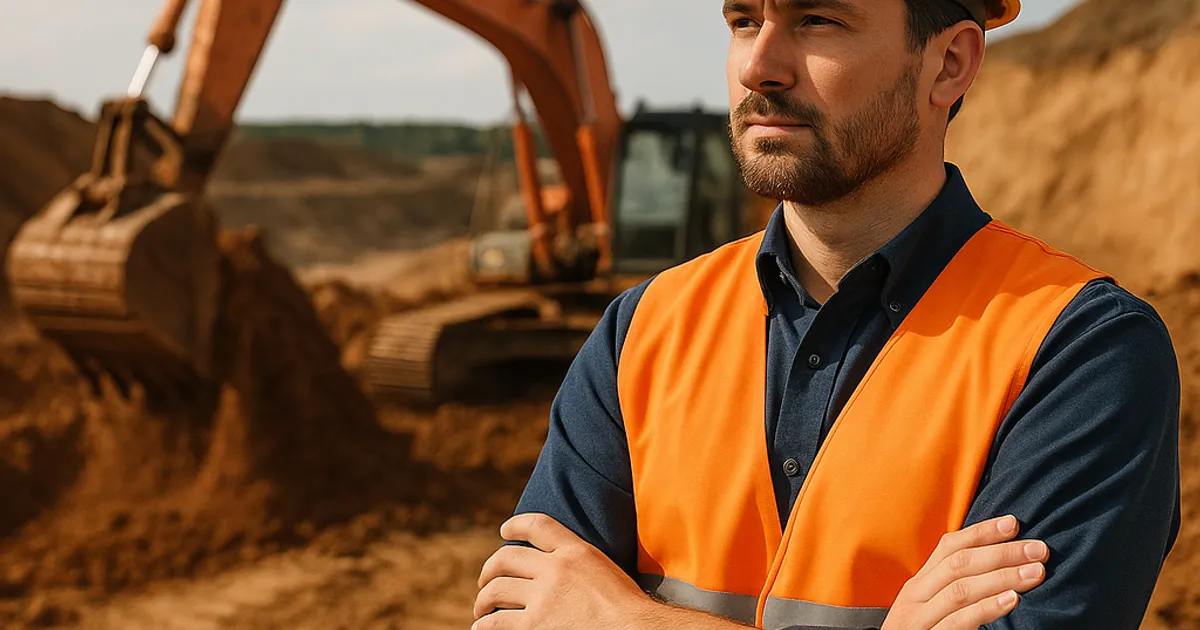
The excavation industry doesn't get the glamour of high-rise construction or the headlines of billion-dollar infrastructure bills — but it gets the dirt. Literally. And right now, that dirt is worth more than it has been in decades.
U.S. construction spending topped $2.09 trillion in 2023, according to the U.S. Census Bureau, and earthwork sits at the foundation of virtually every project in that number. From data centers and solar farms to highway widening projects and master-planned communities, someone has to move the earth before anything else can happen. That someone is the excavation contractor.
Yet despite surging demand, many excavation businesses remain stuck in a cycle of feast-or-famine bidding, thin margins, and geographic limitations that cap their revenue potential. The companies breaking out of that cycle aren't just working harder — they're thinking strategically about where, how, and with whom they grow.
This article is a deep-dive playbook for excavation contractors ready to move from reactive to strategic: how to evaluate expansion opportunities, build the financial infrastructure to fund growth, leverage technology to find and manage more work, and position your company as the dominant player in your market.
Understanding the Excavation Market Landscape in 2024 and Beyond
Before you can expand intelligently, you need to know what you're expanding into. The excavation and earthmoving industry is not monolithic — it's a collection of distinct sub-markets, each with its own demand drivers, competitive dynamics, and margin profiles.
Market Size and Growth Trajectory
The U.S. excavation contracting market is estimated at $87.4 billion in 2024, with a projected compound annual growth rate (CAGR) of approximately 4.8% through 2030, according to IBISWorld industry data. Key demand drivers include:
- Infrastructure Investment: The Infrastructure Investment and Jobs Act (IIJA), signed in 2021, authorized $1.2 trillion in spending over five years, with a significant portion directed toward roads, bridges, water systems, and broadband expansion — all of which require earthwork.
- Housing Development: Despite interest rate pressures, the U.S. faces a structural housing deficit of 3.5 to 5.5 million units (Harvard Joint Center for Housing Studies). New subdivisions, multifamily developments, and workforce housing projects are creating sustained demand for site prep and grading work.
- Energy Transition: Utility-scale solar and wind installations require massive grading, trenching, and foundation excavation. The Solar Energy Industries Association (SEIA) projects over 700 gigawatts of new solar capacity by 2035 — each gigawatt requiring hundreds of acres of prepared ground.
- Data Center Expansion: Hyperscale data centers being built by Amazon, Google, Microsoft, and Meta require deep excavation, complex utility trenching, and precision grading on sites ranging from 50 to 500 acres.
Identifying High-Growth Segments
Not all excavation work grows equally. Savvy contractors analyze their local and regional markets to identify which segments are accelerating:
| Segment | Typical Margin | Growth Outlook | Barriers to Entry |
|---|---|---|---|
| Residential Site Prep | 8–14% | Moderate | Low |
| Commercial/Industrial | 12–18% | Strong | Moderate |
| Heavy Highway (DOT) | 6–12% | Strong (IIJA) | High (bonding, DBE) |
| Utility Trenching | 14–22% | Very Strong | Moderate |
| Environmental Remediation | 18–30% | Strong | High (licensing) |
| Renewable Energy | 10–16% | Very Strong | Moderate |
Understanding where your current work sits in this matrix — and where the most accessible growth opportunities lie — is the first step in building a credible expansion strategy.
Building the Financial Foundation for Expansion
Expansion without financial discipline is the fastest way to destroy a profitable excavation business. Heavy equipment, bonding capacity, insurance, and payroll are all cash-intensive, and the delay between mobilization and payment on large projects can stretch 60 to 90 days or more.
Cash Flow Management
The single biggest killer of growing excavation companies is not lack of revenue — it's cash flow timing. Consider a contractor who wins a $2 million DOT subcontract: they may spend $300,000 in equipment fuel, operator wages, and materials in the first month before receiving a single payment. Multiply this across two or three simultaneous projects and the cash gap becomes existential.
Key financial metrics every expanding excavation contractor should track:
- Days Sales Outstanding (DSO): The average number of days between invoicing and payment. Industry average is 45–60 days; best-in-class contractors get this below 35 days through retainage management and lien rights.
- Equipment Utilization Rate: Your fleet should be generating billable hours at least 75–80% of available time. Below 65% and you're carrying dead weight.
- Gross Margin by Project Type: Many contractors discover that their "bread and butter" work is actually their lowest-margin work. Tracking margin by project type reveals where to focus sales efforts.
- Backlog Coverage Ratio: Ideally, you want 3–6 months of work in backlog at all times. Expansion decisions should be made with at least 60 days of committed backlog.
Equipment Strategy: Buy, Rent, or Lease?
Equipment decisions are among the most consequential for an expanding excavation company. The fully loaded cost of owning a Caterpillar 320 excavator — including financing, insurance, maintenance, and depreciation — runs approximately $85,000 to $120,000 per year, depending on utilization and age of the machine.
For expansion into new project types or geographies, a rent-first strategy is often prudent. Renting reduces upfront capital commitment, allows you to test new equipment categories without long-term obligation, and keeps your balance sheet flexible for bonding purposes. Once a project type proves sustainable and recurring, the economics of ownership typically become favorable at utilization rates above 60%.
Financing considerations:
- Section 179 tax deductions allow up to $1.16 million in equipment expensing in 2023–2024, making strategic purchases highly tax-advantaged.
- Equipment-secured term loans typically carry rates of 6–9% in the current environment.
- Sale-leaseback arrangements on existing owned equipment can unlock capital for expansion without disposing of working assets.
Bonding Capacity and Surety Relationships
For contractors pursuing public projects or prime contracts over $150,000 (the federal threshold under the Miller Act), surety bonding is non-negotiable. Your bonding capacity — typically 10–15x your working capital — directly caps your ability to pursue large projects.
Building surety relationships before you need them is critical. Work with a surety-specialist broker, maintain clean financial statements (ideally reviewed or audited by a CPA), and document your completed project history meticulously. Contractors who invest in this infrastructure early can pursue projects that competitors simply cannot access.
Geographic Expansion: When, Where, and How to Move into New Markets
Geographic expansion is the most common growth path for excavation contractors — and the most frequently mismanaged. Moving into a new market without adequate preparation often results in lower margins, higher equipment costs, and reputational damage that follows you home.
Market Entry Criteria
Before committing resources to a new geography, rigorously evaluate these factors:
Demand Assessment
- What is the current and projected construction activity in the target market? Review building permit data from municipal records, state DOT project let schedules, and private development pipeline databases like Dodge Data & Analytics.
- Are there specific project types in the new market that align with your existing capabilities and equipment?
- How saturated is the competitive landscape? A market with 15 established earthwork contractors of similar size will require a significant differentiation strategy.
Cost of Market Entry
- Equipment mobilization costs for moving heavy machinery more than 100 miles can run $5,000–$25,000 per machine, depending on size and distance.
- Establishing local subcontractor relationships, securing regional insurance endorsements, and meeting local licensing requirements (which vary significantly by state and municipality) add to entry costs.
- Labor availability is a critical consideration. The Associated General Contractors of America reported in 2023 that 88% of construction firms were struggling to fill craft worker positions — in a new market, you may face even tighter labor conditions than at home.
Relationship Infrastructure
- Do you have existing relationships with general contractors, developers, or project owners in the target market? A warm introduction dramatically reduces the time and cost of market entry.
- Can you identify a local partner — a smaller contractor or equipment dealer — who can provide ground-level intelligence and introductions?
Regional Spotlight: High-Growth Markets Worth Watching
Several U.S. metros are experiencing above-average construction activity driven by population growth, energy investment, and infrastructure spending:
Denver, Colorado: Data center construction, Front Range infrastructure projects, and energy-sector development are creating strong earthwork demand. Contractors exploring the dirt exchange in Denver market are finding opportunities to move surplus material from urban infill projects to suburban development sites — a logistics challenge that technology platforms are making far more manageable.
Seattle, Washington: Tech campus expansions, Sound Transit light rail extensions, and a robust residential market keep earthwork contractors busy year-round. The dirt exchange in Seattle connects contractors dealing with the region's complex soil conditions — including marine clay and glacial till — with nearby fill sources and disposal options.
Los Angeles, California: Despite regulatory complexity, LA's infrastructure backlog, transit expansion, and housing mandates create significant earthwork volume. The dirt exchange in Los Angeles helps contractors navigate the expensive logistics of moving earth in one of the country's most congested urban environments.
The Phased Entry Approach
Rather than committing full resources to a new market immediately, use a phased approach:
- Phase 1 — Intelligence Gathering (Months 1–3): Attend local AGC or ABC chapter events, bid select projects without expecting to win (to understand local pricing), and identify key decision-makers.
- Phase 2 — Strategic First Project (Months 4–9): Secure a first project at slightly lower margin than target, prioritizing on-time, high-quality delivery and relationship building with the GC or owner.
- Phase 3 — Scale (Months 10–24): Leverage the completed project as a reference, build local subcontractor and supplier relationships, and begin pursuing work at target margin levels.
Technology as a Competitive Weapon in Modern Excavation
The excavation industry has historically been slow to adopt technology, creating significant competitive advantage for early movers. The contractors growing fastest right now are leveraging technology at every level of their operations.
Machine Control and GPS Grade Technology
GPS-guided machine control systems — from manufacturers including Trimble, Leica, and Topcon — allow operators to achieve design grade without manual staking, reducing rework, lowering labor costs, and compressing project schedules. Studies have shown that machine control can reduce earthmoving time by 15–25% on complex grading projects.
The ROI is compelling: a system costing $50,000–$80,000 per machine can pay for itself on a single large project through reduced staking costs, lower fuel consumption (fewer passes to achieve grade), and avoided rework expenses. Contractors without machine control are increasingly at a disadvantage when bidding precision-grade work.
Drone Surveying and Volumetric Analysis
Unmanned aerial vehicles (UAVs) equipped with photogrammetry software are transforming how excavation contractors measure and manage earthwork quantities. A drone survey that would take a crew of surveyors two days can be completed in two hours, with volumetric accuracy within 1–3% compared to traditional methods.
Key applications for expanding contractors:
- Pre-bid site analysis to identify hidden earthwork challenges
- Progress documentation for payment applications
- Material stockpile inventory management
- As-built verification for regulatory compliance
OSHA's regulations on aerial survey operations and FAA Part 107 certification requirements should be reviewed before launching a commercial drone program.
Digital Platforms for Material Sourcing and Project Discovery
Perhaps the most immediate technology opportunity for growing excavation contractors is the use of digital platforms to find work, source materials, and manage excess dirt and aggregate disposal — a challenge that becomes dramatically more complex as you take on more projects simultaneously.
Traditional dirt brokering relied entirely on personal relationships and phone calls, creating significant inefficiency: excess fill sitting idle on one jobsite while a project two miles away was paying premium prices to import the same material. DirtMatch solves this problem at scale, connecting contractors who have surplus earth material with those who need it, reducing haul distances, cutting disposal costs, and unlocking revenue from material that would otherwise be a liability.
Understanding how DirtMatch works is straightforward — contractors post available or needed materials, and the platform's matching algorithm connects compatible parties based on material type, quantity, location, and timing. For a contractor expanding into new geographies, this network effect is particularly valuable: it provides immediate visibility into local material supply and demand conditions that would otherwise take months to map through traditional relationship-building.
Workforce Development and Retention Strategies
No expansion strategy survives contact with a labor shortage. The construction industry is in the midst of a generational workforce crisis, and earthwork contractors feel it acutely: experienced equipment operators, grade checkers, and foremen are among the hardest skilled tradespeople to find and retain.
The Operator Pipeline Problem
The Bureau of Labor Statistics projects 5% growth in construction equipment operator employment through 2032, but the challenge isn't projected openings — it's the current gap. The average age of heavy equipment operators in the U.S. is rising, with a significant portion of the skilled workforce approaching retirement age.
Contractors who solve the operator pipeline problem will have a structural competitive advantage. Strategies that are working:
Apprenticeship and Training Programs
- Partner with local operating engineers unions (IUOE) or community colleges to create feeder programs
- Invest in simulator-based pre-training, which reduces machine hours required to develop basic proficiency
- Establish internal career ladders from laborer to operator to foreman to superintendent
Compensation and Retention
- Top-performing operators should be compensated at the 75th percentile of your market — the cost of turnover (recruiting, training, lost productivity) far exceeds the cost of above-market wages
- Performance bonuses tied to project efficiency metrics create alignment between operator incentives and company profitability
- Equipment ownership programs — where long-tenured operators can purchase a piece of equipment and lease it back to the company — create powerful retention incentives
Culture and Technology Appeal
- Younger operators are attracted to companies using advanced technology. Machine control, telematics, and digital project management tools signal that your company is modern and invested in its people
- Flexible scheduling, where operationally feasible, is increasingly a differentiating factor in competitive labor markets
Diversification Strategies: Expanding Your Service Mix
Geographic expansion isn't the only growth path. For many contractors, adding adjacent service lines within existing markets is a lower-risk, higher-return growth strategy — particularly when it allows you to capture more of the value chain on projects where you're already working.
High-Value Adjacent Services
Concrete Demolition and Recycling Demolition work naturally feeds excavation — and crushed concrete from demolition projects (recycled concrete aggregate, or RCA) can be repurposed as base material, reducing material costs on subsequent projects. Contractors who control both demolition and reuse of materials can offer GCs significant value while improving their own margins. ASTM C33 governs specifications for concrete aggregate, and RCA must meet these standards for structural applications.
Erosion Control and Stormwater Management As EPA stormwater regulations under the National Pollutant Discharge Elimination System (NPDES) tighten, general contractors increasingly prefer earthwork subcontractors who can self-perform erosion control installation and SWPPP (Stormwater Pollution Prevention Plan) compliance. Adding this capability requires minimal additional equipment investment but commands meaningful premium pricing.
Underground Utility Installation Trenching and backfill for water, sewer, gas, and telecom utilities is a natural adjacency for excavation contractors. Utility work often carries higher margins than bulk earthmoving, and infrastructure spending under the IIJA is creating substantial pipeline of underground work. Licensing requirements vary by state and utility type.
Aggregate Processing and Supply Contractors with access to rock or gravel deposits — either owned land or mineral rights agreements — can add aggregate processing (crushing, screening, washing) as a revenue stream. This is particularly powerful in markets where aggregate supply is constrained and prices are high. The ability to supply your own projects with crushed stone or gravel while selling surplus material to competitors creates both cost advantage and revenue diversification.
Find or Post Dirt, Rock & Aggregate
Join thousands of contractors using DirtMatch to buy, sell, and exchange earthwork materials.
Try DirtMatch FreeBidding Strategy and Estimating Excellence
Expansion requires winning more work — but winning work at the wrong margin is worse than not winning it at all. The estimating function is the commercial engine of your business, and it must evolve as you grow.
Building a Scalable Estimating Process
Many excavation contractors rely on experienced estimators who carry critical knowledge in their heads — a fragile system that breaks down during growth phases. Scalable estimating requires:
Standardized Unit Cost Library Develop a continuously updated database of unit costs for every work type you perform: excavation in various soil conditions, haul rates at different distances, compaction, dewatering, etc. These unit costs should be updated at least quarterly based on actual project performance data.
Takeoff Technology Software platforms like HCSS HeavyBid, B2W Estimate, or Agtek enable faster, more accurate quantity takeoffs and produce professional bid packages. The investment — typically $5,000–$20,000 annually — is recovered quickly through reduced estimation errors and improved bid preparation speed.
Bid/No-Bid Discipline Not every project deserves a bid. Developing explicit bid/no-bid criteria — considering factors like project type, owner reputation, bonding requirements, competition level, and strategic value — allows your estimating team to focus on the most winnable and most profitable opportunities.
Pricing Strategy for New Markets
When entering a new geographic market, resist the temptation to underprice aggressively to win work. While a modest competitive adjustment may be warranted on your first project to account for your lack of local references, severely underpriced work:
- Trains the market to expect low prices from you
- Creates cash flow stress during your most vulnerable growth phase
- Often attracts the most difficult clients and projects
Instead, compete on value: superior scheduling certainty, technology-enabled quality control, and a track record of clean project closeouts are differentiation factors that sophisticated buyers — particularly GCs who've been burned by low-bid subcontractors — genuinely value.
Regulatory Navigation: Compliance as a Competitive Advantage
Regulatory complexity is one of the most significant barriers to expansion in the excavation industry — and navigating it better than your competitors is a genuine source of competitive advantage.
Federal Regulations Every Expanding Contractor Must Master
OSHA Excavation Standards (29 CFR 1926 Subpart P) Excavation and trenching is consistently among OSHA's most cited violation categories. Proper cave-in protection (sloping, shoring, or trench boxes), competent person requirements, and atmospheric testing protocols are non-negotiable. A single serious violation can result in fines of $15,625 per violation, and willful violations can reach $156,259. More importantly, a fatality triggers regulatory scrutiny that can follow a company for years.
Environmental Compliance The Clean Water Act Section 404 regulates discharge of dredged or fill material into waters of the U.S., and excavation projects regularly encounter jurisdictional wetlands that trigger permitting requirements. Contractors who can help clients navigate 404 permitting or work within approved permits are significantly more valuable to project owners. Engage an environmental consultant relationship early in your growth journey.
State-Specific Requirements Licensing requirements for earthwork contractors vary dramatically by state. California requires a Class A General Engineering Contractor license for most grading work. Texas has relatively minimal licensing requirements. Florida requires separate licenses for underground utility work. As you expand geographically, build a compliance checklist for each state that includes licensing, bonding requirements, lien law nuances, and prevailing wage applicability.
Soil Classification and Quality Standards
Understanding soil classification systems is critical for both estimating accuracy and regulatory compliance. The Unified Soil Classification System (USCS), standardized under ASTM D2487, categorizes soils by grain size and plasticity characteristics. Different classifications carry dramatically different excavation costs, compaction requirements, and suitability for reuse as structural fill.
State DOT specifications — such as the California Department of Transportation (Caltrans) Standard Specifications or the Texas DOT Standard Specifications for Construction and Maintenance of Highways — provide detailed requirements for embankment, subgrade preparation, and aggregate base that earthwork contractors must meet on public projects.
Building Strategic Partnerships and Industry Networks
No excavation company grows in isolation. The most successful expansion stories are built on networks of relationships — with GCs, owners, suppliers, equipment dealers, and fellow contractors.
GC Relationship Development
General contractors are the primary customers for most excavation subcontractors, and building preferred-subcontractor status with the right GCs is more valuable than any marketing spend. Strategies for deepening GC relationships:
- Consistent Communication: Proactive project updates, early change order identification, and clean RFI management make you a GC's easiest sub to work with
- Preconstruction Value: Offer value engineering input during the bid phase — your on-the-ground knowledge of local soil conditions, haul routes, and material sources can save GCs significant money and earns you goodwill
- Problem-Solving Orientation: When problems occur (and they always do), bring solutions rather than claims. The sub who helps the GC keep the owner happy gets the next bid invitation
Industry Association Involvement
Active participation in industry associations — the Associated General Contractors (AGC), the National Utility Contractors Association (NUCA), or the Associated Builders and Contractors (ABC) — provides access to:
- Government affairs advocacy that shapes regulations affecting your business
- Peer learning and best practice sharing
- Estimating data and market intelligence
- Visibility to GCs and owners who participate in the same organizations
Leveraging Digital Networks for Material Exchange
As your project volume grows, managing the flow of dirt, rock, and aggregate across multiple simultaneous projects becomes a significant logistical challenge. Contractors running multiple jobs in a region like San Francisco or Boulder often find themselves paying to export material from one site while importing nearly identical material to another site just miles away — a costly inefficiency that erodes margins on otherwise profitable projects.
Platforms like DirtMatch eliminate this inefficiency by creating a real-time marketplace for earth materials. Whether you're operating in the competitive dirt exchange in San Francisco market or managing the unique geological challenges of dirt exchange in Boulder, having a platform that connects your surplus material with nearby demand — and vice versa — reduces haul costs, improves project economics, and builds relationships with other local contractors who become partners on future projects.
For contractors managing expansion across multiple markets, DirtMatch Pro offers enhanced tools for tracking material movements, managing multiple active listings, and accessing priority matching across all active project sites — capabilities that become increasingly valuable as project complexity grows.
Marketing and Business Development for Excavation Contractors
Many excavation contractors are exceptional operators who are uncomfortable with marketing — and as a result, leave significant revenue on the table. Strategic business development doesn't require abandoning your identity; it requires systematizing what great contractors already do naturally.
Digital Presence as a Trust Signal
When a developer or GC is evaluating excavation subcontractors for a major project, their research almost certainly includes a Google search. A professional website with a project portfolio, equipment list, safety record, and client testimonials is table stakes in 2024. Yet a surprising percentage of excavation contractors still lack an adequate digital presence.
Beyond the basics, consider:
- Google Business Profile: Ensures your company appears in local search results and maps
- LinkedIn: Increasingly important for reaching project developers, real estate private equity firms, and municipal procurement officers
- Case Studies: Detailed write-ups of complex or high-profile completed projects demonstrate capability more powerfully than any advertisement
Thought Leadership and Technical Credibility
Contractors who demonstrate deep technical expertise — through presentations at industry events, articles in trade publications, or participation in technical committees — command premium pricing and preferential consideration from sophisticated buyers. If your team has developed expertise in a specialized area (contaminated soil handling, complex dewatering, precision grading for solar installations), document and share that expertise publicly.
Referral Systems
The most valuable leads in the excavation business come from referrals — from satisfied GCs, owners, engineers, and even fellow subcontractors who aren't able to take a project. Building a systematic referral program (as simple as regular check-in calls with past clients and a policy of sending thank-you notes after referral introductions) can generate a significant pipeline at essentially zero marketing cost.
Measuring Success: KPIs for an Expanding Excavation Operation
You cannot manage what you don't measure. As your operation grows, the informal scorekeeping that worked when you ran one or two projects at a time must evolve into a formal performance management system.
Essential KPIs for Excavation Contractors
| KPI | Target Range | Why It Matters |
|---|---|---|
| Gross Margin by Project | 12–20% | Identifies profitable vs. problem work |
| Equipment Utilization Rate | 75–85% | Measures fleet efficiency |
| Safety Incident Rate (TRIR) | Below 2.0 | Affects insurance, bonding, bid eligibility |
| Days Sales Outstanding | Below 45 days | Cash flow health indicator |
| Backlog (months) | 3–6 months | Business stability and growth runway |
| Bid-Hit Ratio | 25–35% | Estimating accuracy and market positioning |
| Revenue Per Employee | $180,000–$250,000 | Operational efficiency benchmark |
| Project Schedule Adherence | Above 85% | Customer satisfaction driver |
Creating a Growth Dashboard
Monthly review of these KPIs — ideally in a simple dashboard accessible to key leadership — creates accountability and enables early intervention when a project or market is trending in the wrong direction. Many contractors use their accounting software (Sage 300 CRE, Viewpoint Vista, or Foundation) combined with spreadsheet-based dashboards; purpose-built construction analytics platforms like Procore Analytics or HeavyJob provide more sophisticated capability.
Conclusion: The Contractor Who Plans Wins
The excavation industry rewards hard work — but it rewards strategic hard work exponentially more. The contractors who will dominate their markets over the next decade are those who invest as deliberately in their business strategy as they do in their equipment fleet.
Expansion isn't about growing for growth's sake. It's about building a business that can pursue the most profitable opportunities in your market, withstand inevitable economic cycles, and create lasting value — for your clients, your employees, and your family.
Every step of that journey requires better information, better relationships, and better tools. Whether it's understanding local material pricing before entering a new market, finding a home for 10,000 cubic yards of excess fill from a urban infill project, or connecting with a GC who needs a reliable earthwork partner in your backyard, the right platform makes the difference between a good operator and a great business.
Ready to put your expansion strategy in motion? Get started with DirtMatch and discover how smarter material matching can cut costs, improve project margins, and open doors to the partnerships that fuel sustainable growth.