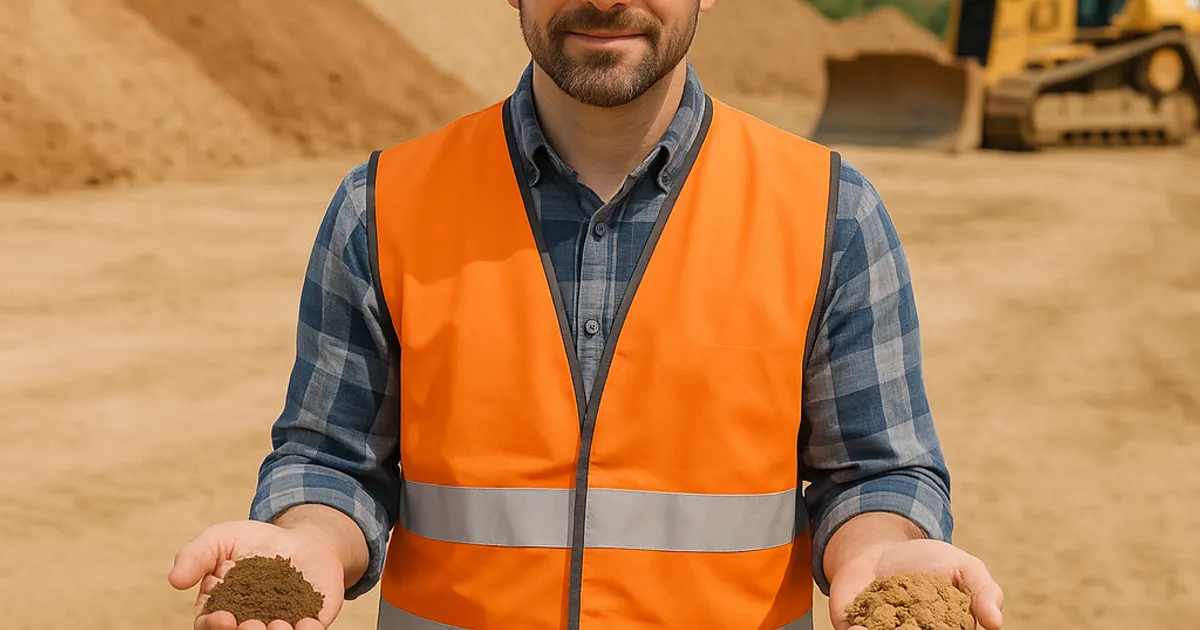

Ordering fill dirt sounds straightforward until your supplier quotes you in tons and your plans are drawn in cubic yards. Suddenly, a simple backfill job turns into a math problem with thousands of dollars riding on the answer. Whether you are a seasoned excavation contractor or managing your first grading project, mastering cubic yards to tons dirt conversion is a foundational skill that protects your budget, your schedule, and your professional reputation.
This guide walks through every layer of the conversion process: the underlying physics, the soil-specific variables, the formulas professionals use, and the practical tools that make the math faster. By the end, you will have a reliable system for estimating material quantities on any earthwork job in 2026.
Why the Cubic Yards vs. Tons Question Matters So Much
The construction industry uses two fundamentally different systems to measure bulk materials. Volume-based measurement, expressed in cubic yards, describes how much physical space a material occupies. Weight-based measurement, expressed in tons, describes how heavy that material is. The problem is that these two quantities are not interchangeable without knowing one critical variable: density.
Density varies dramatically across soil types, moisture levels, compaction states, and even geographic regions. Sandy loam from a site in Denver behaves very differently from the heavy clay soil common to construction projects in the Pacific Northwest. A cubic yard of dry, loose topsoil might weigh as little as 1,400 pounds, while a cubic yard of wet, compacted clay can exceed 2,800 pounds. If you apply a single generic conversion factor across every job, you will be wrong more often than you are right.
The financial stakes are real. Earthmoving and grading represents roughly 20 to 30 percent of total construction costs on most site development projects, according to industry data tracked by the AGC of America. A miscalculation of just 10 percent on a 5,000-ton fill project can translate to cost overruns of $8,000 to $15,000 depending on regional haul rates. On larger infrastructure projects, the margins for error shrink even further.
Beyond cost, unit confusion creates logistical headaches. Trucking companies quote loads by weight because federal regulations govern axle limits. Suppliers often price by the ton because their scales are calibrated in tons. Meanwhile, project engineers specify quantities in cubic yards because volumetric measurements relate directly to excavation depths and fill lifts shown on grading plans. Bridging these two worlds accurately is what separates sharp estimators from everyone else.
The Core Formula: Converting Cubic Yards to Tons
The foundational conversion formula is simple:
Tons = Cubic Yards x (Pounds per Cubic Yard / 2,000)
Broken down:
- Determine the volume of material in cubic yards
- Multiply by the material's weight per cubic yard in pounds
- Divide by 2,000 to convert pounds to short tons
For the reverse calculation:
Cubic Yards = Tons x 2,000 / Pounds per Cubic Yard
The catch is that middle number: pounds per cubic yard. This is where most estimators go wrong, because they use a generic default of 2,700 pounds per cubic yard (roughly 1.35 tons) without verifying whether it actually matches their material. That figure is a reasonable average for many types of dry, medium-density fill, but it is far from universal.
Here is a practical example. If you need to fill a depression measuring 50 feet long, 30 feet wide, and 2 feet deep:
- Volume = (50 x 30 x 2) / 27 = 111 cubic yards
- Using sandy loam at 2,500 lbs/cy: 111 x 2,500 / 2,000 = 138.75 tons
- Using heavy wet clay at 2,800 lbs/cy: 111 x 2,800 / 2,000 = 155.4 tons
That difference of nearly 17 tons on a modest residential backfill job illustrates why using the right density value matters from day one.
Soil Type Weight Reference Table
The following table provides verified weight ranges for the most common earthwork materials. These figures represent typical in-place or compacted densities and should be adjusted based on moisture content and local testing data.
| Material | Lbs per Cubic Yard | Tons per Cubic Yard |
|---|---|---|
| Dry Topsoil (loose) | 1,400 to 1,700 | 0.70 to 0.85 |
| Moist Topsoil | 1,700 to 2,100 | 0.85 to 1.05 |
| Sandy Loam (dry) | 2,200 to 2,500 | 1.10 to 1.25 |
| Sandy Loam (moist) | 2,400 to 2,700 | 1.20 to 1.35 |
| Fill Dirt (general) | 2,000 to 2,700 | 1.00 to 1.35 |
| Clay Soil (dry) | 2,200 to 2,600 | 1.10 to 1.30 |
| Clay Soil (wet) | 2,600 to 3,000 | 1.30 to 1.50 |
| Gravel (loose, dry) | 2,700 to 3,000 | 1.35 to 1.50 |
| Gravel (compacted) | 3,000 to 3,400 | 1.50 to 1.70 |
| Crushed Stone | 2,500 to 2,900 | 1.25 to 1.45 |
| Sand (dry) | 2,600 to 2,900 | 1.30 to 1.45 |
| Sand (wet) | 3,000 to 3,400 | 1.50 to 1.70 |
| Rock (bank run) | 3,000 to 3,500 | 1.50 to 1.75 |
| Decomposed Granite | 2,400 to 2,800 | 1.20 to 1.40 |
| Caliche | 2,800 to 3,200 | 1.40 to 1.60 |
These ranges align with classifications established by ASTM International under standards D2487 (soil classification) and D698/D1557 (compaction testing), which are the benchmarks used by project engineers and state DOT specifications across the country.
The Swell and Shrinkage Factor: A Critical Variable Engineers Often Overlook
One of the most overlooked aspects of dirt conversion is the difference between in-situ volume, loose volume, and compacted volume. These three states represent the same material at different points in the earthmoving process, and each has a distinct volume.
In-situ (bank) material is soil measured in its natural, undisturbed state in the ground. This is the baseline.
Loose material is what happens after you excavate it. Soil expands (swells) when disturbed because air pockets are introduced between particles. Most soils swell 10 to 30 percent when excavated. This matters for truck load calculations.
Compacted material is what you get after placing and compacting fill. Compaction removes air voids and densifies the material, so compacted volume is typically 10 to 25 percent less than the original bank volume.
The swell factor and shrinkage factor are expressed as multipliers:
- Swell Factor = Bank Volume x Swell Percentage (for truck hauling)
- Compaction Factor = Bank Volume x Compaction Percentage (for fill placement)
For example, common clay has a swell factor of about 1.30 (30% expansion) when loaded into trucks, and a compaction factor of about 0.90 (10% shrinkage) when placed and compacted. If your grading plan calls for 1,000 cubic yards of compacted fill:
- Bank yards needed: 1,000 / 0.90 = 1,111 bank cubic yards
- Truck load yards to haul: 1,111 x 1.30 = 1,444 loose cubic yards
Ignoring swell and shrinkage can result in ordering 15 to 40 percent less material than you actually need, which means additional hauls, schedule delays, and renegotiated trucking contracts.
Contractors sourcing fill dirt through DirtMatch can specify the material type and desired compacted volume upfront, helping suppliers provide accurate quantity quotes that account for these real-world adjustments.
Step-by-Step Process for Calculating Dirt Quantities on Any Job
Here is a reliable, repeatable process for converting dirt quantities accurately:
Step 1: Measure the Volume in Cubic Feet
For simple rectangular areas:
- Volume (cubic feet) = Length x Width x Depth
For irregular shapes, break the area into smaller rectangles or triangles and sum the results. For complex topographic fills, use a grid method: divide the site into a grid, measure the existing and finished grade at each grid point, calculate the average depth across the grid cell, and sum all cells.
Step 2: Convert to Cubic Yards
Divide cubic feet by 27 (there are 27 cubic feet in one cubic yard).
Step 3: Identify Your Material Type
Do not guess. Reference the soil survey data for the site, ask the supplier for a material data sheet, or request a field compaction test. The USDA Web Soil Survey provides free access to soil maps and data for any location in the United States, which can give you a reasonable starting point for native soil density.
Step 4: Apply the Correct Density
Select the appropriate weight per cubic yard from verified reference data or laboratory testing. Use the midpoint of the range as your base estimate, then run a second calculation at the high end to establish a conservative scenario.
Step 5: Account for Swell and Compaction
Apply the appropriate swell and shrinkage factors for your specific material and compaction target. These factors are typically available from geotechnical reports or from state DOT materials libraries.
Step 6: Convert to Tons
Apply the formula: Tons = Cubic Yards x (Lbs/CY / 2,000). Calculate both a base-case and a high-density scenario to bracket your estimate.
Step 7: Verify Against Truck Capacity
Standard dump trucks carry 10 to 14 tons or 10 to 16 cubic yards per load depending on configuration. Tri-axle and quad-axle trucks can carry 18 to 22 tons in some states. Divide your total tonnage by per-truck capacity to estimate the number of loads required.
Regional Soil Variations and Why Location Changes Everything
Soil density and composition vary significantly by geography, and these differences have direct consequences for your conversion calculations.
In the Pacific Northwest, heavy glacial till and expansive clay soils are common. Projects in the Seattle area regularly encounter soils with moisture contents well above the standard reference conditions, pushing densities toward the upper end of the clay range. Contractors managing dirt exchange in Seattle need to account for these elevated moisture levels, especially during the wet season when soils can absorb additional water weight between excavation and placement.
In the Rocky Mountain region, decomposed granite, caliche, and cobble-rich soils are prevalent. These materials have high variability in density and often require rock breaking before they can be properly compacted. Projects in Denver and along the Front Range frequently encounter caliche layers that add unexpected weight to haul calculations.
In California, expansive adobe clay in inland valleys and decomposed granite in foothill regions create very different calculation requirements on projects that may be just 50 miles apart. Contractors managing fill projects in Los Angeles or San Diego frequently deal with engineered fill specifications that require specific compaction percentages, making accurate swell and shrinkage accounting mandatory.
In the Boston metro area, the legacy of glacial geology means contractors encounter boulder-laden till, peat deposits, and highly variable fill from historical urban development. The density of mixed urban fill in Boston can be extremely difficult to predict without site-specific testing.
Common Conversion Mistakes and How to Avoid Them
Even experienced contractors make avoidable errors in dirt quantity calculations. Here are the most frequent mistakes and the fixes:
Using a Universal 1.35 Tons per Cubic Yard
This is the most common error. The 1.35 figure is a rough average for medium-density moist fill, but it does not apply to light topsoil, heavy clay, wet sand, or crushed rock. Always verify density for each material type.
Forgetting to Convert Between Measurement States
Ordering in bank yards when the supplier quotes in loose yards, or specifying compacted yards without accounting for shrinkage, introduces compounding errors. Clarify the measurement state with your supplier before finalizing any purchase order.
Ignoring Moisture Content Changes
Material that leaves a quarry or borrow site at 8 percent moisture can arrive at a job site at 15 percent moisture after rain exposure during transit. This moisture gain adds real weight and can cause loads to exceed legal axle limits. Build a moisture buffer into your weight calculations, particularly in wet climates or during rainy seasons.
Conflating Short Tons and Metric Tons
In the United States, material is typically sold in short tons (2,000 lbs). Metric tons (2,204.6 lbs) and long tons (2,240 lbs) are used in international and some specialty contexts. A supplier quoting metric tons on a 500-ton job represents a difference of more than 50,000 lbs. Confirm the unit of measure on every contract.
Not Accounting for On-Site Waste and Overage
A standard industry practice is to add 5 to 15 percent overage to your calculated quantity to account for measurement error, material spillage during placement, and variations in the subgrade surface. For critical structural fills, err toward the higher end of this range.
Find or Post Dirt, Rock & Aggregate
Join thousands of contractors using DirtMatch to buy, sell, and exchange earthwork materials.
Try DirtMatch FreeHow Trucking Regulations Affect Your Weight Calculations
Federal and state weight limits directly govern how much material a truck can legally carry per load, which ties directly to your conversion calculations. Under federal highway regulations, most standard five-axle semi-trucks are limited to 80,000 pounds gross vehicle weight. After subtracting the truck's tare weight (typically 30,000 to 35,000 lbs), the legal payload is roughly 45,000 to 50,000 lbs, or 22.5 to 25 short tons.
However, many states have issued special permits and seasonal load limits that modify these caps. States with spring thaw restrictions, such as Minnesota, Wisconsin, and Maine, impose reduced weight limits during freeze-thaw cycles when road surfaces are vulnerable. Contractors in these regions must plan for smaller loads during restricted periods, which increases the number of hauls and associated costs.
Trip tickets issued at quarries and borrow sites record the actual scale weight of each load. These tickets are essential documentation for quantity verification and should be matched against your estimated conversion calculations to catch systematic errors early in the project.
Estimating Fill Dirt Costs Using Converted Quantities
Once you have an accurate tonnage figure, you can build a reliable cost estimate. Fill dirt pricing varies substantially by region, material quality, and market conditions. Here are representative ranges as of mid-2026:
| Material | Price per Ton | Price per Cubic Yard |
|---|---|---|
| Clean Fill Dirt | $5 to $20 | $7 to $27 |
| Topsoil (screened) | $20 to $55 | $27 to $74 |
| Sandy Fill | $10 to $28 | $14 to $38 |
| Clay Fill | $8 to $22 | $11 to $30 |
| Gravel Fill | $15 to $35 | $20 to $47 |
| Crushed Stone | $18 to $45 | $24 to $60 |
Hauling costs typically add $5 to $20 per ton depending on haul distance and regional fuel prices. A 10-mile haul costs significantly less than a 50-mile haul, and finding nearby material sources can generate dramatic savings on large projects.
This is one of the key advantages of using a matching platform. DirtMatch connects contractors who need fill material with nearby sources, including excavation sites that are disposing of clean dirt, reducing haul distances and the associated cost per ton. On large grading projects, optimizing haul distance can reduce total material costs by 20 to 40 percent.
Using Technology to Automate Dirt Quantity Calculations
Modern earthwork projects increasingly rely on digital tools to handle quantity calculations with greater speed and accuracy than manual methods allow.
GPS-based machine control systems from manufacturers like Caterpillar, Komatsu, and Trimble use real-time topographic data to calculate cut and fill volumes continuously as grading progresses. These systems eliminate manual surveying steps and provide running totals of material moved, which can be cross-referenced against truck ticket data to verify haul quantities.
Drone-based photogrammetry has become a standard tool on mid-to-large projects. Aerial surveys processed through volumetric software can calculate stockpile volumes, measure excavation depths, and track fill progress across an entire site in a fraction of the time required for traditional survey methods. Accuracy on well-controlled drone surveys typically falls within 1 to 3 percent of actual volume.
Building Information Modeling (BIM) platforms and civil design software such as Civil 3D generate earthwork reports that include cut/fill volumes, mass haul diagrams, and material balance summaries. These outputs are referenced directly to the project's grading plan and incorporate actual terrain data, making them far more reliable than hand calculations on complex sites.
For contractors who do not have access to these tools on every project, a systematic manual approach using the step-by-step process outlined earlier in this guide provides a solid foundation. Pairing accurate quantity estimates with a material sourcing platform like DirtMatch ensures that your converted quantities translate into real procurement decisions backed by available supply.
Compaction Testing and How It Validates Your Conversion Numbers
Compaction testing serves two purposes: it verifies that fill material has been placed to the specified density, and it provides the actual in-place density value you can use to refine your conversion calculations mid-project.
The most common field test is the nuclear density gauge test, which measures moisture content and density in real time. The sand cone test and drive cylinder test are alternative methods used when nuclear gauges are not available or appropriate. Results are typically expressed as a percentage of the maximum dry density established by the Proctor test (ASTM D698 for standard Proctor, ASTM D1557 for modified Proctor).
If a project specification requires 95 percent modified Proctor compaction on fill lifts, and your laboratory maximum dry density is 120 lbs per cubic foot, then your target field density is 114 lbs per cubic foot. This translates to approximately 3,078 lbs per cubic yard, which is significantly higher than the generic fill dirt averages many estimators use. Running your conversion with the compaction-verified density at project completion allows you to reconcile theoretical quantities against actual truck ticket weights, which is an important financial closeout step on any major earthwork contract.
Practical Tips for Communicating Quantities Across Teams
Quantity miscommunication between field crews, estimators, project managers, and suppliers is a surprisingly common source of errors on earthwork projects. A few practical disciplines can prevent most of these problems:
First, establish a standard measurement state at the beginning of every project. Decide whether all quantities will be expressed in bank cubic yards, loose cubic yards, or compacted cubic yards, and document this in your project setup notes. Require that any supplier or subcontractor quote match this standard or explicitly state what state their quantity represents.
Second, create a conversion summary sheet for each project. This one-page document should list the soil types on the project, their tested or estimated densities, and the swell and shrinkage factors in use. Attach it to the project file and share it with the field superintendent and lead estimator.
Third, reconcile truck tickets weekly against your running quantity estimate. If your ticket weights are consistently higher or lower than your conversions predicted, investigate the cause early rather than discovering a significant variance at project closeout.
Fourth, when sourcing fill from multiple locations or material types, maintain separate conversion calculations for each source. Blending a generic number across mixed sources introduces errors that compound over large volumes.
For contractors managing multiple active projects simultaneously, platforms like DirtMatch provide a centralized place to track material sources, coordinate haul schedules, and connect with suppliers who can provide accurate material specs including density and moisture content, making cross-project quantity management significantly more manageable.
Dirt Conversion for Special Project Types
Beyond standard grading and backfill, certain project types require modified approaches to dirt conversion.
Utility Trench Backfill
Utility trench backfill involves placing and compacting material in confined, deep lifts around pipes and conduits. Specified densities are often higher than standard structural fill, and the confined geometry makes volumetric measurement more complex. Bedding material (typically sand or pea gravel) and structural backfill may have different densities, requiring separate conversion calculations for each zone.
Pond and Lake Construction
Earth dam and pond construction requires precise mass balance calculations. The impoundment volume must be balanced against the excavation volume, with compaction factors applied to determine whether the site is net cut or net fill. Seepage and settlement projections also affect long-term volume calculations.
Retaining Wall Backfill
Retaining wall backfill often specifies granular, free-draining material to minimize lateral pressure from saturated soils. These materials (gravel, crushed stone, recycled concrete aggregate) have distinct densities from typical fill dirt and must be converted separately.
Roadway Subbase and Base Course
Highway and roadway projects use highly specific material gradations and compaction requirements governed by state DOT specifications. Quantities are often calculated in terms of compacted lift thicknesses over measured lane widths, requiring precise density inputs to convert from plan quantities to purchase orders.
Building Your Estimation Toolkit
Accurate cubic yards to tons conversion is a skill that improves with practice and the right supporting resources. Here is a summary of what belongs in every earthwork estimator's toolkit:
Reference Materials:
- A verified density table for common regional soil types
- Swell and shrinkage factors by material type
- State DOT material specifications for projects involving public infrastructure
- ASTM standards for soil classification and compaction testing
Calculation Tools:
- A spreadsheet template with pre-built formulas for volume, weight, and truck load calculations
- Access to the USDA Web Soil Survey for preliminary site soil data
- A drone survey provider or GPS machine control system for large projects
Professional Network:
- Relationships with local suppliers who can provide accurate material data sheets
- Access to a platform like DirtMatch to locate nearby fill sources quickly and reduce haul costs
- A geotechnical engineer contact for projects requiring certified compaction testing
Mastering these conversions does not require an engineering degree. It requires a systematic approach, verified inputs, and the discipline to document your assumptions so that errors can be caught and corrected before they become expensive problems.
The construction industry moves enormous quantities of earth every year. Getting those numbers right, from the first estimate through final truck ticket reconciliation, is what separates profitable earthwork operations from ones that constantly chase their margins. Use the formulas, reference tables, and step-by-step processes in this guide as your standard operating procedure, and your quantity calculations will become one of the most reliable parts of your estimating process.